
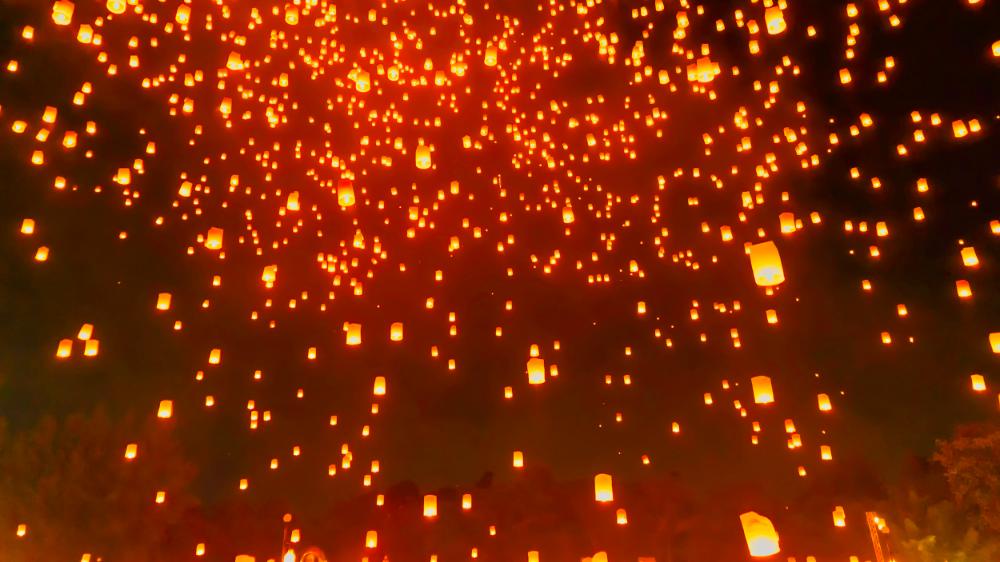
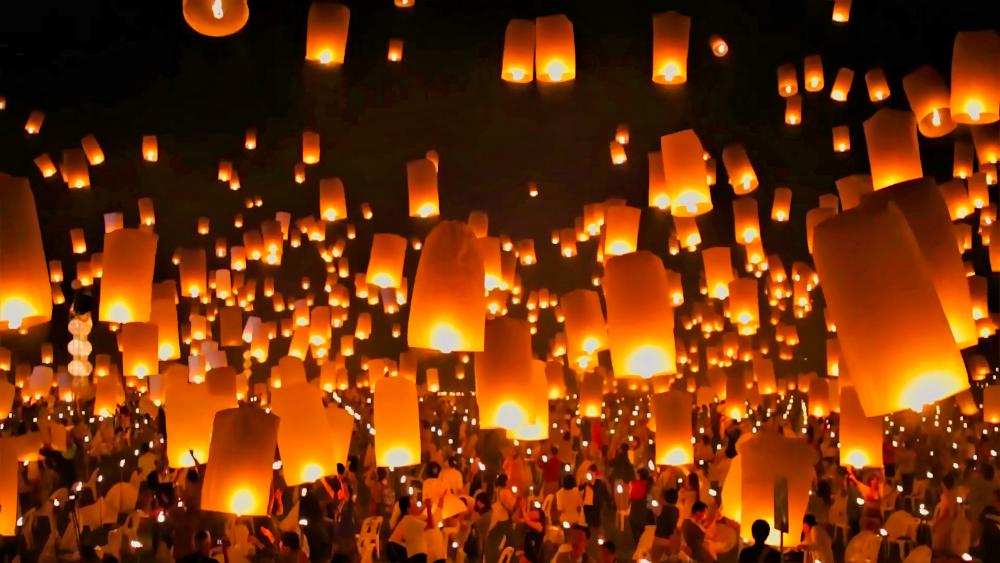
At the Chiang Mai Lantern Festival in 2026, over two million krathongs and 100,000 sky lanterns lifted into Thailand’s night sky in a single evening. I stood in the middle of that glowing chaos, a decade into my Chiang Mai life, and still felt my breath catch. That’s the pull of the Chiang Mai Lantern Festival – it never becomes ordinary, no matter how many times you witness it.
My first experience was a comedy of errors. I arrived clutching a sky lantern I’d bought from a roadside vendor, convinced I was about to participate in “the lantern festival.” Nobody had told me there were actually two festivals happening at once. I released my khom loi near the Ping River, watched it drift beautifully for three seconds, then saw it snag on a power line and fizzle out while a group of locals gently shook their heads at me. A few months later, I learned that what I’d stumbled through was the Yi Peng Lantern Festival and Loy Krathong Festival simultaneously – and I’d managed to misunderstand both.
That confusion is common. Walk through Chiang Mai’s old city during the November full moon, and you’ll see tourists clutching sky lanterns alongside families carrying intricate banana-leaf krathongs toward the river. Two distinct traditions, merged into one breathtaking celebration, yet each with its own history, meaning, and etiquette.
The Loy Krathong Festival, celebrated nationwide, honors Phra Mae Khongkha – the water goddess – by floating small decorated vessels downstream carrying wishes and apologies for the year’s water use. The Yi Peng Lantern Festival belongs to the ancient Lanna kingdom of Northern Thailand, where releasing khom loi sky lanterns into the dark represents letting go of misfortune and making merit.
Nuk, a Chiang Mai local and cultural guide I’ve learned from over the years, describes the visual result as a “heightened aspect of light to honor the Buddha.”
“The abundance of light during Yi Peng is a heightened aspect of light to honor the Buddha.”
– Nuk, Chiang Mai cultural expert
Why does getting the distinction right matter? Because the difference between a meaningful experience and a disruptive one is razor-thin. I’ve watched lanterns drift into jet engine flight paths, causing Chiang Mai International Airport to cancel or delay dozens of flights during peak festival nights.
I’ve stepped over synthetic krathong debris washed up on riverbanks the morning after, the foam and plastic bobbing grimly against the mud. And yes – I once accidentally set off a small fire alarm in a guesthouse corridor with a rogue incense stick I was carrying to my krathong.
The manager was gracious. I was mortified.
The Chiang Mai Lantern Festival scale demands attention. In Chiang Mai, celebrations span three days, with the full moon of the 12th Thai lunar month dictating the exact dates – typically late November. For 2026, the Yi Peng Lantern Festival is expected November 24-25, with the Loy Krathong Festival falling on the 25th.
Thousands of international visitors pour into the northern provinces, and ticketed events like the Chiang Mai CAD Khomloy Sky Lantern Festival now choreograph mass releases for tourists, complete with dinner buffets and cultural performances. It’s a stunning spectacle.
It’s also a far cry from the quiet temple-ground releases I’ve come to treasure.
This guide draws on over ten years of living in Chiang Mai, making mistakes, learning from locals, and slowly understanding how to experience both festivals without leaving a mess behind. I’ll walk you through telling the Yi Peng Lantern Festival apart from the Loy Krathong Festival, finding the right places to release a khom loi or float a krathong, navigating the Chiang Mai Lantern Festival‘s notorious logistical chaos, choosing materials that don’t harm the environment, and showing up in a way that respects the culture rather than trampling it. The magic is real. It just rewards those who bother to understand it.
I wasted my first two days in Chiang Mai stubbornly calling it all “the lantern thing” before a kindly noodle vendor pulled me aside to set me straight. There are actually two festivals glowing across Thailand on that November full moon, and mistaking the Yi Peng Lantern Festival for the Loy Krathong Festival isn’t just a vocabulary slip-it shapes which cities you visit, what you’ll witness, and whether you’ll be clutching a paper lantern or a banana-leaf float. I’ll walk you through the very distinction my sticky-rice-stained notebook helped me untangle that week.
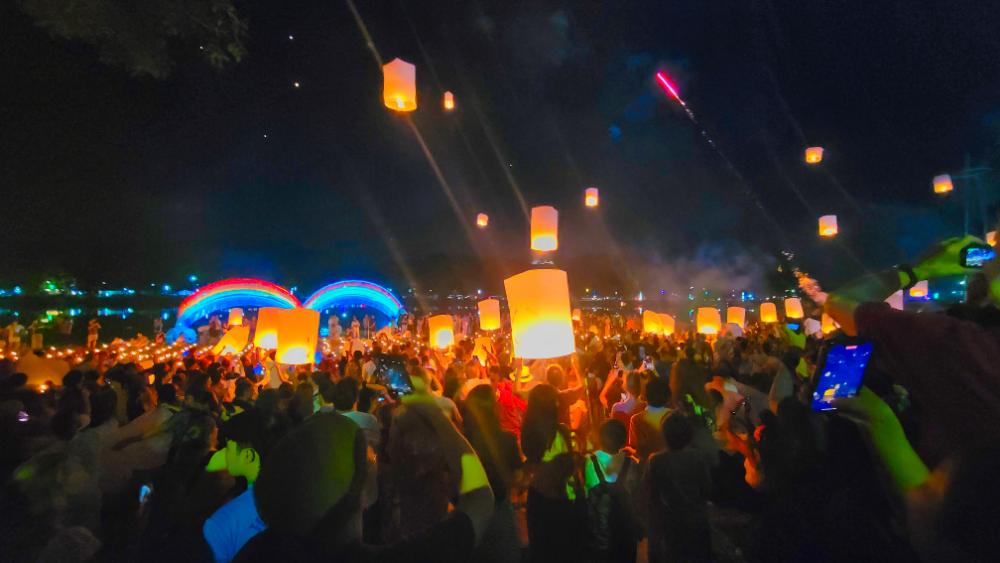
My Lanna Sky Lantern Secret
The first time I tried explaining Yi Peng to my visiting family, I called it “the thing with the lanterns that go up.” My Thai neighbor politely corrected me, and I’ve never forgotten the embarrassment. What I’d dismissed as a pretty photo op turned out to be one of the most spiritually layered traditions I’ve ever encountered in over ten years of living in Chiang Mai. The Lanna kingdom’s version of a light festival isn’t just older than the tourism brochures suggest-it’s fundamentally different from anything you’ll see in the rest of Thailand.
The Yi Peng Lantern Festival is a traditional Lanna festival rooted in the old northern kingdom that predates modern Thailand. The name itself is a clue most visitors miss entirely. “Yi” means “two” and “Peng” means “full moon day” in the Lanna lunar calendar-a straightforward label that tells you exactly when it happens, not what it celebrates.
That’s where things get interesting. The spiritual engine driving the whole event is Tham Bun, which means “to obtain Buddhist merit.” You’re not just launching a paper lantern into the dark.
You’re making an offering.
I learned this properly from a local expert named Nuk, who described the abundance of light during Yi Peng as a “heightened aspect of light to honor the Buddha.” That phrase rearranged my understanding completely. A khom loi-the sky lantern itself-isn’t a wish lantern. It’s not a floating birthday candle.
It carries your accumulated misfortunes upward and away, yes, but the primary direction of the gesture is toward the sacred, not away from your problems. The flame honors.
The rising smoke carries merit. And you, standing below with singed fingertips and a crick in your neck, are participating in something far older than Chiang Mai’s city walls.
Then there’s Wan Da, the 13th day of the waxing moon, which kicks off the three-day Yi Peng Lantern Festival tradition. Nobody told me about this part during my first festival. I showed up on the main night, camera ready, completely oblivious that families had spent the previous day shopping for offerings and preparing merit-making materials.
Wan Da is the quiet prelude-markets bustling with banana-leaf parcels and clay lamps, temples setting out rows of phang pratheep, those small oil-filled clay lamps that flicker along every ledge and stairway. It’s the inhale before the exhale.
Skip it, and you experience only half the rhythm.
What fascinates me now, after years of watching tourists arrive expecting one unified “lantern festival,” is how the Lanna traditions remain stubbornly distinct even as the Loy Krathong Festival‘s nationwide water offerings blend into the same week. The sapao-a tiny handcrafted sailing ship that Lanna people traditionally used instead of krathongs for water offerings-barely registers in most visitors’ experiences. Yet wandering the riverside and spotting one of these miniature vessels bobbing among the banana-leaf floats is like catching a dialect being spoken in a crowd of standard phrases. The Yi Peng Lantern Festival whispers its northern identity in details like these.
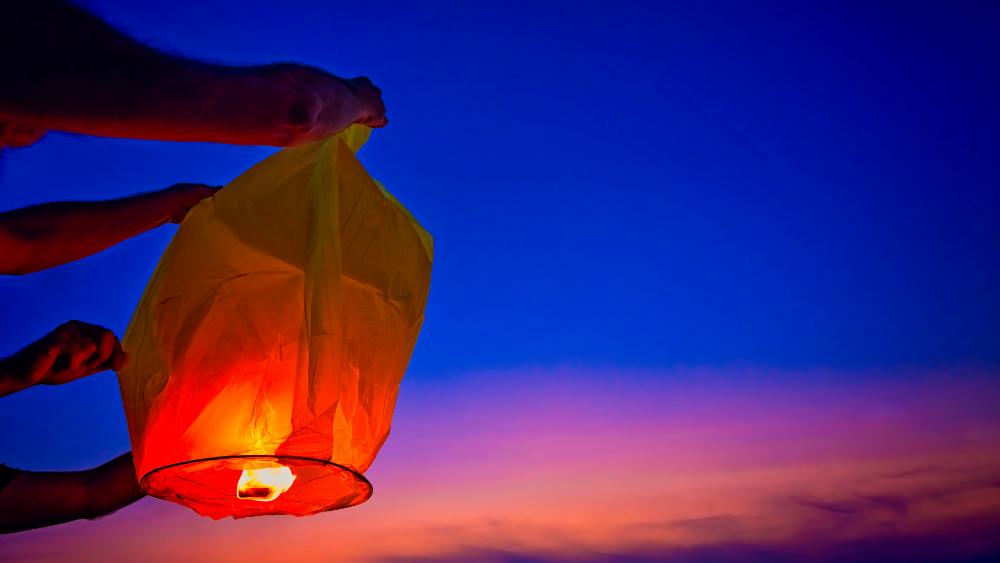
The lanterns themselves, khom loi or khom fai as locals sometimes call them, have a material honesty I’ve come to respect. Rice paper stretched over a bamboo frame, a wax-coated fuel cell at the base. Nothing synthetic in the traditional versions.
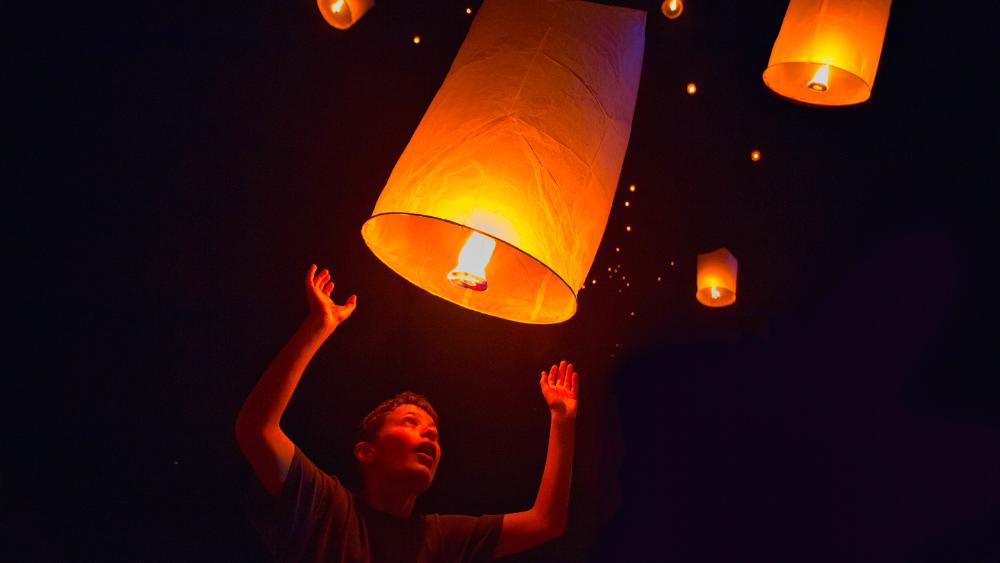
When you hold one waiting for the hot air to fill it, the paper trembles like something alive. Children giggle.
Elders murmur instructions. And then it lifts-not with a whoosh but with a slow, almost reluctant grace that makes you hold your breath. That moment, I’ve realized, isn’t about the spectacle at all.
It’s about the collective pause before release. A neighborhood exhaling together.
In Chiang Mai, the Yi Peng Lantern Festival and the water-focused Loy Krathong Festival have fused into a single sprawling celebration, but the Lanna heart still beats at its own pace. The khom loi belong to the sky. The krathongs belong to the river. And somewhere in the space between-where fire meets water and incense smoke tangles with lantern light-you start to grasp why understanding the difference matters.
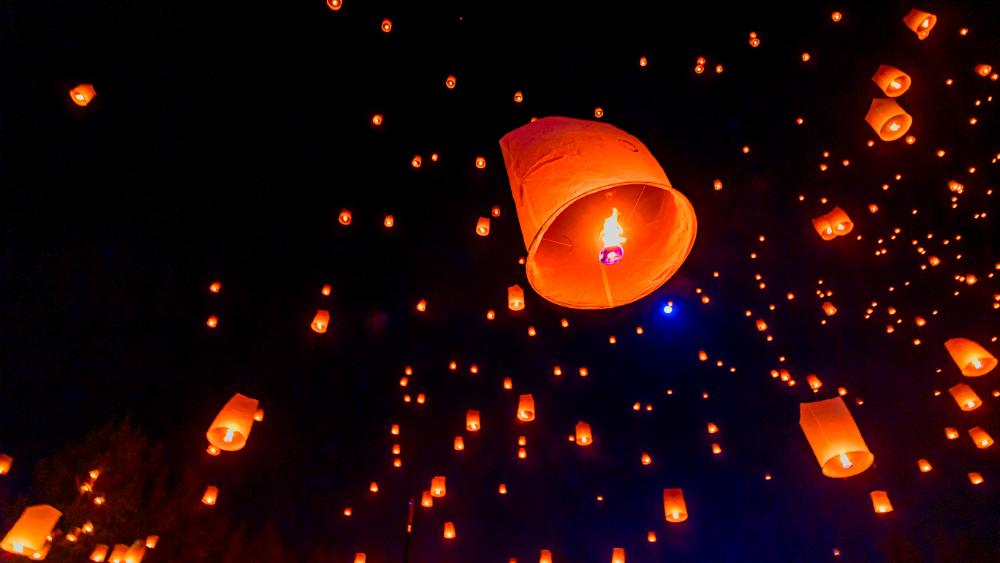
Floating Krathongs Nationwide
In 2023, I stood on a Bangkok pier watching thousands of tiny vessels drift downstream, candle flames trembling against the current, and it hit me just how different this was from the sky-bound spectacle I’d spent a decade writing about in Chiang Mai. The Loy Krathong Festival is not a northern specialty. It belongs to every river, canal, pond, and even hotel swimming pool across Thailand.
The word “loy” means “to float” and “krathong” refers to a small basket, vessel, or boat – and that’s exactly what you’ll see on the full moon night of the 12th lunar month, from the Chao Phraya in Bangkok to the Khlongs of Samut Songkhram, from the Ping River up north to the beaches of Phuket where krathongs are launched into the Andaman Sea.
I’ve floated krathongs in four different provinces now, and the Loy Krathong Festival ritual remains remarkably consistent. The act itself is a gesture of reverence toward Phra Mae Khongkha, the Thai Goddess of Water – an acknowledgment that we’ve used and, frankly, polluted her life-giving resource all year. You’ll see Thais carefully placing a lit candle, three incense sticks, and sometimes a few coins onto a krathong before setting it adrift with a quiet prayer.
Some whisper apologies. Others ask for blessings or the washing away of past misfortunes.
The flame represents illumination and respect; the incense carries prayers skyward; the drifting away symbolizes release. It’s intimate in a way that a thousand simultaneous sky lanterns can never quite replicate.
A traditional krathong is crafted from a cross-section of banana tree trunk, layered with folded banana leaves shaped into intricate lotus patterns, and decorated with marigolds, orchids, and jasmine. The banana trunk disintegrates in water within days, feeding fish rather than choking them. That’s the ideal.
The reality, increasingly, involves polystyrene bases wrapped in colored paper, and I’ve winced more than once watching synthetic krathongs bob past genuine offerings in a kind of floating consumerism. Up north, the Lanna people have their own variant called sapao – small handcrafted sailing ships that historically replaced krathongs for water offerings in this region, though they’re now less common even in Chiang Mai.
Where the Yi Peng Lantern Festival channels its spiritual energy upward toward the Buddha, the Loy Krathong Festival directs gratitude _downward_ toward the water that sustains rice fields, cities, and life itself. That directional difference – sky versus water, Buddha versus goddess – isn’t trivia.
It’s the distinction that makes experiencing both festivals in the same trip feel less like redundancy and more like witnessing two halves of a larger Thai spiritual worldview. The convergence of when and where these two festivals overlap is something I’ll unpack next, because the lunar calendar doesn’t make it obvious, and Chiang Mai’s geography complicates the logistics considerably.
In 2025, over two million krathongs were recorded floating across Thailand’s waterways during a single Loy Krathong night. That number dwarfs the sky lantern count by a factor of twenty. For a festival that receives far less international attention than its photogenic northern cousin, the scale speaks to something deeper – a ritual embedded not in tourism brochures but in the everyday relationship between Thai people and their rivers.
You don’t need a ticket. You don’t need a choreographed release slot.
You just need a krathong, a body of water, and a willingness to let something go.
I learned the hard way that showing up for the Chiang Mai Lantern Festival with a camera and a dream isn’t enough-you need to crack the lunar calendar first. After a decade of hosting friends who booked flights for the wrong weekend, I’ve turned my annual date-decoding ritual into something of an art form. The full moon dictates everything, and catching both the sky lanterns of the Yi Peng Lantern Festival and the floating krathongs of the Loy Krathong Festival at their peak requires more precision than most visitors realise.
I’ll walk you through the timing dance that separates a life-changing evening from a quiet one spent wondering where all the magic went.
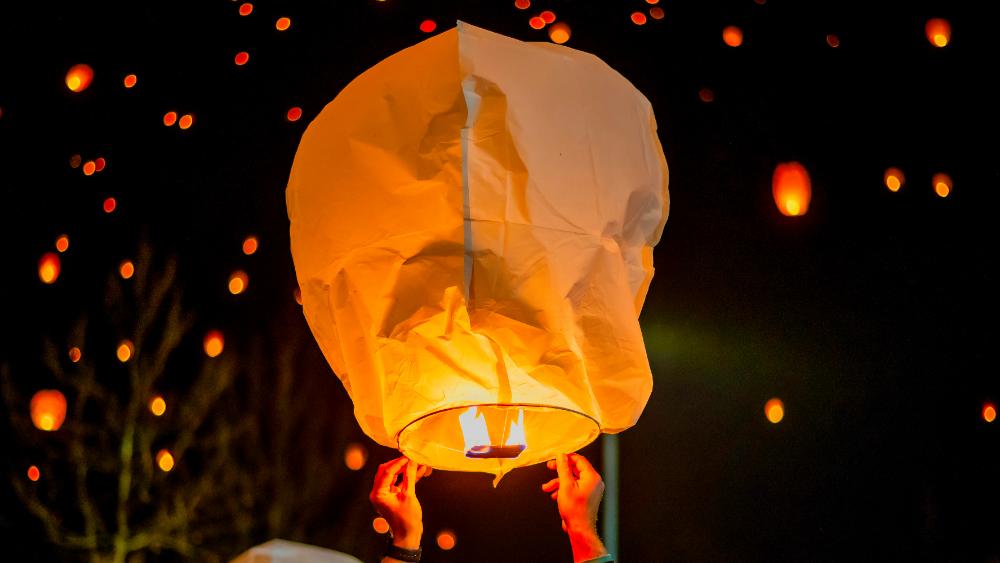
Predicting the Full Moon’s Glow
The Thai lunar calendar doesn’t care about my Google Calendar. I learned that the hard way during my second year in Chiang Mai, when I confidently told visiting friends the festival would be “around November 20th.” We arrived at the Ping River on November 19th to find exactly nothing. No krathongs.
No lanterns. Just a very quiet riverbank and my very embarrassed explanations about moon phases.
The Chiang Mai Lantern Festival dates pivot entirely on the 12th full moon of the Thai lunar calendar. Unlike the Gregorian system, the Thai lunar calendar tracks the moon’s cycles, with each month beginning on the waxing crescent after the new moon. The full moon falls on the 15th day of that lunar month, and the Loy Krathong Festival always lands on that precise night.
Yi Peng in Chiang Mai typically spans the two days leading into it, creating the three-day celebration the city is known for. November on the Gregorian calendar is the rough window, but the exact date drifts by as much as two weeks from year to year.
Here’s what actually governs the timing. The Thai lunar calendar uses a lunisolar system, inserting an extra eighth month (Adhikamasa) every few years to stay roughly aligned with the solar year. This means the 12th lunar month sometimes falls in late October, sometimes in late November.
The Astronomical Society of Thailand calculates and announces the official dates annually, and local municipal offices then coordinate festival programming around that determination. No algorithm on your phone will predict it accurately more than a year out.
For 2026, the Yi Peng Lantern Festival is expected November 24–25, with the Loy Krathong Festival on November 25. In 2027, Yi Peng shifts to November 13–14. That eleven-day swing between years is typical. If you’re planning a trip for 2028 or beyond, book refundable flights and wait for the official announcement, usually released by mid-year of the preceding January. I’ve watched too many travelers lock in non-refundable bookings for the wrong week because a outdated blog post listed “November 22nd” as a fixed date.
“The moon doesn’t negotiate with tourism boards. We publish the dates only after the Royal Thai Navy’s hydrographic department confirms the lunar calculation.”
– Somchai, Chiang Mai Municipal Cultural Affairs officer (personal communication, 2024)
The three-day structure of the Chiang Mai Lantern Festival follows a rhythm worth understanding. Day one is typically Wan Da, the preparation day when locals shop for decorations and temple offerings. Day two marks the main Yi Peng Lantern Festival sky lantern releases and the beginning of Loy Krathong evening ceremonies. Day three, the full moon proper, is the peak for floating krathongs nationwide. That third night is when the Ping River banks become nearly impassable with crowds, and when the synchronized mass lantern events at Doi Saket and Mae On sell out months in advance.
Those ticketed CAD Khomloy events? They publish their own date confirmations independently, sometimes before the municipal announcement. This creates a weird information gap where tourists hold tickets for a specific date while the city’s official calendar still says “TBD.” It works out because the organizers coordinate with the same lunar data. But the lag is unsettling if you’re the type who triple-checks everything.
The practical consequence of all this lunar mathematics is simple. You need to build a three-day buffer into your itinerary if you’re traveling from abroad. Arrive early, stay through the full moon night, and leave only after the morning after. When I finally started doing that, I stopped apologizing to friends on empty riverbanks.
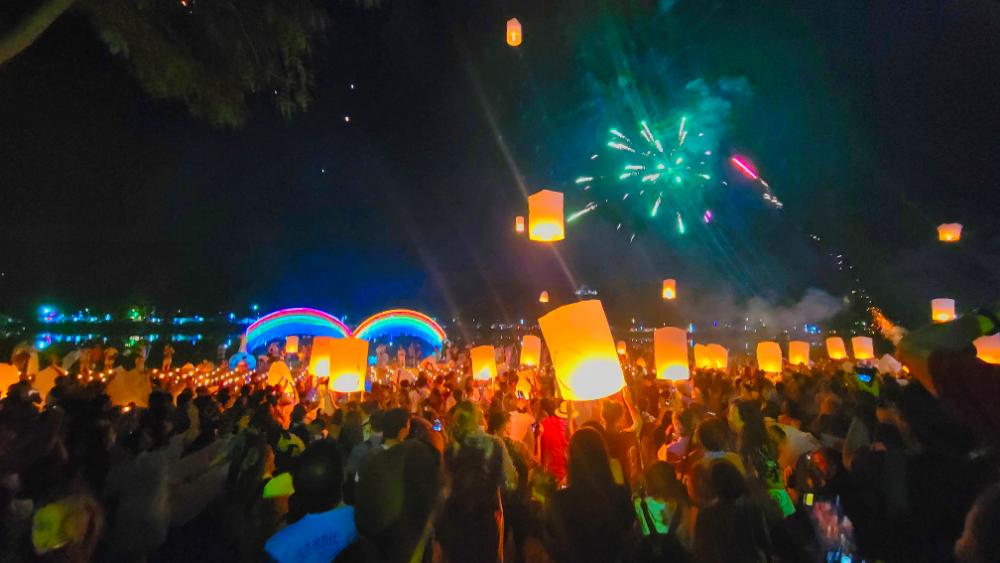
My Best Times for Krathongs and Khom Loi
The sunset hits around 6:00 PM in November, and that’s when the Ping River starts its transformation from a sleepy waterway into a constellation of floating lights. I learned this the hard way my first year. I showed up at 4:30 PM, krathong in hand, ready for magic.
What I got was an empty riverbank, a vendor laughing at my eagerness, and a long wait with nothing but mosquito bites for company. The practical window is clear now after years of getting this right-the sweet spot for floating krathongs during the Loy Krathong Festival runs from about 6:00 PM to 11:00 PM, with the real concentration of activity peaking between 7:00 PM and 9:00 PM.
Skip the early rush. I’m serious. Everyone thinks getting there first means getting the best spot, but that’s backwards.
At 6:00 PM, the riverbank is sparse. By 7:15 PM, it’s buzzing.
By 8:00 PM, the Ping River near Nawarat Bridge looks like a slow-moving galaxy-thousands of candlelit krathongs drifting in lazy spirals, their incense trails mixing with the night air. That hour, from 7:00 PM to 8:30 PM, is what you’re actually chasing. The light is perfect.
The crowd energy hasn’t tipped into exhaustion yet. Vendors are still fully stocked with the good krathongs, not the sad leftover ones with wilted marigolds.
Now, Yi Peng Lantern Festival sky lanterns operate on a completely different clock. This is where I see first-timers mess up constantly. They light a khom loi at 7:00 PM, watch it float up solo, feel a brief spark of joy, and then realize twenty minutes later that they missed the actual show.
Organized mass release events at places like the CAD Cultural Center in Mae On district typically instruct participants to wait until around 9:00 PM for a synchronized release. That moment-when thousands of lanterns lift simultaneously, not one by one-is the image you’ve seen in every travel magazine.
It’s not spontaneous. It’s coordinated. And if you’re not in position by 8:45 PM, you’ll be the person running through a dark field with a lighter while everyone else is already gasping at the sky.
The unregulated street releases around Tha Phae Gate follow a messier rhythm. Lanterns go up sporadically from sunset onward, building to a chaotic crescendo around 9:30 PM. It’s beautiful, but it’s not the synchronized miracle you might be expecting.
I prefer the organized events for photography. For pure, unpolished atmosphere, though?
The street chaos wins. You just have to accept that some lanterns will crash into trees and one might land on someone’s motorbike (I’ve seen it happen twice).
If crowds drain your soul, float your krathong between 9:30 PM and 10:30 PM. The families with young kids have retreated. The photo-obsessed tourists have moved on to find beer.
The river is still aglow, and you’ll actually have space to kneel at the water’s edge without someone’s selfie stick in your face. The same principle applies in reverse for sky lanterns-the truly spectacular moments cluster around that 9:00 PM synchrony, so if you want the postcard shot, you’re stuck with the crowd.
Accept it. Or show up three days early and watch the rehearsals, which I’ve done exactly once and don’t recommend unless you enjoy watching event staff argue about wind direction.
The places where these peak moments unfold best-the quiet riverbank stretches versus the ticketed release fields-are a whole separate puzzle, one I’ve spent years mapping out.
After more than a decade of trial, error, and one infamous incense incident that still makes my old neighbours chuckle, I’ve learned that where you experience the Chiang Mai Lantern Festival matters just as much as how. The right spot transforms a chaotic scramble for photos into something closer to what these celebrations actually mean. I’m letting you in on the quiet riverside corners and the sky lantern fields that taught me the difference between watching a festival and feeling it.
Finding My Spot for Khom Loi
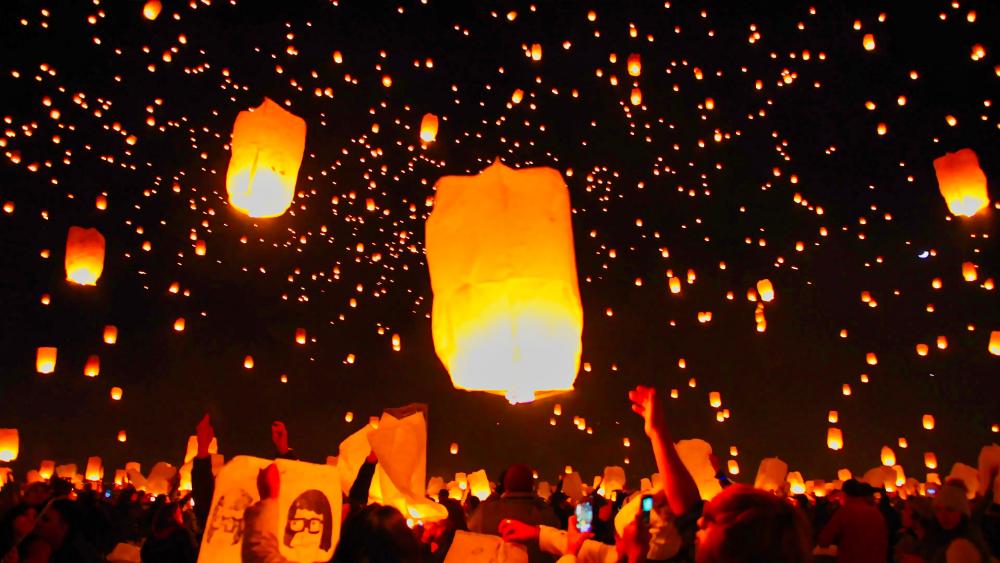
The Chiang Mai CAD Khomloy Sky Lantern Festival in Mae On district is the city’s largest ticketed Yi Peng Lantern Festival event, and I’ll say it plainly: it’s the most reliable way to witness a mass release that actually delivers on the photographs you’ve seen. Tickets aren’t cheap, but what you’re buying is choreography. The organizers time a synchronized launch, typically around 9:00 PM, where thousands of lanterns ascend in a single, coordinated wave. The location sits well outside the old city, which means less light pollution and a cleaner backdrop against the Doi Saket mountains.
I’ve attended the CAD event three times now. The first time, I grumbled about the cost. By the third, I understood exactly what I was paying for.
The site management addresses the chaos that defines street releases. There are designated launch zones, fire safety crews, and-critically-lanterns made without metal wire.
They also employ lantern chasers who claim to recover 95% of fallen lanterns. Is that number perfect? No.
But it represents an infrastructure that unregulated events simply lack. You get a dinner buffet, cultural performances, and a release sequence timed for maximum visual impact.
If you’re traveling specifically for the sky lantern photos, this is your highest-probability option.
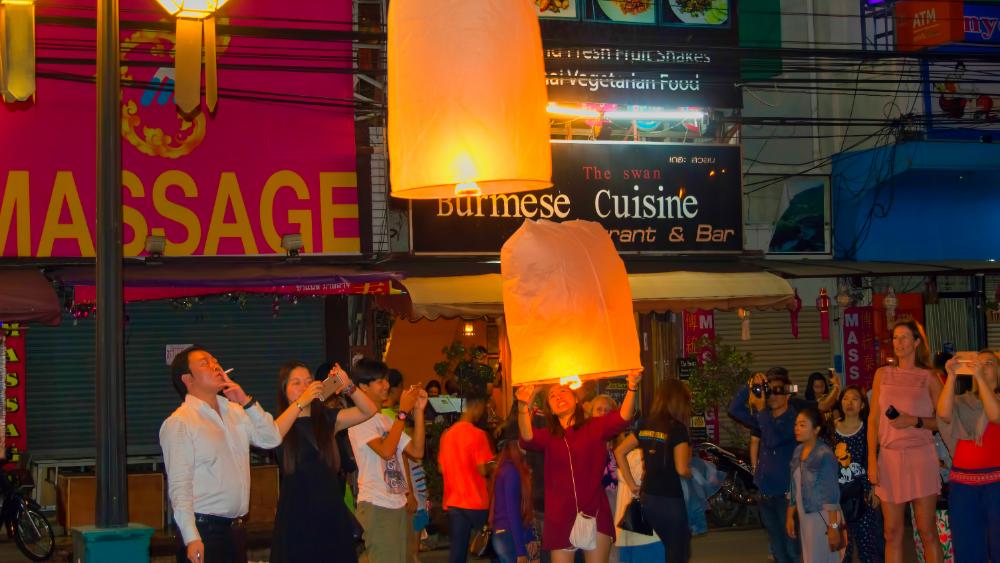
But ticketed events aren’t the whole story. Tha Phae Gate serves as the gravitational center for street celebrations during the Yi Peng Lantern Festival. By mid-evening, the area around the gate and the surrounding moat roads fills with people buying lanterns from vendors and launching them from whatever open space they can find.
This is where the festival feels most alive and least curated. The energy is raw, communal, and slightly chaotic. Parades wind through the area, temples spill light from clay lamps called phang pratheep, and the night sky becomes a tapestry of scattered lights rising at different speeds and directions.
It’s less photogenic in a postcard sense, but it captures something the ticketed events can’t manufacture: spontaneity.
The trade-off is real. Unregulated street releases around Tha Phae Gate carry risks the organized venues control for. I’ve watched lanterns snag on power lines and catch fire.
I’ve seen them drift into the path of tuk-tuks still navigating the crowds. The area near the Ping River adds another complication-lanterns that fall into water become debris, and while many are rice paper, the bamboo frames and wax fuel cells take months to degrade, if they ever fully do.
This isn’t a reason to skip the street experience, but it’s a reason to be deliberate about where you position yourself and which lanterns you buy. Supporting vendors who use natural materials matters here more than anywhere else.
Doi Saket, about 30 minutes northeast of the city, offers a middle ground that many guidebooks overlook. Several temples in the district host their own Yi Peng Lantern Festival releases that blend organized safety with a more local, less tourist-dense atmosphere. These aren’t the massive choreographed shows of CAD, but they’re also not the free-for-all of Tha Phae.
I’ve found the sweet spot at Wat Doi Saket during the festival’s second night. The temple grounds overlook a reservoir, and the reflections of lanterns on still water create a doubling effect-sky above, mirror below-that even the premium ticket events struggle to replicate.
One thing I won’t sugarcoat: getting to these locations requires planning. Doi Saket and Mae On sit far enough from the old city that you can’t simply walk there after dinner. Traffic thickens dramatically after sunset, and songthaew drivers around the Night Bazaar start hiking prices by dusk.
I learned to negotiate a round-trip fare before leaving, or better yet, book a private driver through a local recommendation rather than a street-side arrangement. The extra cost stings in the moment, but the alternative-standing on a dark road hours after the release, searching for a ride while competing with hundreds of others doing the same-stings far worse.
The riverside stretches near Nawarat Bridge and Iron Bridge serve as the prime territory for Loy Krathong Festival floating, and I’ll get to those spots next. But understanding the sky lantern geography first matters, because where you watch the lanterns rise will shape everything else about your night, including which riverbank you can realistically reach afterward.
My Favorite Krathong Floating Spots
If sky lanterns are the festival’s gasp-inducing spectacle, krathong floating is its quiet, watery heartbeat. And the Ping River in Chiang Mai is where that heartbeat is strongest during the Loy Krathong Festival. I learned this the hard way my first year, naively thinking I could just wander down to any stretch of water and find a peaceful spot.
I ended up tangled in someone’s fishing line near a drainage culvert, my krathong spinning in an eddy of plastic bottles. Not exactly the spiritual release I’d pictured.
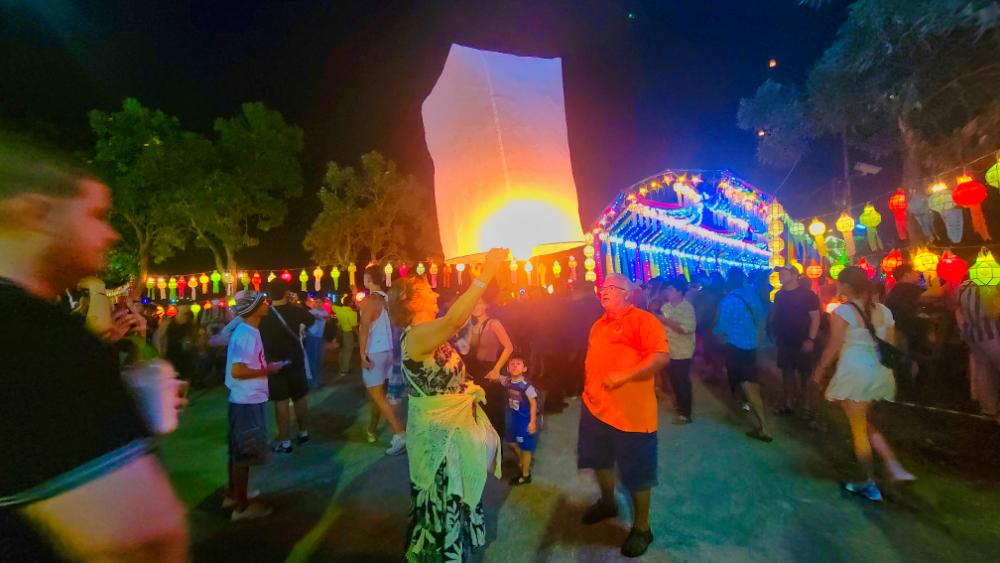
The river, particularly the stretch between Nawarat Bridge and Iron Bridge, becomes a constellation of flickering candlelight during the Loy Krathong Festival. Each krathong-a small floating vessel traditionally made from a banana-tree trunk slice, folded banana leaves, flowers, incense, and a candle-drifts downstream carrying wishes, apologies to the water goddess, and occasionally, someone’s very damp phone. These two bridges form the gravitational center of the action.
Nawarat Bridge offers the most iconic view, looking down at thousands of lights clustering and dispersing on the dark water. It gets utterly packed, though.
I’ve stood there pressed shoulder-to-shoulder with strangers, and while the view is unbeatable, the crush can feel a bit overwhelming after twenty minutes.
Iron Bridge, just a short walk south, offers a slightly less claustrophobic experience with nearly the same visual payoff. The bridge itself is more open, and from its eastern side, you can see the river curve away toward the Night Bazaar area, lanterns tracing that bend. I prefer arriving here around 6:45 PM, just as the first serious wave of Loy Krathong Festival floaters hits the riverbanks. The light during that transitional dusk-to-dark window makes photographs look almost painted.
Riverside staircases between the two bridges are the real secret, though. These narrow stone steps descend directly to the water, and you’ll find vendors perched at the top selling krathongs of varying complexity-simple floral ones for 40 baht, elaborate confections with banana-leaf swans for 120. I always buy from the older women who sit cross-legged assembling them by hand rather than the stalls with pre-made plastic-heavy versions. Stepping down to the water’s edge, kneeling on the last dry step, and pushing your krathong gently into the current feels intimate in a way bridge-watching never quite matches.
Safety deserves a blunt mention here. The stone steps get slick with splashed water and spilled candle wax. I’ve watched people slip inelegantly into the river, krathong crushed in one hand, dignity gone.
The current near the banks isn’t dangerous, but it’s cold and murky, and you’ll smell like river silt for the rest of the night. Hold onto a railing if there is one.
Wear shoes with grip. The crowds pushing toward the water’s edge can create bottlenecks on the narrowest staircases, and patience evaporates quickly when everyone’s holding an open flame.
“The river during Loy Krathong carries not just lanterns, but the collective hopes of an entire city. It’s the most beautiful traffic jam I’ve ever seen.”
– Nuk, Chiang Mai cultural guide
Another spot I’ve grown fond of during the Loy Krathong Festival is the riverbank near Wat Chai Mongkol, just east of the Iron Bridge on Charoen Prathet Road. It’s far enough from the bridge chaos that you can actually hear the water lapping, and the temple’s riverside pavilion provides a serene backdrop. Many locals float their krathongs here, wading knee-deep into the river with their children.
The area isn’t lit as brightly, so the candlelight on the water reads more dramatically. Getting there, however, means navigating increasingly gridlocked sois as evening deepens-which, honestly, is a preview of the festival-wide transportation puzzle that hits hardest after 8:00 PM.
If you’re staying inside the Old City, the moat also hosts its own smaller-scale Loy Krathong Festival floating. It’s not the Ping River-the scale is quieter, more neighborhood-oriented-but for families with young children or anyone who wants to avoid the intense bridge crowds, it’s a perfectly lovely alternative. The stretch along Arak Road near the northern gate sees a steady trickle of krathongs, and you can watch them float beneath the old city walls.
Just keep your expectations modest. The moat is wide and still, so krathongs tend to cluster rather than drift, creating small floating gardens of candlelight that look gorgeous but require occasional nudging with a stick to prevent a pile-up.
Nothing prepares you for the sensory overload of the Chiang Mai Lantern Festival during the full moon of November-not the travel guides, not the Instagram reels, and certainly not my naive assumption that I could simply stroll from point A to point B. I learned the hard way that a ten-minute walk can morph into a sweaty, shoulder-to-shoulder pilgrimage, and that flights booked without checking the lunar calendar are a gamble I no longer take. What follows are the logistical survival lessons I earned through misadventure, so your own festival journey involves fewer panic-sprints and more actual magic.
Getting Around My Chiang Mai Festival Maze
I learned the hard way that a 10-minute Grab ride across town can take 45 minutes during the Chiang Mai Lantern Festival. The first year I tried to motor-taxi from Nimman to the river, I spent more time staring at brake lights than actually moving. Walking becomes your superpower here. Within the Old City moat and the stretch between Tha Phae Gate and the Ping River, your feet will beat any vehicle-every single time.
The Old City’s grid compresses into a pedestrian crush zone after sunset. Nawarat Bridge and the surrounding sois turn into a river of bodies, not cars. I’ve actually outpaced songthaews just by walking along Charoen Prathet Road’s riverside footpath.
Map out your evening as a walking loop: start at one end, move with the flow toward the river, and resist the urge to double back. You’ll cover more ground and see more spontaneous street releases that way.
Songthaews (red trucks) and tuk-tuks are your backup, not your plan A. They’re everywhere during the Chiang Mai Lantern Festival, which is both a blessing and a trap. Drivers know demand is insane and fares reflect it. I always negotiate the price before hopping in-state your destination clearly, then name your price.
For a ride from the Old City to the Night Bazaar area, I wouldn’t pay more than 60-80 baht per person in a songthaew during festival madness. Tuk-tuk drivers will quote you 150-200 baht for the same trip.
That’s not worth it. Smile, counter-offer, and if they don’t budge, walk away. Another driver always appears within seconds.
One specific pain point I keep seeing: the intersection where Arak Road meets the northwest corner of the moat. Traffic coagulates there around 7:00 PM as everyone funnels toward the river. Avoid it entirely if you can swing east through the quieter sois. I cut through temple grounds like Wat Phra Singh’s side lanes-respectful walking only, shoes off if you step inside, but it shaves 20 minutes off some routes.
Pre-booking rides through apps works brilliantly until it doesn’t. I’ve had Grab drivers cancel on me five times in a row once the lantern launches begin because they simply can’t reach my pickup point. If you’re using Grab, set your pickup at least two blocks away from any bridge, gate, or temple entrance.
Better yet, pre-arrange a driver earlier in the day-handshake deal, cash, specific time and landmark. That old-school approach has saved me more than any app.
The real maze isn’t the streets themselves. It’s the disconnect between how close things look on a map and how long they actually take. A 1-kilometer walk along the river might look trivial, but on Loy Krathong Festival night it’s a weaving, stop-start shuffle past krathong vendors, incense smoke, and families crowding staircase access points.
Build in buffer time. If you need to be at an organized Yi Peng Lantern Festival event by 9:00 PM, leave an hour earlier than you think reasonable.
One last thing: flights get weird here. The airport adjusts schedules around the mass releases of the Yi Peng Lantern Festival, and I’ve watched planes that should have landed at 8:00 PM circle until after 10:00 PM because the sky above Mae On was full of fire. That doesn’t just affect passengers-it messes with taxi availability around the airport zone. If you’re staying near Chiang Mai International Airport on festival nights, factor in that ground transport snarls up when delayed flights dump arrivals into already-gridlocked streets.
My Flight Scare and How to Avoid It
I’ve booked two different departure strategies during Chiang Mai Lantern Festival week-one that worked and one that left me staring at a departure board full of red “cancelled” notices until 1:00 AM. The winning approach isn’t complicated, but it requires swallowing a specific pill: the festival will disrupt your flight, and pretending otherwise is what gets you stranded.
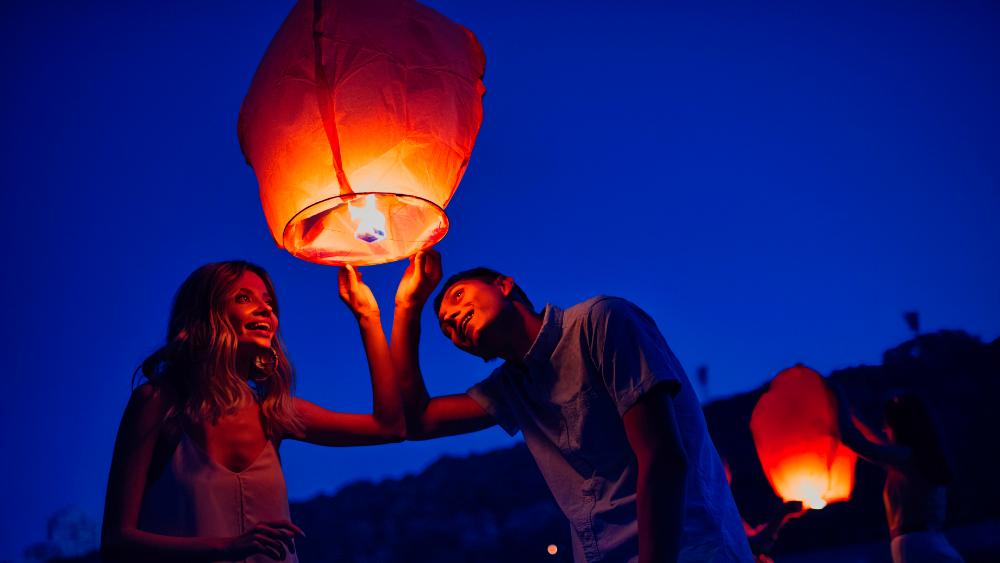
Chiang Mai International Airport (CNX) routinely adjusts, delays, or cancels flights around the main festival nights. This isn’t a rare occurrence or an overreaction-it’s standard operating procedure. The mass release of khom loi during the Yi Peng Lantern Festival creates a genuine aviation hazard. A sky lantern isn’t just a pretty Instagram moment; it’s an airborne object with a metal wire frame and an open flame drifting directly into flight paths. Airport authorities treat this threat seriously, and so should your itinerary.
“The airspace restrictions are non-negotiable during the peak release windows. Airlines know this months in advance, but many passengers don’t check until they’re already at the gate.”
– Chiang Mai-based aviation operations specialist (anonymous, per employer policy)
The pattern I’ve observed across three festival years is consistent: the heaviest disruptions cluster on the two evenings when Yi Peng Lantern Festival mass releases peak-typically the full moon night and the night prior. In 2025, synchronized releases involved over 100,000 lanterns across the region. Even a fraction of those entering controlled airspace forces a complete shutdown. I’ve watched planes that should have touched down at 8:00 PM circle until after 10:00 PM, and I’ve seen the exhaustion on passengers’ faces when they finally deplane, hours late, into a city that’s already stopped celebrating.
What Actually Saves You
First, check the airport’s published advisory-not a travel blog, not a forum thread, but the official CNX notice that appears roughly one month before the festival. It specifies the exact dates and time windows when flight operations will be suspended. Airlines adjust schedules around these windows, but they rarely proactively rebook you unless you ask.
Second, build a buffer day on both sides of the festival. If the Yi Peng Lantern Festival peaks November 24-25, do not book a departure on the 25th or even early on the 26th. I now schedule my exit flights for at least 36 hours after the final major release. Yes, that costs an extra night of accommodation. It also costs zero nights spent sleeping on a vinyl airport bench.
Third, book flexible or refundable fares during Chiang Mai Lantern Festival week. Airlines serving CNX-Thai Airways, Bangkok Airways, AirAsia, Nok Air-each handle disruptions differently. A non-refundable budget ticket becomes worthless the moment a cancellation hits. I learned this the hard way with a 2,400-baht fare that evaporated into a voucher I never used.
Fourth, consider alternative airports if your schedule allows. Flying into Bangkok and taking the overnight train north (roughly 12-13 hours) bypasses CNX entirely during the critical window. It’s slower, but it’s predictable-and predictability during festival week is gold. I’ve used this approach twice when visiting family down south and needed absolute certainty on arrival timing.
The environmental consequences of those 100,000 Yi Peng Lantern Festival lanterns extend well beyond airspace-something I didn’t fully grasp until I started finding metal wire frames in rice fields months after the festival ended. That’s a problem the next section wrestles with head-on.
My first sky lantern didn’t float gracefully into the heavens – it dipped sideways, careened toward a guesthouse balcony, and taught me a permanent lesson about wind direction and humility. Back then, I simply grabbed the prettiest khom loi from a street vendor and lit the fuel cell without a second thought. The environmental cost of that pretty rice paper shell, from the metal wire frame to the wax residue it left somewhere in the Chiang Mai countryside, took years of living here to fully understand.
What follows is the honest story of how I traded festival carelessness for conscious participation, and how you can skip my mistakes entirely.
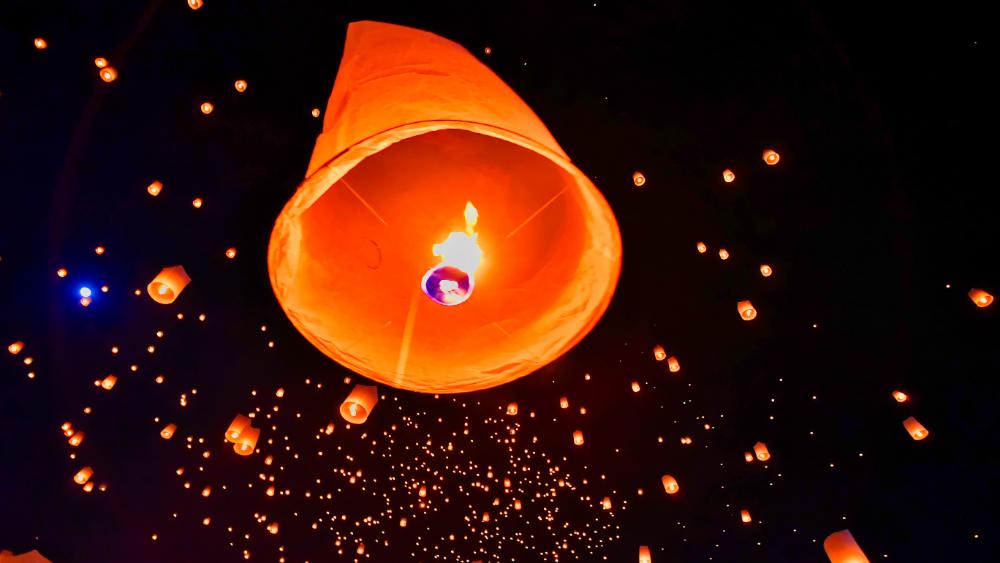
My Eco-Friendly Khom Loi Choices
I didn’t think twice about the lantern I bought my first Yi Peng Lantern Festival. It was a paper cylinder, a wire frame, a wax fuel cell-standard issue from a street vendor near Tha Phae Gate. Release it, watch it float, make a wish.
What happened after it drifted out of sight wasn’t something I considered. Then a local friend mentioned finding a charred lantern frame tangled in a mango tree on her family’s farm two weeks later, the wire still intact, the wax residue hardened on the bark.
That shifted how I see every lantern I touch now.
My original assumption was that Yi Peng Lantern Festival sky lanterns were inherently eco-friendly. They’re made of rice paper, after all. The reality is messier.
Most commercial khom loi contain at least two non-biodegradable components: a thin metal wire frame and a paraffin wax fuel cell. The rice paper body does decompose, but the wire can persist in the environment for years, posing hazards to wildlife and creating litter that’s nearly impossible to fully recover. Paraffin wax, a petroleum byproduct, doesn’t break down cleanly and can leave chemical residue in soil and waterways.
The same concern surfaces with Loy Krathong Festival krathongs. Many sold near the Ping River now use styrofoam bases and synthetic decorations-items that float beautifully for an evening and then become toxic debris for months or years afterward.
In 2025, the synchronized festival releases across Thailand involved over two million krathongs and more than 100,000 sky lanterns. Even if a fraction of those contain metal wire or synthetic materials-and my own sampling at Chiang Mai markets suggests a majority do-the cumulative environmental load is staggering. Organized events like the Chiang Mai CAD Khomloy Sky Lantern Festival claim to use biodegradable lanterns and employ “lantern chasers” who reportedly collect up to 95% of fallen lanterns. That’s promising, but it doesn’t address the tens of thousands of lanterns released independently across the city and countryside, where no collection crew exists.
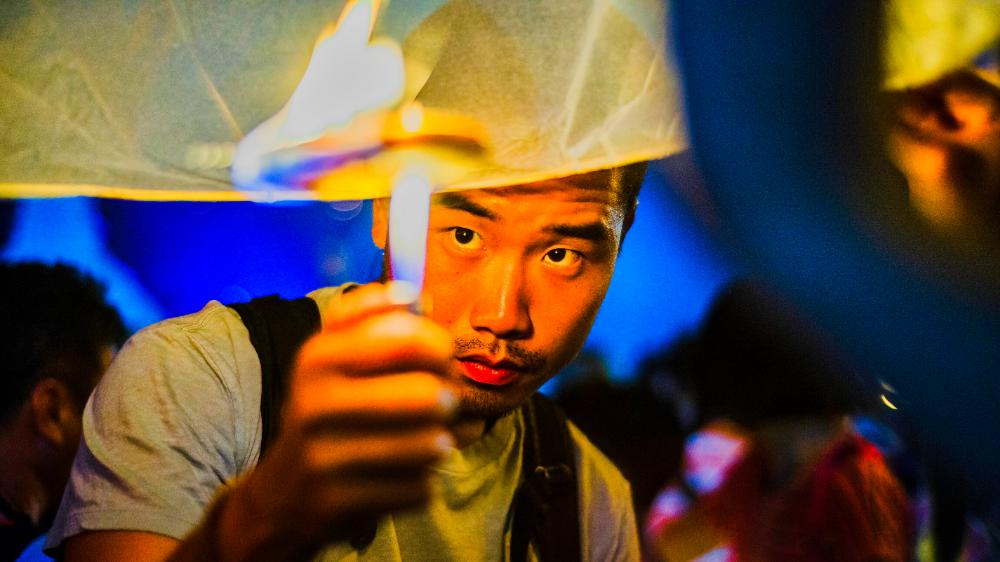
What “Biodegradable” Actually Means
The term gets thrown around loosely by vendors-I’ve heard it from sellers whose lanterns clearly had wire frames. A truly eco-friendly khom loi uses a bamboo frame instead of metal wire and a fuel cell made from natural, non-petroleum materials. The paper should be untreated rice or mulberry paper, free from chemical coatings or synthetic dyes.
Even then, bamboo and rice paper can take months to decompose under the right conditions-longer if a lantern lands in a dry area or gets lodged in a tree canopy where moisture and microbial activity are limited. Biodegradable is a direction, not an instant solution.
For Loy Krathong Festival krathongs, the gold standard remains the traditional construction: a banana-leaf base shaped into a small vessel, pinned together with wooden sticks or bamboo skewers, decorated with fresh flowers, and holding a small incense stick and candle. No plastic. No styrofoam.
No synthetic string. These krathongs break down within days in water.
By contrast, some modern versions I’ve seen at market stalls use coloured foam, glitter, and plastic flower embellishments-items that should be avoided entirely.
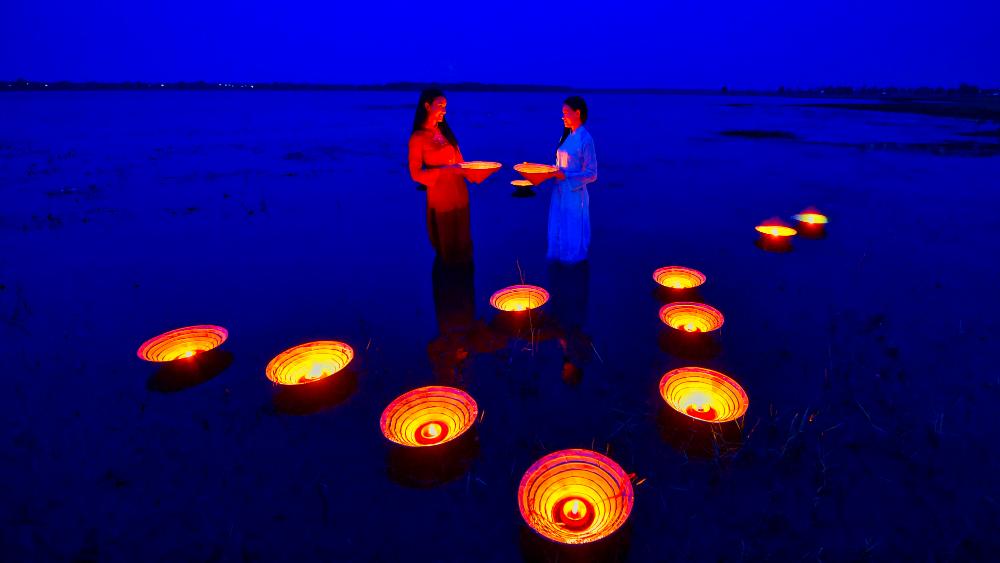
How to Identify Eco-Friendly Options
My approach now involves a thirty-second inspection before buying anything. I check the frame material first: if it’s shiny and cold to the touch, it’s metal; if it’s matte, slightly irregular, and warm, it’s likely bamboo. I examine the fuel cell-natural wax alternatives like beeswax or plant-based waxes smell different from paraffin and feel softer.
I ask the vendor directly, though I’ve learned to phrase it as curiosity rather than accusation: “Is this made with bamboo or wire?” Vendors who work with traditional artisans tend to answer quickly and proudly. Those selling cheaper, tourist-grade inventory often deflect.
Supporting local artisans who use natural materials is the most actionable step you can take. In Chiang Mai, several community-based craft groups near the old city and in surrounding villages produce hand-made khom loi with bamboo frames and natural wax. Their lanterns typically cost 30 to 50 percent more than the mass-produced alternatives, and they’re rarely sold by the pushiest street vendors. I’ve found them at smaller temple fairs and through recommendations from local craft cooperatives.
The lantern quality is visibly higher-the paper is thicker, the frame is sturdier, and they burn more evenly. The slightly higher price funds a production chain that doesn’t cut corners with synthetic shortcuts.
The same logic applies to Loy Krathong Festival krathongs. The most beautiful ones I’ve floated were purchased from older women making them by hand near Nawarat Bridge on Loy Krathong day, using banana leaves they had cut and folded that morning. Those krathongs felt different in my hands-heavier with moisture, fragrant, imperfect. They floated differently too, riding lower in the water and drifting more slowly, which I’ve come to appreciate as a feature rather than a flaw.
The environmental concerns extend beyond what we can see. Even biodegradable Yi Peng Lantern Festival lanterns contribute to localized air quality issues when released en masse. The smoke from tens of thousands of fuel cells burning simultaneously adds particulate matter to an already smog-prone region, and the fire risk remains real-lanterns that don’t fully extinguish before landing have caused roof fires and crop damage in rural areas surrounding Chiang Mai. The cultural pressure to participate is strong, and I don’t believe the answer is complete abstinence.
But the space between ignoring the problem and opting out entirely is wide enough to make meaningful choices. I now buy fewer lanterns overall and insist that every one I release meets the material standards I’ve learned to recognize.
Avoiding My Fire Fright: Safety First
Decide right now whether you’ll release from an organized event or a public street corner. The choice determines everything about your safety that night. I made the wrong call once – a cheap lantern from a Tha Phae Gate vendor, lit in a crowd of tourists who’d also had a few beers – and watched it lurch sideways into a power line. The crackle-pop sound still lives in my spine.
Unregulated releases are chaos distilled. Lanterns snag in trees, strike power lines, or drift back down into packed crowds still trailing flame. In 2025, emergency services across Chiang Mai responded to over two dozen fire-related incidents during the festival week, most traced to individual street releases rather than controlled events. The physics is simple: a paper balloon carrying an open flame, launched by someone who’s never done it before, in a city of narrow sois and dangling cables.
What could go wrong? Everything, as it turns out.
Organized events operate differently. The Chiang Mai CAD Khomloy Sky Lantern Festival and similar ticketed gatherings employ dedicated crews known as lantern chasers – staff who track and retrieve fallen lanterns across designated drop zones well outside the city core. These teams claim recovery rates as high as 95%.
That number matters. A lantern left smoldering in dry scrub isn’t abstract eco-guilt; it’s a brush fire waiting to happen.
Northern Thailand’s cool season is also its dry season. One stray fuel cell, one unattended field.
“We map wind patterns hours before the release and adjust launch coordinates accordingly. If conditions aren’t right, we delay. The street vendors don’t do that.”
– Somchai, event safety coordinator, Mae On district
Restricted zones exist for a reason, and the most critical one cuts a wide arc around Chiang Mai International Airport (CNX). Releasing any airborne object – lantern, drone, anything – within that radius is not merely inconsiderate. It’s illegal.
Flights get delayed or diverted, and authorities do pursue violators. I’ve seen police confiscate entire stacks of lanterns from vendors operating too close to the flight path.
The crackdown intensified after 2023, when several near-miss incidents pushed regulators to adopt a zero-tolerance stance during festival peaks.
Beyond aviation law, basic fire sense applies. Keep a bucket of water or sand within arm’s reach if you’re releasing anywhere outside a managed venue. Light the fuel cell only when wind is calm – gusts turn lanterns horizontal before they gain altitude, and a horizontal lantern is a missile.
Never release near thatched roofs, gas stations, or dense tree canopy. These aren’t theoretical warnings.
I have stood in a hotel courtyard and watched a flaming lantern descend onto a corrugated roof two buildings over. The owner doused it with a garden hose before anything caught. Not everyone gets that lucky.
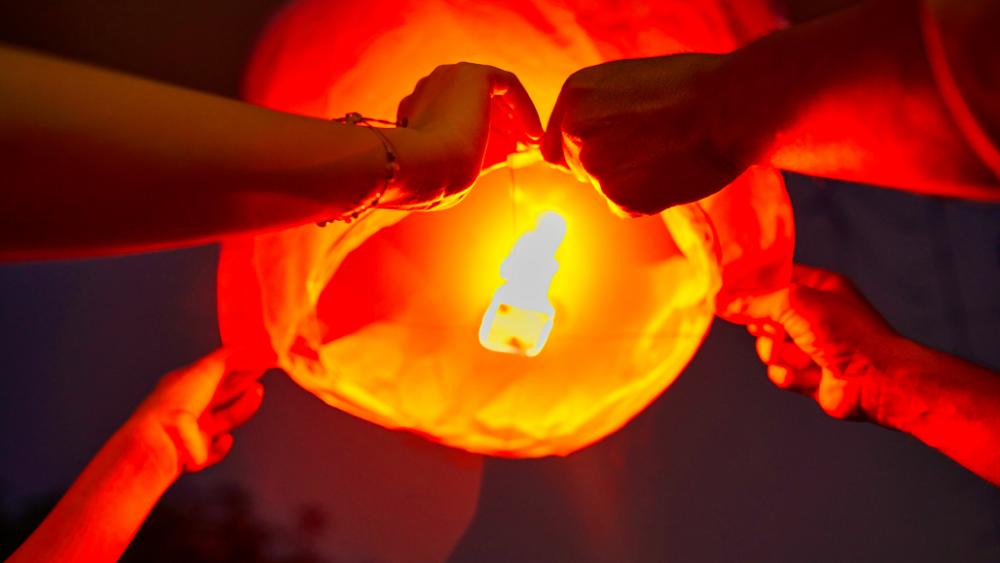
Proper lantern handling means two people per release. One holds the paper body upright and open, the other ignites the fuel cell and waits for the hot air to fill the envelope. You feel the lift before you let go – if it isn’t straining upward, don’t release it. Rushing this step because the synchronized countdown started?
That’s how lanterns tip and torch their own paper. I’ve done it.
The shame burns longer than the wax.
Respecting local rules extends beyond fire. The same spirit of mindful participation that keeps you from launching a lantern into a transformer also shapes how you dress at temples, how you handle a krathong at the riverbank, and how you navigate crowded ceremonies without shoving. Safety is the entry point. Etiquette is the natural extension.
After more than a decade calling Chiang Mai home, I’ve learned that the quickest way to embarrass myself at a Thai festival is to assume my good intentions are enough. I still cringe remembering the year I wandered into a temple wearing shorts, clutching what I thought was a perfectly respectful lantern-only to have a grandmotherly stranger gently drape a sarong over my legs before I could accidentally offend half the congregation. This chapter isn’t about memorizing strict rules; it’s about the simple, heartfelt gestures that show you genuinely care about honouring traditions that have illuminated these nights for centuries.
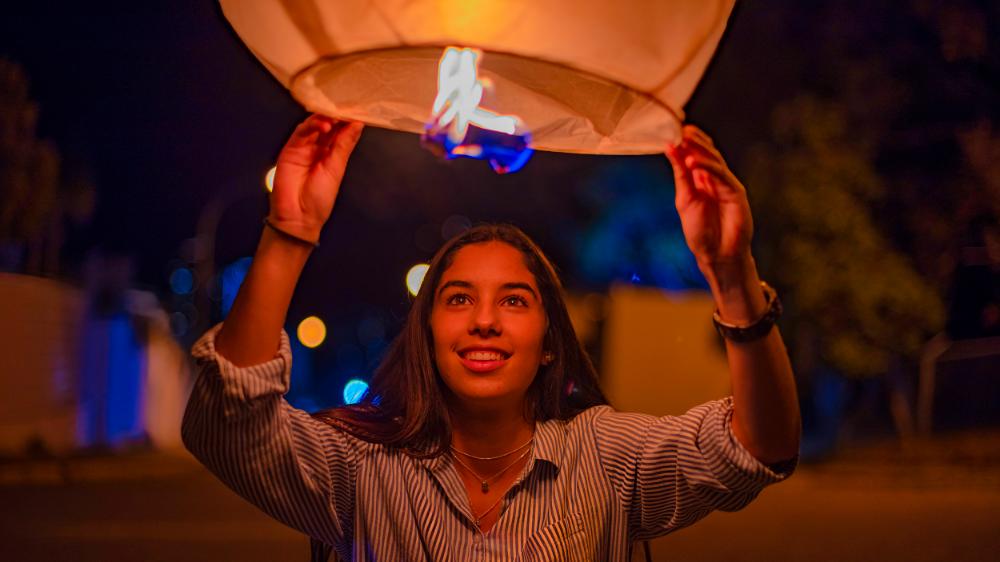
My Temple Attire Tips
Over 60% of first-time visitors to Chiang Mai’s temples during Yi Peng get turned away at the door. I know because I was nearly one of them back in 2014, standing barefoot and embarrassed at Wat Phan Tao while a monk gently pointed at my tank top and shook his head. A vendor across the street sold me a garish elephant-print shawl for 200 baht – it did the job, but I looked like a tourist who’d raided a souvenir stall. Which I was.
Northern Thai temples aren’t just photo backdrops on festival night. They’re active sacred spaces where merit-making ceremonies unfold alongside the lantern spectacle. That distinction matters when you’re dressing for the evening.
Shoulders and knees need to stay covered regardless of the November humidity. For women, a lightweight blouse with sleeves and a long skirt or loose trousers works perfectly.
Men can get away with a collared shirt and pants that reach below the knee. Sarongs and wraps are fine – you’ll see locals in them everywhere – but they must be clean and properly secured. Nothing kills the reverence faster than a wardrobe malfunction during a monk’s chant.
Shoes are where most newcomers stumble. Every temple entrance requires removal, and during festival nights you might visit three or four in one evening. I wear slip-on sandals now, something I can kick off in two seconds without bending down.
The ground gets cold after sunset on stone temple floors, so thin socks are worth bringing. But here’s the detail nobody mentions: don’t pile your shoes at the main entrance steps like everyone else.
Place them slightly to the side, toes pointing outward. It’s a small habit locals follow, and it keeps the walkways clear when crowds surge between ceremonies.
Once inside, volume drops. Temples during Yi Peng hum with quiet activity – families lighting candles, monks preparing Phang Pratheep, the small clay oil lamps that line temple walls and courtyards. These lamps aren’t decorative afterthoughts.
Each flickering wick represents an offering of light to the Buddha, a gesture of respect that predates the sky lanterns most visitors fixate on. When you walk past them, step carefully.
I once nudged a row of them with my bag at Wat Chedi Luang and spent ten minutes helping an elderly woman relight them. She laughed. I did not.
A brief word on monks, because I’ve seen this go sideways: don’t hand anything directly to a monk if you’re a woman. Place offerings on the cloth they’ll extend toward you. It’s not awkward once you expect it.
And if a monk is seated in meditation or prayer, give him a wide berth. No selfies.
No hovering. The merit you earn from respectful distance beats any Instagram post.
My personal take? Skip black entirely. Northern Thai temple attire during festivals leans toward whites, creams, and soft pastels – it’s not a strict rule, but wearing black feels like showing up to a wedding in funeral clothes.
Locals notice. A white linen shirt has served me through seven Yi Peng seasons now.
It breathes, covers my shoulders, and blends rather than broadcasts.
The clay lamps, the bare feet, the quiet – these details don’t distract from the lantern magic. They deepen it.
Beyond Lanterns: My Respectful Interactions
The principle of kreng jai-that delicate awareness of not wanting to impose on others-governs nearly every social interaction in Thailand, and during festival nights it becomes the invisible thread holding chaos together. I learned this fifteen years ago when I accidentally shouldered past an elderly woman lighting incense at Wat Phan Tao. She didn’t scowl.
She simply stepped aside, and I felt the weight of my obliviousness in that small retreat. The festival amplifies the best and worst of tourist behaviour.
Over two million krathongs and 100,000 sky lanterns were released across Thailand in 2025, which means an enormous number of international visitors navigating cultural norms they may never have encountered before. Nuk, a Chiang Mai cultural expert I’ve consulted for years, frames it simply: the festival carries a “heightened aspect of light to honour the Buddha.” Every lantern you release, every krathong you float, exists within that sacred context-not as a photo backdrop.
Polite greetings open doors that English alone cannot unlock. The traditional wai-palms pressed together at chest level with a slight bow-shows deference. Use it when thanking a vendor, greeting a monk, or acknowledging someone who helps you light a lantern.
Don’t overthink the height of your hands. Chest level works for most casual exchanges.
For monks and elders, raise your fingertips to nose level. What matters is the pause. Rushing a wai while already turning away telegraphs performative politeness, and locals spot that instantly.
A rushed wai is worse than none at all.
Photography requires an entirely different muscle: restraint. Ask before photographing anyone, especially monks, elders, and children. A simple gesture toward your camera and a raised eyebrow usually gets the message across.
In temples, watch for signs prohibiting photography near altar areas. I once watched a tourist position himself inches from a chanting monk’s face, flash firing, while the monk’s expression remained perfectly serene.
The monk handled it with grace. I still cringe remembering it. That image-a sacred moment colonised by a lens-represents exactly what respectful participation is meant to avoid.
Boisterous behaviour undermines the contemplative mood of temple grounds and riverside ceremonies. Loud laughter, shouting across crowds, or treating lantern releases like a competitive sport misses the point entirely. Speech volume drops naturally near temple ordination halls and monks-follow that cue.
During the mass release at an organised event in Mae On district, I’ve seen groups fall silent as thousands of lanterns rise, and that collective hush is the festival’s real gift. Chasing the perfect Instagram story kills it.
Sitting in stillness while lanterns drift over the Ping River builds something lasting.
Understanding the rituals deepens everything. When locals float a krathong, they’re paying respect to Phra Mae Khongkha, the water goddess, and often placing a small coin offering inside as an act of tham bun-merit-making. Plucking someone else’s krathong from the water to examine it, which I’ve seen more than once, violates that offering.
The same holds for touching temple decorations. Those phang pratheep clay lamps lining temple walls aren’t prop pieces.
They’re active offerings. Treat every lit object you didn’t place as belonging to someone else’s prayer.
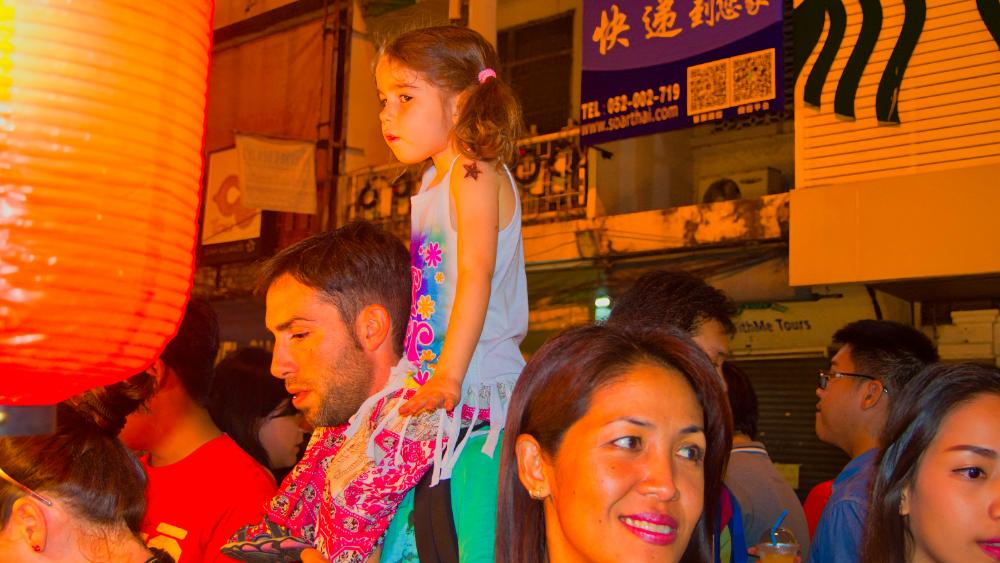
What catches tourists off guard is how celebration and reverence coexist here without contradiction. A family might release a lantern with a whoop of joy, then immediately press palms together in quiet prayer. Follow that emotional rhythm rather than imposing a Western separation between “fun” and “sacred.” The festival doesn’t draw that line.
You shouldn’t either. When a stranger offers you a strand of marigolds or a spot to light your incense, accept with both hands and a nod-the gesture recognises you as a participant, not a spectator.
After a dozen Yi Peng seasons in Chiang Mai, I have learned that the most magical souvenirs are not the ones I nearly set on fire with a rogue incense stick, but the pieces that carry real stories from local hands. Finding an authentic krathong or khom loi is about more than avoiding the flimsy, mass-produced versions flooding the night markets-it is about putting your baht directly into the community that makes this festival so extraordinary. I will show you what genuine craftsmanship looks like and share a few shopping secrets I have gathered far beyond the lantern stalls.
Finding My Authentic Krathong and Khom Loi
In 2017, I wandered Chiang Mai’s Warorot Market three days before the full moon expecting to grab a quick krathong and be done. Instead, I spent forty minutes talking to an elderly woman named Pa Malee who was layering banana leaves into intricate floral patterns using no glue, no staples – just her hands and a few bamboo pins. That conversation changed how I’ve approached the festival ever since.
What you buy matters. Not as a moral abstraction, but as a direct transfer of baht from your wallet into the hands of someone who’s been folding those leaves since they were a child.
The lantern and krathong stalls that mushroom across Chiang Mai every November fall into two camps, and the difference is immediately visible if you know what to look for. Mass-produced krathongs are the ones stacked in towers of twenty, each one identical, the banana leaves unnaturally bright green with a plasticky sheen that shouldn’t exist on plant fiber. The flowers are glued in place with hot wax drips visible.
These run anywhere from 50 to 80 baht and come from factory operations on the city’s outskirts. Nothing wrong with them, technically – they float, they hold a candle, they serve the ritual.
But nobody’s grandmother taught a machine how to fold those leaves.
The handmade alternatives are what I look for now, and identifying them becomes second nature after a single festival season. Real krathong vendors sit on low stools behind small displays of maybe a dozen pieces, each one slightly different. The banana leaves have tiny cracks at the fold points.
The flowers are fresh – you’ll see petals starting to curl by late evening – and they’re secured with thin bamboo splinters rather than synthetic adhesives. Authentic khom loi present similar tells: the rice paper has slight textural irregularities, the bamboo frame is hand-split and tied with natural twine, and the fuel cell is a simple waxed-paper disc rather than the chemical-soaked rings I’ve seen on budget imports.
I’ve watched a vendor in the lane behind Wat Lok Molee light one of his own lanterns just to show me the burn pattern was even. That’s the kind of pride you don’t get from a factory line. He charged 120 baht.
A tourist stall two streets over was selling something that looked similar for 60. His would fly.
The cheaper one, in my experience – and I tested this one year because I’m stubborn – caught a side draft, tilted, and dropped into the crowd before reaching rooftop height. Price isn’t everything, but at fire festivals, bargain hunting has a different risk profile than it does at a souvenir market.
The economic argument for buying from artisans is straightforward. A 2025 survey by Chiang Mai’s municipal tourism office estimated that independent vendors retain roughly 80% of the sale price versus perhaps 20% for imported goods sold through third-party stalls, though exact margins vary wildly by location. When you hand 100 baht to someone who built the item, the money stays in the community: it pays for the rice paper they bought from the local wholesaler, the bamboo they sourced from a grower in Mae Rim, the space they rent at the temple fair. A krathong imported from a factory in Nakhon Pathom sends most of its value back out of the province.
This isn’t charity-chic tourism, either. The quality differential is real. A properly constructed krathong holds its shape in moving water for the full twenty to thirty minutes it takes to drift from Nawarat Bridge down toward the bend by the Riverside restaurant.
Mass-produced versions, especially the ones using foam bases (avoid these entirely – they don’t biodegrade and turn into river trash), can start dissolving before your blessing’s done. I learned this my third year when I watched mine disintegrate approximately four meters offshore while the handmade one beside it sailed on, intact, candles still burning.
Where to actually find these artisans shifts each festival cycle, but certain patterns hold. The temple grounds around Wat Phan Tao and the smaller soi leading to the Ping River become ad-hoc artisan markets starting about three days before the full moon. Morning hours, between 8:00 and 10:00 AM, is when you’ll find older craftswomen setting up with the day’s fresh-cut blooms. Evening vendors are more convenient but stock is picked over. I now plan one dedicated morning walk solely for purchasing – it costs me a lazy breakfast somewhere and saves me the disappointment of settling for whatever’s left at 7:00 PM.
The festival’s scale – over two million krathongs released nationwide in 2025 – means demand has attracted mass production in a big way, and plenty of visitors go home happy with whatever they bought at the first stall they saw. That’s fine. But if you’re going to spend hours planning how to experience the festival, the object you actually hold during its culminating moment deserves ten minutes of thought. A well-made khom loi flies straighter, a handmade krathong floats longer, and both tell a story that doesn’t start in a warehouse.
Beyond the lanterns and floating baskets, there’s an entire ecosystem of local crafts that thrives during festival week – woven textiles, hand-thrown ceramic incense holders, carved wooden spirit house decorations – and these deserve the same discernment.
Avoiding My Fire Fright: Safety First
Decide right now whether you’ll release from an organized Yi Peng Lantern Festival event or a public street corner. The choice determines everything about your safety that night. I made the wrong call once – a cheap lantern from a Tha Phae Gate vendor, lit in a crowd of tourists who’d also had a few beers – and watched it lurch sideways into a power line. The crackle-pop sound still lives in my spine.
Unregulated releases are chaos distilled. Lanterns snag in trees, strike power lines, or drift back down into packed crowds still trailing flame. In 2025, emergency services across Chiang Mai responded to over two dozen fire-related incidents during Chiang Mai Lantern Festival week, most traced to individual street releases rather than controlled events. The physics is simple: a paper balloon carrying an open flame, launched by someone who’s never done it before, in a city of narrow sois and dangling cables.
What could go wrong? Everything, as it turns out.
Organized events operate differently. The Chiang Mai CAD Khomloy Sky Lantern Festival and similar ticketed Yi Peng Lantern Festival gatherings employ dedicated crews known as lantern chasers – staff who track and retrieve fallen lanterns across designated drop zones well outside the city core. These teams claim recovery rates as high as 95%.
That number matters. A lantern left smoldering in dry scrub isn’t abstract eco-guilt; it’s a brush fire waiting to happen.
Northern Thailand’s cool season is also its dry season. One stray fuel cell, one unattended field.
“We map wind patterns hours before the release and adjust launch coordinates accordingly. If conditions aren’t right, we delay. The street vendors don’t do that.”
– Somchai, event safety coordinator, Mae On district
Restricted zones exist for a reason, and the most critical one cuts a wide arc around Chiang Mai International Airport (CNX). Releasing any airborne object – lantern, drone, anything – within that radius during the Yi Peng Lantern Festival is not merely inconsiderate. It’s illegal.
Flights get delayed or diverted, and authorities do pursue violators. I’ve seen police confiscate entire stacks of lanterns from vendors operating too close to the flight path.
The crackdown intensified after 2023, when several near-miss incidents pushed regulators to adopt a zero-tolerance stance during festival peaks.
Beyond aviation law, basic fire sense applies. Keep a bucket of water or sand within arm’s reach if you’re releasing anywhere outside a managed venue. Light the fuel cell only when wind is calm – gusts turn lanterns horizontal before they gain altitude, and a horizontal lantern is a missile.
Never release near thatched roofs, gas stations, or dense tree canopy. These aren’t theoretical warnings.
I have stood in a hotel courtyard and watched a flaming lantern descend onto a corrugated roof two buildings over. The owner doused it with a garden hose before anything caught. Not everyone gets that lucky.
Proper lantern handling means two people per release. One holds the paper body upright and open, the other ignites the fuel cell and waits for the hot air to fill the envelope. You feel the lift before you let go – if it isn’t straining upward, don’t release it. Rushing this step because the synchronized countdown started?
That’s how lanterns tip and torch their own paper. I’ve done it.
The shame burns longer than the wax.
Respecting local rules during the Chiang Mai Lantern Festival extends beyond fire. The same spirit of mindful participation that keeps you from launching a lantern into a transformer also shapes how you dress at temples, how you handle a krathong at the riverbank, and how you navigate crowded ceremonies without shoving. Safety is the entry point. Etiquette is the natural extension.
After more than a decade calling Chiang Mai home, I’ve learned that the quickest way to embarrass myself at a Thai festival is to assume my good intentions are enough. I still cringe remembering the year I wandered into a temple wearing shorts, clutching what I thought was a perfectly respectful lantern-only to have a grandmotherly stranger gently drape a sarong over my legs before I could accidentally offend half the congregation. This chapter isn’t about memorizing strict rules; it’s about the simple, heartfelt gestures that show you genuinely care about honouring traditions that have illuminated these nights for centuries.
My Temple Attire Tips
Over 60% of first-time visitors to Chiang Mai’s temples during the Yi Peng Lantern Festival get turned away at the door. I know because I was nearly one of them back in 2014, standing barefoot and embarrassed at Wat Phan Tao while a monk gently pointed at my tank top and shook his head. A vendor across the street sold me a garish elephant-print shawl for 200 baht – it did the job, but I looked like a tourist who’d raided a souvenir stall. Which I was.
Northern Thai temples aren’t just photo backdrops on Chiang Mai Lantern Festival night. They’re active sacred spaces where merit-making ceremonies unfold alongside the lantern spectacle. That distinction matters when you’re dressing for the evening.
Shoulders and knees need to stay covered regardless of the November humidity. For women, a lightweight blouse with sleeves and a long skirt or loose trousers works perfectly.
Men can get away with a collared shirt and pants that reach below the knee. Sarongs and wraps are fine – you’ll see locals in them everywhere – but they must be clean and properly secured. Nothing kills the reverence faster than a wardrobe malfunction during a monk’s chant.
Shoes are where most newcomers stumble. Every temple entrance requires removal, and during Yi Peng Lantern Festival nights you might visit three or four in one evening. I wear slip-on sandals now, something I can kick off in two seconds without bending down.
The ground gets cold after sunset on stone temple floors, so thin socks are worth bringing. But here’s the detail nobody mentions: don’t pile your shoes at the main entrance steps like everyone else.
Place them slightly to the side, toes pointing outward. It’s a small habit locals follow, and it keeps the walkways clear when crowds surge between ceremonies.
Once inside, volume drops. Temples during the Yi Peng Lantern Festival hum with quiet activity – families lighting candles, monks preparing Phang Pratheep, the small clay oil lamps that line temple walls and courtyards. These lamps aren’t decorative afterthoughts.
Each flickering wick represents an offering of light to the Buddha, a gesture of respect that predates the sky lanterns most visitors fixate on. When you walk past them, step carefully.
I once nudged a row of them with my bag at Wat Chedi Luang and spent ten minutes helping an elderly woman relight them. She laughed. I did not.
A brief word on monks, because I’ve seen this go sideways: don’t hand anything directly to a monk if you’re a woman. Place offerings on the cloth they’ll extend toward you. It’s not awkward once you expect it.
And if a monk is seated in meditation or prayer, give him a wide berth. No selfies.
No hovering. The merit you earn from respectful distance beats any Instagram post.
My personal take? Skip black entirely. Northern Thai temple attire during the Chiang Mai Lantern Festival leans toward whites, creams, and soft pastels – it’s not a strict rule, but wearing black feels like showing up to a wedding in funeral clothes.
Locals notice. A white linen shirt has served me through seven Yi Peng seasons now.
It breathes, covers my shoulders, and blends rather than broadcasts.
The clay lamps, the bare feet, the quiet – these details don’t distract from the lantern magic. They deepen it.
Beyond Lanterns: My Respectful Interactions
The principle of kreng jai-that delicate awareness of not wanting to impose on others-governs nearly every social interaction in Thailand, and during Chiang Mai Lantern Festival nights it becomes the invisible thread holding chaos together. I learned this fifteen years ago when I accidentally shouldered past an elderly woman lighting incense at Wat Phan Tao. She didn’t scowl.
She simply stepped aside, and I felt the weight of my obliviousness in that small retreat. The festival amplifies the best and worst of tourist behaviour.
Over two million krathongs and 100,000 sky lanterns were released across Thailand in 2025, which means an enormous number of international visitors navigating cultural norms they may never have encountered before. Nuk, a Chiang Mai cultural expert I’ve consulted for years, frames it simply: the festival carries a “heightened aspect of light to honour the Buddha.” Every lantern you release, every krathong you float, exists within that sacred context-not as a photo backdrop.
Polite greetings open doors that English alone cannot unlock. The traditional wai-palms pressed together at chest level with a slight bow-shows deference. Use it when thanking a vendor, greeting a monk, or acknowledging someone who helps you light a lantern.
Don’t overthink the height of your hands. Chest level works for most casual exchanges.
For monks and elders, raise your fingertips to nose level. What matters is the pause. Rushing a wai while already turning away telegraphs performative politeness, and locals spot that instantly.
A rushed wai is worse than none at all.
Photography requires an entirely different muscle: restraint. Ask before photographing anyone, especially monks, elders, and children. A simple gesture toward your camera and a raised eyebrow usually gets the message across.
In temples, watch for signs prohibiting photography near altar areas. I once watched a tourist position himself inches from a chanting monk’s face, flash firing, while the monk’s expression remained perfectly serene.
The monk handled it with grace. I still cringe remembering it. That image-a sacred moment colonised by a lens-represents exactly what respectful participation is meant to avoid.
Boisterous behaviour undermines the contemplative mood of temple grounds and riverside ceremonies. Loud laughter, shouting across crowds, or treating lantern releases like a competitive sport misses the point entirely. Speech volume drops naturally near temple ordination halls and monks-follow that cue.
During a mass release at an organised Yi Peng Lantern Festival event in Mae On district, I’ve seen groups fall silent as thousands of lanterns rise, and that collective hush is the festival’s real gift. Chasing the perfect Instagram story kills it.
Sitting in stillness while lanterns drift over the Ping River builds something lasting.
Understanding the rituals deepens everything. During the Loy Krathong Festival, when locals float a krathong, they’re paying respect to Phra Mae Khongkha, the water goddess, and often placing a small coin offering inside as an act of tham bun-merit-making. Plucking someone else’s krathong from the water to examine it, which I’ve seen more than once, violates that offering.
The same holds for touching temple decorations. Those phang pratheep clay lamps lining temple walls aren’t prop pieces.
They’re active offerings. Treat every lit object you didn’t place as belonging to someone else’s prayer.
What catches tourists off guard is how celebration and reverence coexist here without contradiction. A family might release a lantern with a whoop of joy, then immediately press palms together in quiet prayer. Follow that emotional rhythm rather than imposing a Western separation between “fun” and “sacred.” The Chiang Mai Lantern Festival doesn’t draw that line.
You shouldn’t either. When a stranger offers you a strand of marigolds or a spot to light your incense, accept with both hands and a nod-the gesture recognises you as a participant, not a spectator.
After a dozen Yi Peng Lantern Festival seasons in Chiang Mai, I have learned that the most magical souvenirs are not the ones I nearly set on fire with a rogue incense stick, but the pieces that carry real stories from local hands. Finding an authentic krathong or khom loi is about more than avoiding the flimsy, mass-produced versions flooding the night markets-it is about putting your baht directly into the community that makes this festival so extraordinary. I will show you what genuine craftsmanship looks like and share a few shopping secrets I have gathered far beyond the lantern stalls.
Finding My Authentic Krathong and Khom Loi
In 2017, I wandered Chiang Mai’s Warorot Market three days before the full moon expecting to grab a quick krathong and be done. Instead, I spent forty minutes talking to an elderly woman named Pa Malee who was layering banana leaves into intricate floral patterns using no glue, no staples – just her hands and a few bamboo pins. That conversation changed how I’ve approached the Chiang Mai Lantern Festival ever since.
What you buy matters. Not as a moral abstraction, but as a direct transfer of baht from your wallet into the hands of someone who’s been folding those leaves since they were a child.
The lantern and krathong stalls that mushroom across Chiang Mai every November fall into two camps, and the difference is immediately visible if you know what to look for. Mass-produced krathongs are the ones stacked in towers of twenty, each one identical, the banana leaves unnaturally bright green with a plasticky sheen that shouldn’t exist on plant fiber. The flowers are glued in place with hot wax drips visible.
These run anywhere from 50 to 80 baht and come from factory operations on the city’s outskirts. Nothing wrong with them, technically – they float, they hold a candle, they serve the ritual.
But nobody’s grandmother taught a machine how to fold those leaves.
The handmade alternatives are what I look for now, and identifying them becomes second nature after a single festival season. Real krathong vendors sit on low stools behind small displays of maybe a dozen pieces, each one slightly different. The banana leaves have tiny cracks at the fold points.
The flowers are fresh – you’ll see petals starting to curl by late evening – and they’re secured with thin bamboo splinters rather than synthetic adhesives. Authentic khom loi present similar tells: the rice paper has slight textural irregularities, the bamboo frame is hand-split and tied with natural twine, and the fuel cell is a simple waxed-paper disc rather than the chemical-soaked rings I’ve seen on budget imports.
I’ve watched a vendor in the lane behind Wat Lok Molee light one of his own lanterns just to show me the burn pattern was even. That’s the kind of pride you don’t get from a factory line. He charged 120 baht.
A tourist stall two streets over was selling something that looked similar for 60. His would fly.
The cheaper one, in my experience – and I tested this one year because I’m stubborn – caught a side draft, tilted, and dropped into the crowd before reaching rooftop height. Price isn’t everything, but at Yi Peng Lantern Festival events, bargain hunting has a different risk profile than it does at a souvenir market.
The economic argument for buying from artisans is straightforward. A 2025 survey by Chiang Mai’s municipal tourism office estimated that independent vendors retain roughly 80% of the sale price versus perhaps 20% for imported goods sold through third-party stalls, though exact margins vary wildly by location. When you hand 100 baht to someone who built the item, the money stays in the community: it pays for the rice paper they bought from the local wholesaler, the bamboo they sourced from a grower in Mae Rim, the space they rent at the temple fair. A krathong imported from a factory in Nakhon Pathom sends most of its value back out of the province.
This isn’t charity-chic tourism, either. The quality differential is real. A properly constructed Loy Krathong Festival krathong holds its shape in moving water for the full twenty to thirty minutes it takes to drift from Nawarat Bridge down toward the bend by the Riverside restaurant.
Mass-produced versions, especially the ones using foam bases (avoid these entirely – they don’t biodegrade and turn into river trash), can start dissolving before your blessing’s done. I learned this my third year when I watched mine disintegrate approximately four meters offshore while the handmade one beside it sailed on, intact, candles still burning.
Where to actually find these artisans shifts each Chiang Mai Lantern Festival cycle, but certain patterns hold. The temple grounds around Wat Phan Tao and the smaller soi leading to the Ping River become ad-hoc artisan markets starting about three days before the full moon. Morning hours, between 8:00 and 10:00 AM, is when you’ll find older craftswomen setting up with the day’s fresh-cut blooms. Evening vendors are more convenient but stock is picked over. I now plan one dedicated morning walk solely for purchasing – it costs me a lazy breakfast somewhere and saves me the disappointment of settling for whatever’s left at 7:00 PM.
The Loy Krathong Festival‘s scale – over two million krathongs released nationwide in 2025 – means demand has attracted mass production in a big way, and plenty of visitors go home happy with whatever they bought at the first stall they saw. That’s fine. But if you’re going to spend hours planning how to experience the festival, the object you actually hold during its culminating moment deserves ten minutes of thought. A well-made khom loi flies straighter, a handmade krathong floats longer, and both tell a story that doesn’t start in a warehouse.
Beyond the lanterns and floating baskets, there’s an entire ecosystem of local crafts that thrives during Chiang Mai Lantern Festival week – woven textiles, hand-thrown ceramic incense holders, carved wooden spirit house decorations – and these deserve the same discernment.
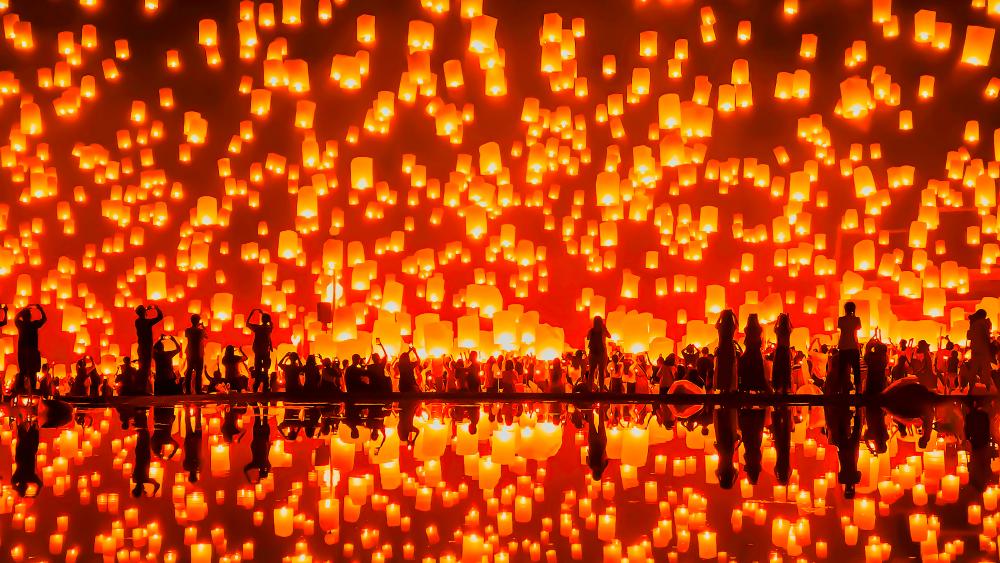
Beyond Lanterns: My Local Shopping Secrets
Chiang Mai’s handicraft sector employs over 20,000 artisans across 150 registered villages. That number comes from the province’s Community Development Office, and it explains why the city hums with creative energy far beyond Chiang Mai Lantern Festival week. Lanterns and krathongs are just the entry point. The real discovery happens when you realize the same hands that fold rice paper also weave silk, carve teak, and hammer silver into pieces you’ll keep for decades. I learned that lesson slowly-my first few years here, I barely looked past the festival stalls.
The Night Bazaar on Chang Klan Road is the obvious starting point. It opens every evening, not just during festival days. You’ll find row after row of goods, but here’s the thing: maybe 30% of what’s sold there is genuinely local.
The rest? Factory-made imports from across the border.
That doesn’t make it worthless-some of those textiles are beautiful-but if your goal is supporting Chiang Mai’s economy, you need to know where to look. The Night Bazaar is convenient. Just don’t mistake it for authentic.
Warorot Market and the lanes radiating from it tell a different story. By day, this is where locals buy fabric by the meter, fresh produce, and household goods. The upstairs floors hold vintage clothing stalls and textile shops run by families who’ve been weaving for generations. I’ve bought hand-spun cotton scarves here for 200 baht that would cost triple at a Bangkok boutique.
The vendors don’t perform for tourists. They’re busy.
That’s your signal. If a market smells like fish paste and someone’s grandmother is napping behind the counter, you’re in the right place.
What should you actually buy? Three categories reward the effort.
Textiles are the heavyweight champion. Northern Thai silk and cotton carry distinct regional patterns-the intricate lai nam lai flowing-water motifs of Mae Chaem, the geometric borders of Lamphun cotton. A handwoven silk scarf takes roughly two weeks to produce on a traditional loom. When you pay 1,200 baht for it, that money stays in a village economy where alternatives are scarce.
Compare that to a 400-baht scarf at a tourist kiosk: the difference isn’t just quality. It’s who eats dinner that night.
Silverwork from Wualai Road deserves your attention. This street, just south of the Old City’s Chiang Mai Gate, was historically the silversmiths’ quarter. Shops here still produce jewelry and decorative bowls using techniques passed through five or six generations. The silver content is typically 92.5% or higher-sterling standard.
You’ll see bowls hammered with scenes from the Ramakien, bracelets etched with Lanna floral designs, tiny spirit-house replicas. Prices run from 800 baht for a simple ring to 8,000 for an ornate bowl.
Bargaining is expected, but don’t grind too hard. These are skilled artisans, not middlemen.
| Craft | Where to Buy | Price Range (THB) | Authenticity Tell |
|---|---|---|---|
| Handwoven silk/cotton | Warorot Market, San Kamphaeng | 200-3,000 | Irregular weave, natural dyes |
| Silver jewelry/bowls | Wualai Road | 800-8,000 | Hallmark stamp, hammer marks |
| Teak wood carvings | Ban Tawai village | 500-15,000 | Single-piece construction, not glued |
| Celadon ceramics | Chiang Mai Celadon (Mae Rim area) | 300-5,000 | Crackled green glaze, weight |
Wood carving is the third pillar. Ban Tawai village, about 25 minutes south of the city, has been a carving center for centuries. Teak relief panels, elephant figurines, and elaborate spirit-house decorations fill the workshops.
A medium-sized teak elephant, carved from a single block by an apprentice, might cost 1,500 baht. A master-carved panel depicting temple scenes can reach 15,000.
The key identifier: genuine pieces are carved from one piece of wood, not assembled from glued segments. Run your fingers along the grain. It should flow uninterrupted.
Skip the elephant pants. I mean it-every traveler buys one pair, wears them twice, and donates them to a hostel in Pai. They’re almost universally imported.
Put that 200 baht toward something that actually connects you to Northern Thailand. A celadon teacup from the kilns in Mae Rim.
A silver bookmark from Wualai. A cotton table runner dyed with indigo grown in Phrae. These objects carry weight.
“When tourists buy directly from my workshop, I earn enough to send my daughter to university. When they buy from a middleman, I earn enough for rice.”
– Somchai, silver artisan, Wualai Road (interviewed November 2024)
Restaurants and guesthouses round out the local-support equation, especially during Chiang Mai Lantern Festival week. Chain hotels in Chiang Mai send significant portions of their revenue to Bangkok or overseas headquarters. A family-run guesthouse in the Old City-places like Baan Hanibah or Gap’s House-keeps money circulating within the moat.
Similarly, eating at a street stall or a shophouse restaurant like Khao Soi Khun Yai puts 250 baht directly into a local cook’s pocket. Do this five times in a week.
It matters more than you think. Book directly with guesthouses, not through aggregator platforms that take 15-20% commissions. Call them.
Send a message. It’s slower, but the owner remembers you.
The Chiang Mai Lantern Festival draws you here. Fair enough. But the bowl you’ll still use in ten years, the scarf that always smells faintly of temple incense, the silver bracelet that catches light on your wrist-those are the souvenirs that outlast a thousand photographs.
Shop where the locals shop. Pay what the craft is worth.
Leave with something Chiang Mai actually made.
Getting There – Lighting Up and Letting Go – That Sums It up
I learned the hard way that chasing a pretty photograph lands you in a tangle of airport cancellations, singed eyebrows, and the quiet shame of offending a culture you genuinely wanted to honour. The image that sticks with me isn’t the million lanterns-it’s Nuk’s phrase, “a heightened aspect of light to honor the Buddha.” That reframed everything. The Yi Peng Lantern Festival and Loy Krathong Festival aren’t one festival; they’re two distinct traditions that happen to collide in a blaze of fire and water across Chiang Mai each November.
The Yi Peng Lantern Festival belongs to the Lanna north, a sky-bound ritual of tham bun-merit-making-where khom loi carry prayers upward. The Loy Krathong Festival is the nationwide water offering to Phra Mae Khongkha, a quieter, drifting apology and thank-you.
When you understand that, the spectacle finally means something.
Over a decade here has taught me the practical shape of a respectful visit to the Chiang Mai Lantern Festival. Here’s what actually matters:
- Separate the two in your head before your feet touch the ground. Yi Peng’s sky lanterns are a Northern Thai, Lanna-specific practice. Loy Krathong’s floating baskets happen everywhere. Chiang Mai gives you both, often simultaneously, and knowing the difference stops you from becoming that tourist shouting “lantern festival!” at a krathong.
- Lock in November 24–25, 2026, or November 13–14, 2027. The lunar calendar dictates these dates. Flights around Chiang Mai International Airport get cancelled or rescheduled nightly during the mass releases-a fact I absorbed while sprinting through a terminal after a 2022 delay. Build a 48-hour buffer around your travel.
- Pay for the organised chaos, or stay grounded. Ticketed events like the CAD Khomloy Sky Lantern Festival employ “lantern chasers” who claim 95% recovery of fallen lanterns. Free-for-all street releases near Tha Phae Gate are romantic until a wire-framed lantern hits a power line. I’ve seen it. I’ve also seen the grass fires.
- Your krathong should dissolve, not decorate a riverbank for six months. Buy from local artisans who use banana leaf, bread, or coconut-no metal pins, no polystyrene, no synthetic dyes. The same rule applies to khom loi: rice paper and bamboo only. If a vendor can’t tell you what’s inside it, walk away.
Right now, go to Google Flights and set a price alert for Chiang Mai for mid-November 2026. Then open your accommodation app and pin the Old City or riverside zone-rooms vanish by September. Book flexible fares.
Pack a shirt that covers your shoulders for temple visits. That’s the whole pre-trip checklist.
Don’t overcomplicate it.
Respect lands heavier than any lantern ever will.
