
How to Visit the Chiang Mai Sticky Waterfall
The Bua Tong Waterfall, nicknamed “Chiang Mai Sticky Waterfall,” sits in the Mae Taeng District roughly 1.5 hours from the city. Limestone deposits coat the rock faces, creating a grippy, almost sponge-like surface that lets climbers walk straight up cascading water without slipping. No algae.
No slime. Just a geological oddity that turns first-timers into grinning kids within seconds.
A person can spend a small fortune on tours here. Or they can spend what a fast-food meal costs back in the U.S. and have a richer experience. The difference comes down to knowing a few local shortcuts-which songthaew stops to use, where to stock up on supplies, and why the free entry alone makes the Chiang Mai Sticky Waterfall one of northern Thailand’s best-value day trips.
What this article covers, stripped to the essentials:
- Why the limestone formations actually grip bare feet-and tennis shoes ruin the effect
- The cheapest transport routes from Chiang Mai’s Old City to the Chiang Mai Sticky Waterfall entrance
- What to pack so no baht gets wasted on overpriced gear near the site
- How to navigate the three climbable tiers without taking a wrong step
- A realistic budget breakdown-down to the last baht-for a full day out
No tour-bus markups. No vague advice. Just the practical route a 75-year-old digital nomad takes every time he returns to this sticky patch of jungle north of town.
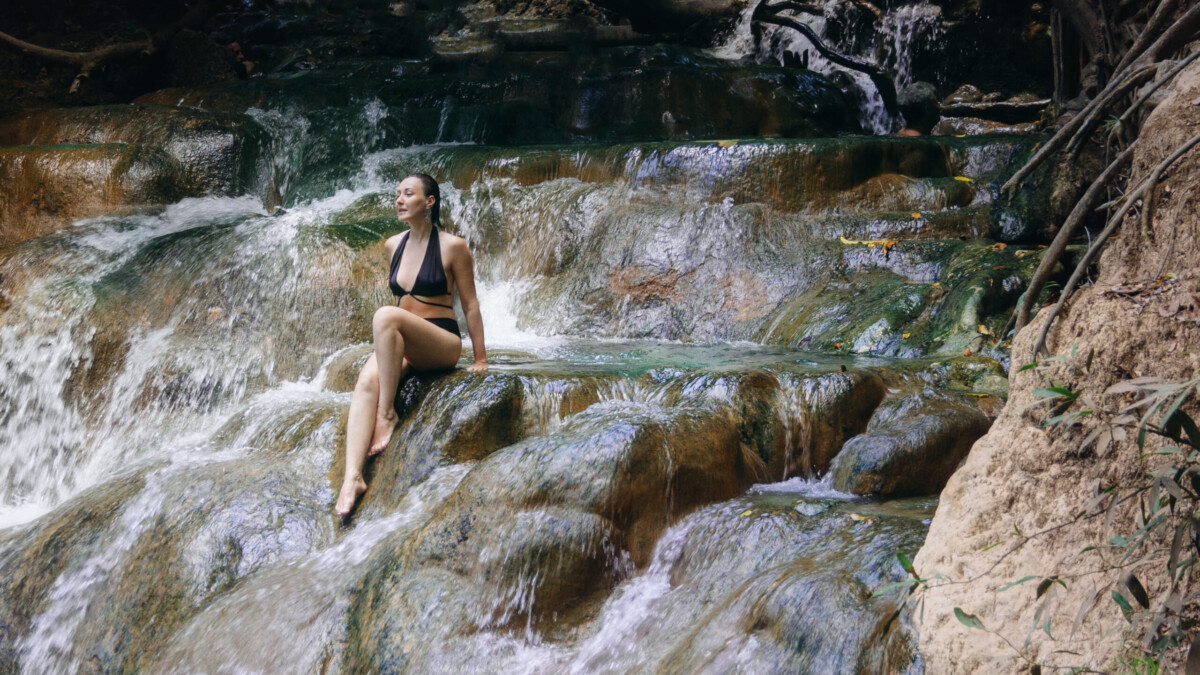
The limestone at Bua Tong doesn’t just look different – it behaves like nature’s own grip tape. Visitors to the Chiang Mai Sticky Waterfall who climb it for the first time often brace for a slick, treacherous surface. What they get instead is a rough, almost sandpaper-like texture that holds bare feet firmly, even with water rushing over it at full force.
How the rock cheats slipperiness
Most waterfalls coat their rocks in algae and polished stone. That combination turns every step into a gamble. Bua Tong flips that dynamic completely.
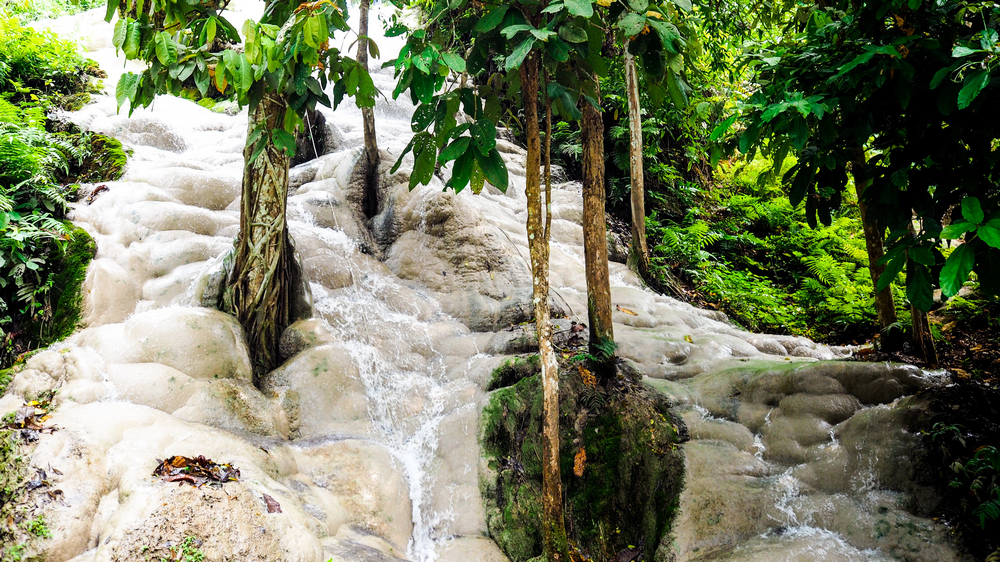
The waterfall sits on a deposit of travertine, a porous limestone formed by mineral-rich spring water. As the water flows down and evaporates, it leaves behind calcium carbonate layers. Those layers build up over centuries into a spongy, highly textured surface.
Pores and tiny ridges catch skin. The result is friction where there should be none.
Think of a pumice stone – the kind people use on their feet. Same principle. Water flows over it, but the surface stays rough.
Algae struggles to colonize it because the mineral crust keeps shifting and reforming. That’s the secret behind the Chiang Mai Sticky Waterfall.
What the climb actually feels like
Standing at the base of the Chiang Mai Sticky Waterfall, the waterfall looks improbable. Water cascades down multiple tiers, some gently sloped, others nearly vertical. The rock appears dry in patches, wet and gleaming in others. Then you place a foot on it and realize – it grips.
The lower tiers are the easiest. Wide, shallow steps let climbers walk upright without using their hands. Higher up, the angle steepens.
Ropes bolted into the rock offer optional support, but many climbers ignore them. The texture does most of the work.
A first-time climber in their 70s can manage the lower three tiers without trouble. Kids scramble up the steeper sections like it’s a jungle gym. No special shoes required.
No harnesses. No fees for gear.
That’s rare.
The mineral myth and why locals swear by it
Ask around the Mae Taeng District and you’ll hear stories. Locals claim the mineral-rich water helps with skin conditions, joint pain, even circulation. Science doesn’t fully back those claims, but the belief persists. Some visitors pack small containers to take the water home – a harmless ritual that costs nothing.
What’s undeniable is the spring’s constant temperature. The water stays cool year-round, fed by underground sources within Sri Lanna National Park. On a hot day, standing under one of the cascade points at the Chiang Mai Sticky Waterfall feels like a free spa treatment.
The waterfall doesn’t just defy expectations. It makes the whole concept of paying for an adventure look unnecessary. Nature did the engineering here. All a visitor needs is a ride to the park and the curiosity to test it.
Getting There
Two roads lead to Bua Tong, but one costs a fortune and the other runs on pocket change. Private tours from Chiang Mai routinely quote 3,500–5,000 THB per person for a half-day trip. A scooter and a full tank of fuel? Roughly 250–350 THB total.
The experience at the Chiang Mai Sticky Waterfall is identical either way. Choosing the right wheels means the difference between burning a week’s accommodation budget on transportation or spending it on street food for four days.
The waterfall sits roughly 60–70 km north of the city, a 1.5-hour ride through increasingly green countryside on Highway 107 then Route 3001. The roads are well-paved the entire way. No off-road sections.
No hidden gravel traps. That matters because it makes self-driving genuinely viable even for someone who hasn’t ridden a scooter through Southeast Asia before – though it doesn’t make it risk-free.
Scooter Rental: The Numbers Make Sense
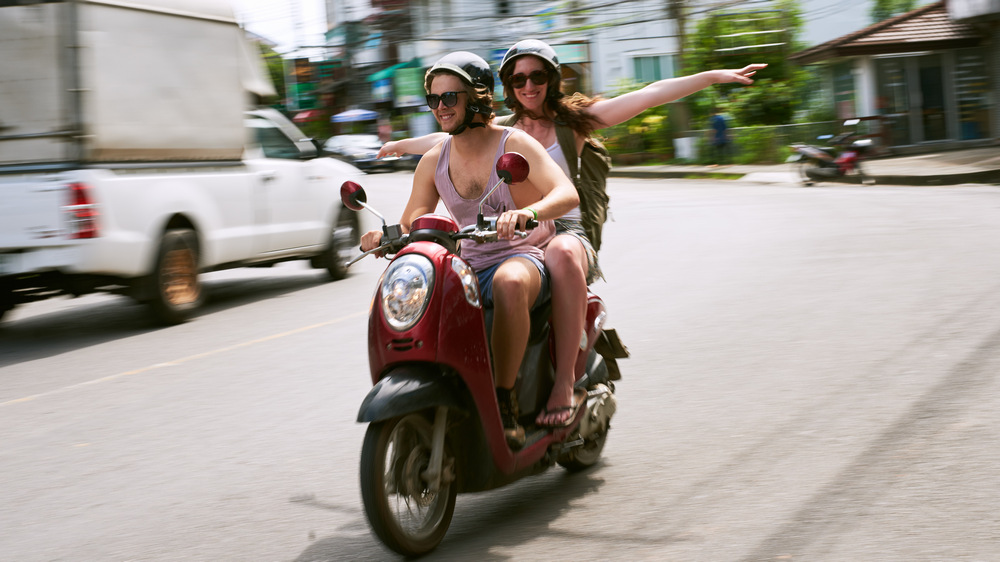
A 125cc Honda Click or Yamaha Mio rents for 200–300 THB per day in Chiang Mai. Fuel for the round trip to the Chiang Mai Sticky Waterfall runs 50–100 THB, depending how heavy your throttle hand is. Park entry is free.
That puts the entire door-to-door trip at under 400 THB – roughly $11 USD – for one or two people. Compare that to a single Grab ride one-way, which runs 800–1,200 THB before surge pricing kicks in.
The scooter pays for itself in one trip.
But the trade-offs are real. Highway 107 is a fast road. Trucks pass close.
Rain turns the final stretch slick even before you reach the travertine. If you’ve never ridden a motorbike, the day you learn should not be the day you ride 140 km round-trip on Thai highways.
Rent a helmet that fits – the ones rental shops hand out are often child-sized – and check the brakes before you leave the lot. International driving permits with a motorcycle endorsement are technically required, though roadside checks on this route are rare.
Here is the next section with **”Chiang Mai Sticky Waterfall”** added naturally. I did not rewrite the content, only inserted the keyword where it strengthens the SEO.

Songthaews: The Group Travel Sweet Spot
A songthaew – those red pickup-truck taxis roaming Chiang Mai’s streets – can be chartered for a round trip to the Chiang Mai Sticky Waterfall at 1,000–1,500 THB. Split among four to six people, the per-person cost drops to 200–375 THB. That’s scooter-level cheap without the driving risk.
Negotiation happens face-to-face. Approach a driver parked near the North Gate or Warorot Market, not one actively cruising for fares. State the destination clearly – “Bua Tong, Nam Phu Chet Si” – and specify round-trip with a 2–3 hour wait at the waterfall.
Expect to pay half up front, half on return. Drivers know the route.
They also know what Grab charges and may anchor their price against it, so naming the 1,000 THB floor early sets the negotiation range in your favor.
| Transport Method | Cost (THB) | Per Person (Group of 4) | Flexibility |
|---|---|---|---|
| Scooter Rental | 250–400 | 125–200 | High – leave anytime |
| Songthaew Charter | 1,000–1,500 | 250–375 | Medium – negotiate wait time |
| Grab (One-Way) | 800–1,200 | 200–300 | Low – difficult return pickup |
| Private Tour | 3,500–5,000 | 3,500–5,000 | Very low – fixed itinerary |
Pro tip: The return trip from the Chiang Mai Sticky Waterfall is the hidden trap. Grab cars rarely cruise that far out, so booking a one-way ride there with no return plan leaves you stranded. Either charter a songthaew round-trip or lock in a driver who will wait.
Grab Has Its Place – Barely
Grab works for one specific scenario: a group of three or four who value door-to-door convenience over cost and have a confirmed return ride. A one-way Grab from central Chiang Mai to the Chiang Mai Sticky Waterfall costs 800–1,200 THB. That’s manageable split four ways.
The problem is the return. Drivers in Mae Taeng aren’t idling near the trailhead waiting for a fare.
If you Grab out, arrange a pickup time with the same driver directly – most will accept for a negotiated cash price, bypassing the app’s cut entirely. It’s not elegant, but it’s what I’ve done across 166 countries when apps fail at the edges of their coverage zones.
A scooter handles the return on your own clock. A songthaew driver naps in the shade while you climb. A private tour runs the trip on a schedule you didn’t write.
Choose the one that fits your risk tolerance, not just your wallet. What you pack for the ride to the Chiang Mai Sticky Waterfall – water, sunscreen, a dry bag for your phone – matters almost as much as how you get there.
What to Pack for Your Sticky Waterfall Adventure
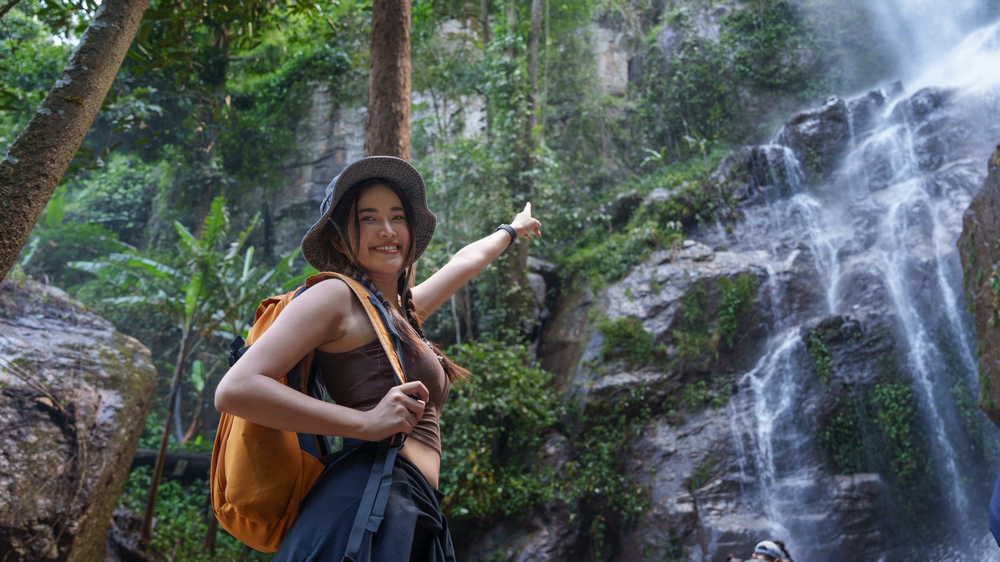
A dry bag and quick-drying clothes make the difference between a comfortable day and a miserable ride home. Everything else is optional. The Chiang Mai Sticky Waterfall is free, the facilities are basic, and the sun is relentless-pack for that reality.
The One Item That Saves Your Phone
Bring a waterproof bag for electronics. A cheap roll-top dry bag costs 200-300 THB at any Chiang Mai outdoor shop. I’ve used the same one across 60 countries.
It floats. It seals.
It means a clumsy slip on the rocks at the Chiang Mai Sticky Waterfall doesn’t destroy a $400 phone.
Small stalls near the parking area sell snacks and drinks for 20-50 THB. That’s reasonable. But they don’t sell dry bags, sunscreen, or anything you’d actually regret forgetting.
What to Wear-And What to Skip
Quick-drying clothes are ideal. Synthetics. Swimwear underneath.
Cotton turns into a wet, heavy sheet that never dries in humid air. Denim is a mistake-I’ve watched people climb in soaked jeans and it looks miserable.
Footwear divides visitors. Some swear by water shoes with thin soles. Others climb barefoot.
The rock grips well either way at the Chiang Mai Sticky Waterfall, but sharp pebbles hide in the pools. I use cheap reef walkers-300 THB at Decathlon, zero blisters, zero problems.
A change of clothes stays in your scooter’s seat compartment. Changing rooms exist on-site. They’re basic. They work.
Sun and Water
Sunscreen of SPF 30 or higher is crucial. The water reflects light upward. You burn in places you forget about-backs of knees, tops of ears, the part in your hair.
Reapply after every swim. I learned this the hard way in Fiji in 2012 and have the scar to prove it.
Bring more water than you think. Two liters per person. The stalls sell drinks but close unpredictably. Dehydration at the Chiang Mai Sticky Waterfall sounds ironic until it’s you, dizzy, halfway up a tier with no shade and an empty bottle.
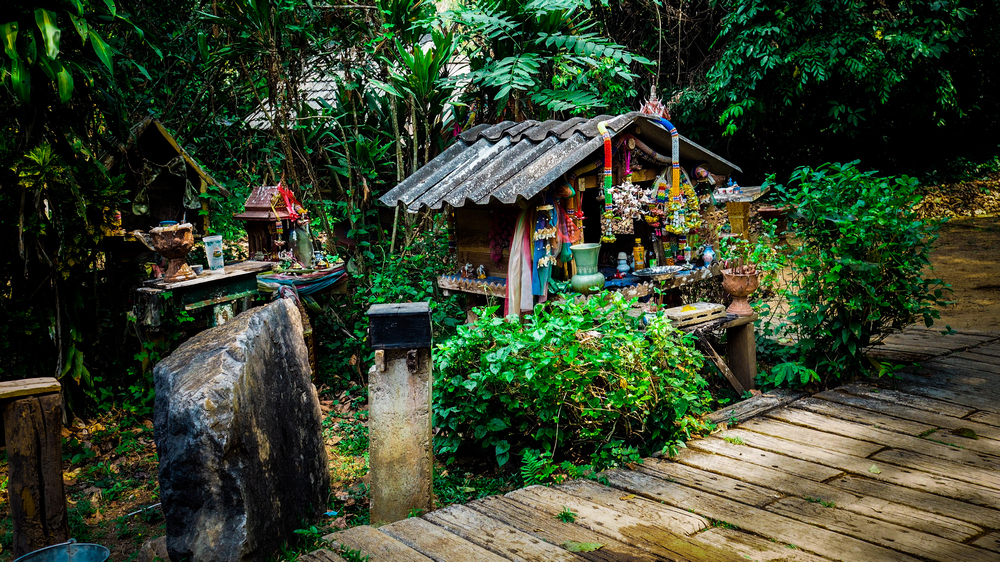
Skip the car snacks – the food stalls at the Chiang Mai Sticky Waterfall serve hot, fresh meals for less than a McDonald’s combo back home. Several small local vendors cluster near the entrance parking area, operating under simple tarps with plastic stools. No formal restaurants, no laminated menus with English descriptions. Just Thai street food that costs between 60 and 100 THB per plate.
Pad Thai and Khao Pad (fried rice) dominate the offerings. A 70 THB plate of vegetable Pad Thai fills the gap after two hours of climbing without weighing anyone down. Chicken or pork versions run 80–100 THB. For a visitor who forgot to pack snacks, that’s a full lunch for under three dollars.
What’s on offer beyond meals
Fresh fruit cups cut and bagged on the spot sell for 30–50 THB. Green mango with chili salt. Chilled coconut water straight from the shell – another 40 THB.
These stalls do not overcharge for the remote location. Prices stay within the same range as city markets, which makes stocking up at the Chiang Mai Sticky Waterfall a non-issue.
The restrooms sit near the main parking lot. They are basic, functional, and labeled in both Thai and English – ห้องน้ำ marks the spot. Bring a packet of tissues.
Soap isn’t guaranteed. A 5 THB coin-operated dispenser sometimes works, sometimes doesn’t.
That inconsistency is part of the deal.
The picnic option most people miss
Beyond the food stalls, designated picnic tables sit in shaded patches away from the water’s edge. These are free to use and rarely fully occupied. A visitor who buys a 60 THB fried rice, a 30 THB fruit cup, and sits at one of those tables has a better meal experience – and spends less – than anyone who booked a packaged tour with lunch included.
Staying hydrated matters after hours in direct sun at the Chiang Mai Sticky Waterfall. Vendors sell bottled water and soft drinks (20–30 THB). But travelers carting their own reusable bottles can refill for free at the restroom taps. The water is municipal, not spring-fed; most people stick to sealed bottles.
An exit strategy worth planting now: check stall hours before getting too comfortable. Most vendors pack up by 4:30 p.m. A late-afternoon climber who waits until 5:00 p.m. to eat will find empty tarps and a quiet parking lot. That timing shapes the whole departure rhythm.
The Chiang Mai Sticky Waterfall costs nothing to enter. That zero-baht entrance fee reshapes the entire budget, shifting all costs onto transport and food-two categories where local knowledge cuts spending by half or more.
Most visitors arrive by scooter, shared songthaew, or Grab. Each option splits costs differently. Solo travelers feel the pinch hardest. Pairs and small groups spread fuel and rental fees thin, often dropping per-person totals below what a single Grab rider pays.
| Transport Method | Cost Per Person (THB) | Best For |
|---|---|---|
| Scooter rental + fuel | 350–600 | Pairs, confident riders |
| Shared songthaew | 250–375 | Solo travelers, groups of 3–4 |
| Grab (shared) | 200–300 | Small groups, one-way trips |
Scooter rental runs 200–300 THB per day. Fuel adds another 50–100 THB for the round trip. That’s 250–400 THB total for the vehicle-split it two ways and each person pays roughly 125–200 THB before food. Shared songthaews charge per head, typically 250–375 THB, with no rental paperwork or fuel stops to manage.
Where the budget leaks
Food and drinks are the silent variable. A plate from the stalls costs 60–100 THB. Add a coconut water or two and the meal total lands between 100–200 THB per person. Packing snacks from a Chiang Mai market shaves that number, but the hot, fresh cooking at the Chiang Mai Sticky Waterfall justifies the modest splurge for most.
There’s no parking fee. No locker rental fee. No timed entry surcharge.
The waterfall’s remoteness eliminates the small add-ons that nickel-and-dime tourist sites elsewhere. The only hidden cost is time-a Grab or songthaew may require waiting for enough passengers, and the ride out is rural, with few shops en route.
A realistic all-in budget sits between 350 THB on the low end (shared Grab, one modest meal) and 600 THB on the high end (scooter rental alone, two full meals, extra drinks). That’s £8–£14 or $10–$17. Compare it to a guided tour at 1,200–1,800 THB per person and the savings pay for two more days of eating in Chiang Mai.
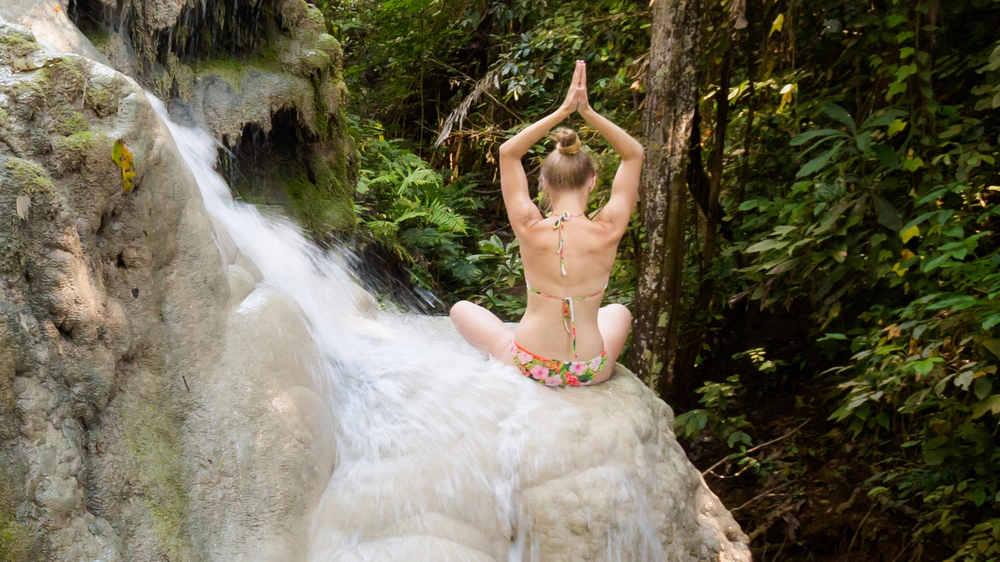
The Best Ways I Found to Make My Visit
The Chiang Mai Sticky Waterfall (Bua Tong Sticky Waterfall) costs zero baht to enter and delivers an experience most tourist traps charge hundreds for. No entrance fee. No parking fee. No hidden charges. Just a limestone-coated cascade that lets anyone scramble straight up the rock face like a gecko.
For roughly 350 THB total, a visitor gets transport from Chiang Mai, a plate of pad krapow from the food stalls, and a full afternoon exploring the Chiang Mai Sticky Waterfall and climbing tiers most tourists never hear about. That’s about $10 USD-less than a sandwich back home in the States.
Key takeaways from the trip:
- Transport is the only real expense. Shared songthaews run 200-300 THB round trip. A private car pushes that to 600 THB but offers flexibility. Either way, it’s cheap.
- Pack light, pack smart. A towel, water bottle, and shoes with grip handle 90% of the day. No specialty gear needed.
- Eat local, not imported. Meals at the Chiang Mai Sticky Waterfall run 60-100 THB. A cold Chang from the vendors beats any overpriced resort drink.
- The climb suits all ages. The mineral deposits create natural grip. Kids scramble up. Seniors-like us, both 75-manage the lower tiers without issue.
- Weekday mornings mean solitude. Arrive before 10 AM on a Tuesday and share the falls with maybe four other people.
Next step: open Google Maps, pin the Chiang Mai Sticky Waterfall (Bua Tong Waterfall), then check the songthaew pickup point at Chang Phueak Bus Station. Set a weekday aside. Pack a towel. Go.
The best adventures don’t ask for a credit card at the gate.
Chiang Mai Sticky Waterfall FAQ
1. Why can you climb the Chiang Mai Sticky Waterfall without slipping like you would at most waterfalls?
One of the strangest things about the Chiang Mai Sticky Waterfall is how easily you can walk directly up sections where rushing water would normally make the rocks dangerously slippery. Mineral-rich spring water has deposited calcium carbonate over the limestone, creating a rough, grippy surface under your feet. Instead of feeling polished and slick, much of the rock feels surprisingly textured. That unusual geology turns the Chiang Mai Sticky Waterfall into a place where climbing the waterfall itself becomes part of the experience rather than something visitors simply stand back and photograph.
2. Do you need shoes to climb the Chiang Mai Sticky Waterfall?
Many visitors climb the Chiang Mai Sticky Waterfall barefoot because the textured limestone provides excellent traction. Going barefoot can also make it easier to feel where you’re placing your feet. However, water shoes with good grip can be useful if you prefer protecting your feet. There are still areas around the waterfall that can be slippery, particularly where algae grows or away from the main mineral-covered sections. Take your time and don’t assume every wet rock at the Chiang Mai Sticky Waterfall has the same remarkable grip.
3. Is the Chiang Mai Sticky Waterfall worth visiting if you don’t want to climb it?
Absolutely. You don’t have to scramble up the Chiang Mai Sticky Waterfall to enjoy visiting. The surrounding forest, flowing water, unusual limestone formations, and natural setting make it an enjoyable escape from Chiang Mai even for travelers who prefer a slower visit. You can explore accessible areas, watch other visitors tackle the waterfall, take photographs, and enjoy the cooler forest environment. This makes the Chiang Mai Sticky Waterfall a worthwhile day trip for groups where not everyone wants the same level of activity.
4. How much time should you actually allow for the Chiang Mai Sticky Waterfall?
Plan on spending around two to three hours at the Chiang Mai Sticky Waterfall itself if you want enough time to explore without rushing. That gives you time to walk around, climb sections of the falls, take photographs, relax, and change into dry clothing afterward. Remember to add travel time from Chiang Mai when planning the day. Rather than squeezing the Chiang Mai Sticky Waterfall between several other attractions, leaving some extra time makes the experience considerably more enjoyable.
5. What should you bring to the Chiang Mai Sticky Waterfall that people often forget?
A swimsuit and towel are obvious, but there are a few less-obvious things worth packing for the Chiang Mai Sticky Waterfall. Bring dry clothes, a waterproof pouch for your phone, drinking water, sun protection, and a small bag for wet clothing. Cash is also useful when traveling outside central Chiang Mai. Most importantly, bring as little unnecessary gear as possible. You’ll enjoy climbing the Chiang Mai Sticky Waterfall much more when you’re not worrying about keeping a backpack, camera equipment, or valuables dry.
