
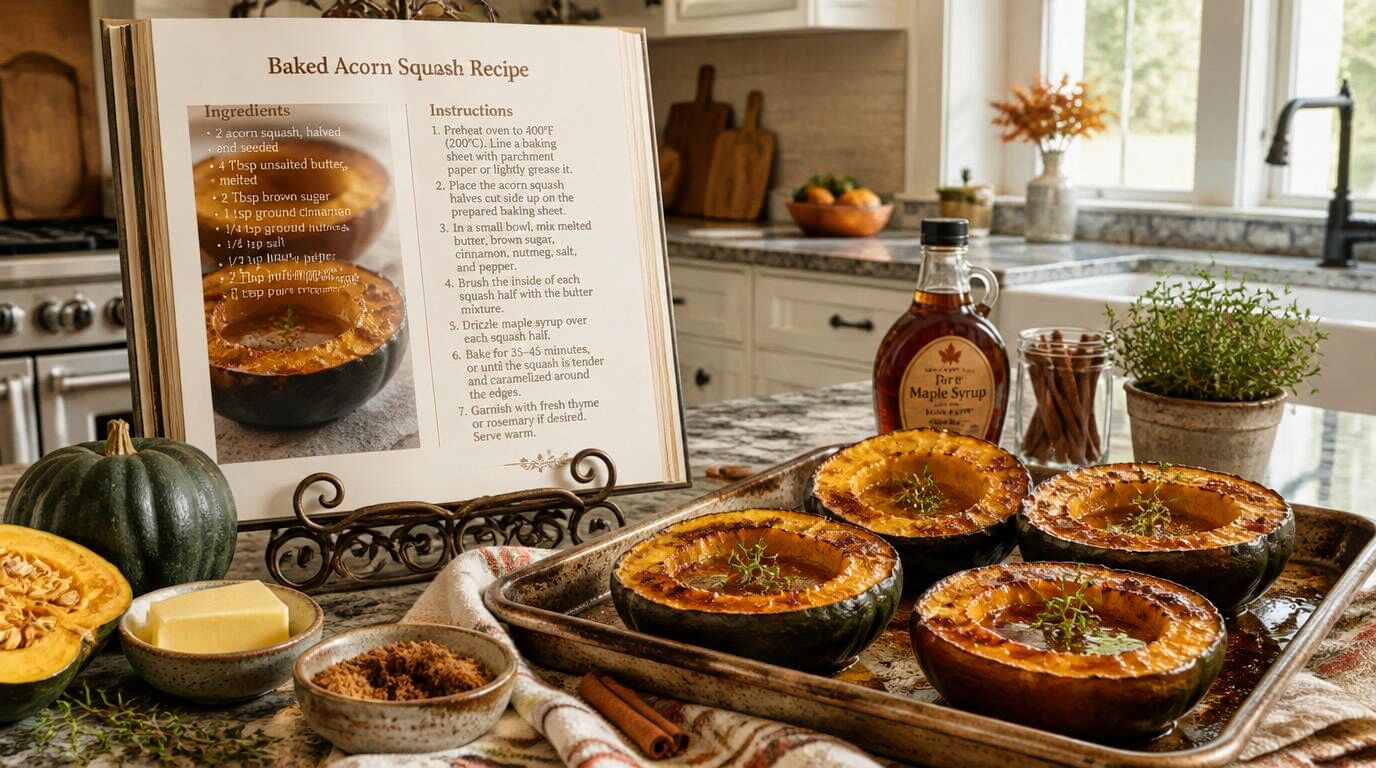
Discover a simple, reliable baked acorn squash recipe that transforms humble winter squash into a tender, slightly sweet side that complements weeknight dinners and holiday spreads. With this baked acorn squash recipe, you’ll season and oven-roast acorn squash until it turns perfectly soft, caramelized, and ready to serve with minimal fuss.
Learn how to choose and prep acorn squash, pick up practical tips from professional kitchens, and explore make-ahead ideas that save time without sacrificing flavor. This baked acorn squash recipe offers creative variations and quick comparisons to other squash methods so you can select the approach that fits your meal and schedule.
Background and History
Indigenous peoples of the Americas cultivated various types of winter squash for centuries, and the baked acorn squash recipe has roots in their traditions. Winter squash stored well through cold months, making it a reliable staple in their diets.
Acorn squash stands out within the broader winter squash family for its sweet, nutty flesh and relatively small size. European colonists adopted Indigenous techniques and integrated squash into colonial agriculture, further spreading the popularity of the baked acorn squash recipe.
Traditional preparations emphasized simple seasonings and preservation. Baking and stuffing methods developed because the thick skin protected the flesh during storage and cooking. Regional recipes evolved; some highlight sweet glazes, while others use savory herbs or cheeses.
Modern cooks often roast acorn squash whole or halved, balancing texture and caramelization. Many contemporary baked acorn squash recipes combine butter, brown sugar, cinnamon, or maple for a classic flavor, while chefs experiment with spices, grains, and proteins.
For classic methods and variations in contemporary cooking, check out Southern Living’s baked acorn squash.
Key Insights
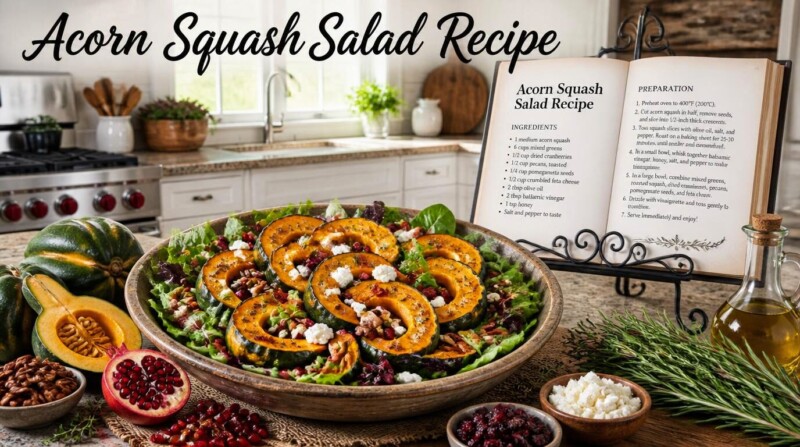
Simple techniques make every baked acorn squash recipe tender and caramelized. A high oven temperature (around 400–425°F) and roasting cut-side up encourage even browning and a sweet, glazed surface. Scoring or adding a small cavity of butter, brown sugar, or maple syrup helps flavors penetrate the flesh and speeds caramelization.
Halves usually need 30–45 minutes depending on size and oven. Test doneness with a fork; the flesh should be soft and easily scraped away from the skin. For a sweeter baked acorn squash recipe, use brown sugar, maple, or cinnamon. For savory variations, use olive oil, thyme, or grated Parmesan to complement the nutty flavor.
Prepare the squash efficiently by halving, seeding, and trimming any uneven edges so it sits flat on the pan. Roasting on a rimmed baking sheet catches any glaze and makes cleanup easier. Try both cut-side-up and cut-side-down methods for different textures: cut-side-up yields a glazed surface, while cut-side-down steams the flesh for extra creaminess. For more technique ideas and recipe variations, see a classic baked acorn squash guide.
Professional Cooking Tips
Use a sharp chef’s knife to trim and halve acorn squash for clean cuts and safer handling. Scoop seeds quickly with a spoon and pat the cavities dry so seasonings adhere. Preheat the oven to 375–400°F to promote even roasting and gentle caramelization. Place squash cut-side up to retain more moisture or roast cut-side down for browner edges.
Season simply: salt, pepper, and a touch of butter or oil bring out the squash’s natural sweetness. For a sweeter baked acorn squash recipe, add brown sugar or maple syrup; for savory dishes, rub the flesh with olive oil and chopped sage. Check doneness by piercing the thickest part with a fork; it should slide in easily. Rotate the pan halfway through baking to ensure uniform color and texture.
Use a rimmed baking sheet or shallow roasting pan to catch caramelized juices. For faster cooking, cut the squash into wedges and reduce bake time by 15–20 minutes. Save the seeds by roasting them with oil and salt for a crunchy snack. Probe the center temperature—about 205°F signals fully tender flesh suitable for mashing. Let roasted squash rest 5 minutes before serving to let juices redistribute. Rewarm gently at 325°F to preserve texture and avoid drying the flesh.
Advance Preparation Guidance
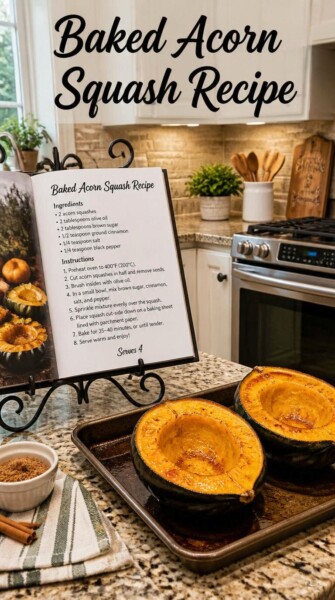
Prep the squash the day before for busy evenings. Halve and scoop the seeds, then pat the cavities dry to reduce excess moisture during baking. Drizzle a little oil or place a pat of butter in each half before covering tightly with plastic wrap to keep the flesh from drying and help the seasoning adhere.
For make-ahead roasting, partially cook the squash until just tender, about 15–20 minutes at 375°F, then cool on a rack. Store the halves in an airtight container in the fridge for up to 3 days. Reheat covered at 350°F until warmed through, or finish under the broiler briefly to caramelize the edges. If fully cooking ahead, add brown sugar or maple syrup just before reheating to preserve texture.
Freeze mashed or cubed baked squash in portioned bags for up to 3 months. Label each bag with the date and use within the recommended time to maintain best flavor. For detailed roasting times and tips, consult this practical guide to baking acorn squash.
Creative Alternatives
Swap the classic brown sugar and butter for a savory-herb profile when you want a less sweet side. Brush the squash with olive oil, sprinkle rosemary and thyme, and finish with grated Parmesan for a crisp, savory edge. For a grain-forward main, stuff halved squash with a mix of quinoa, toasted pecans, dried cranberries, and sautéed onions. The textures contrast nicely; the squash stays tender while the filling provides chew and crunch.
Make a plant-based baked acorn squash recipe by using coconut oil and a maple-miso glaze. This balances sweetness and umami without dairy, pairing well with a crisp green salad or roasted Brussels sprouts. Add chipotle powder and maple syrup for a spicy-sweet twist, then roast until caramelized and squeeze lime over the top to brighten the flavors.
Quick ideas for the baked acorn squash recipe include roasting halves with garlic and sage for 35–45 minutes, cubing and tossing with chili flakes and smoked paprika to roast on a sheet pan, or filling with a warm lentil salad dressed in mustard vinaigrette. Experiment with textures by mashing the roasted flesh into a puree, adding a splash of cream or a dollop of Greek yogurt for silkiness, and using it as a spread or side. For more baked acorn squash recipe inspiration, consult curated recipe collections like this list of classic baked acorn squash recipes.
Related Culinary Ideas
Turn baked acorn squash into a centerpiece by stuffing it with savory fillings. Fill halved squash with quinoa, sautéed onions, cranberries, and toasted nuts for contrasting textures and balanced flavors. For a heartier baked acorn squash recipe, swap quinoa for sausage or lentils and fold in herbs and Parmesan for a protein-rich stuffed acorn squash that works well for weeknight dinners.
Experiment with sweeter preparations by brushing halves with butter, brown sugar, and cinnamon to caramelize the flesh. Add a dollop of Greek yogurt or mascarpone for creaminess and brightness. Try roasting acorn squash cubes and tossing them into salads, pureeing baked squash into soups or a velvety pasta sauce, or using mashed acorn squash as a filling for savory tarts or hand pies.
Pair baked acorn squash with roasted root vegetables or a crisp green salad to balance richness. For technique tips and recipe inspiration, see a collection of baked acorn squash recipes that cover both savory and sweet preparations
Comparative Analysis
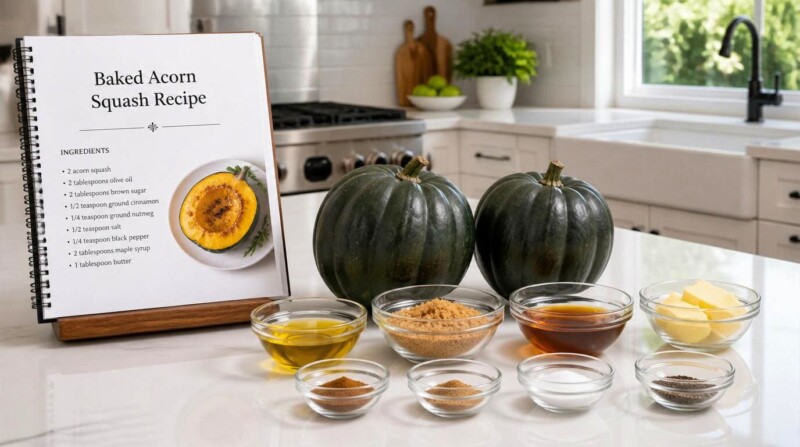
Compare roast acorn squash preparations by focusing on texture, sweetness, and cooking ease. Acorn squash develops a tender, slightly fibrous flesh and a pleasant nutty sweetness when roasted. The baked acorn squash recipe holds glaze well and caramelizes at the cut surface.
Butternut squash yields a smoother, creamier flesh and a more consistently sweet profile, which suits purees and soups more than simple roasted halves. Acorn typically roasts well at 400–425°F for 35–50 minutes depending on size; chopping or scoring speeds cooking and improves glaze penetration. Butternut often needs slightly longer if left whole but browns evenly when cut into cubes.
Acorn squash pairs well with butter, brown sugar, or maple for a classic baked acorn squash recipe, and cinnamon or nutmeg adds warmth. For butternut, use sage, thyme, or savory cheeses to complement its sweet creaminess. Both squashes are rich in fiber and vitamins; acorn’s texture makes it a compelling plated side, while butternut’s smoothness makes it better for blended preparations. For step-by-step roast guidance and glazing tips, reference a classic baked acorn squash recipe from AllRecipes to adapt timings and seasonings to your oven and tastes.
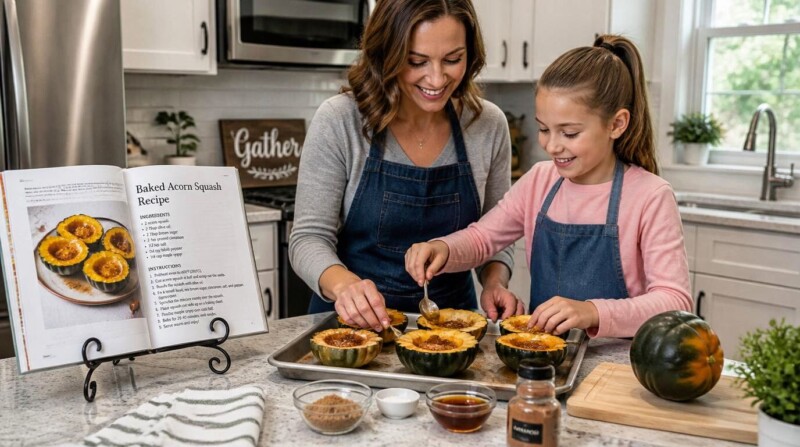
Baked Acorn Squash Recipe Cooking Tips
• Baked Acorn Squash is a simple, flavorful side dish that highlights the squash’s naturally sweet, nutty flavor and tender texture.
• Choose acorn squash that feels heavy for its size and has firm, dark green skin.
• Avoid squash with soft spots, deep cracks, or signs of decay.
• Wash the squash thoroughly before cutting.
• Use a sturdy knife and carefully cut the squash in half from stem to tip.
• Remove the seeds and fibrous center completely before baking.
• Lightly score the flesh with a knife to help seasonings penetrate and promote even cooking.
• Brush the cut surfaces with butter, olive oil, or melted coconut oil for added flavor and moisture.
• Brown sugar, maple syrup, honey, cinnamon, and nutmeg are popular sweet seasonings.
• For a savory version, use garlic, thyme, rosemary, sage, salt, and black pepper.
• Place the squash cut-side up or down depending on the desired texture; cut-side down often produces a softer result.
• Add a small amount of water to the baking dish if additional moisture is desired.
• Roast until the flesh is easily pierced with a fork and caramelized around the edges.
• Avoid overbaking, which can cause the squash to become mushy.
• Toasted nuts, dried fruit, or breadcrumbs can be added during the final stages of baking.
• Stuffed versions may include rice, sausage, vegetables, or grains.
• The flavor should balance natural sweetness, gentle caramelization, and the chosen seasonings.
• Properly baked acorn squash should be tender, moist, and richly flavored.
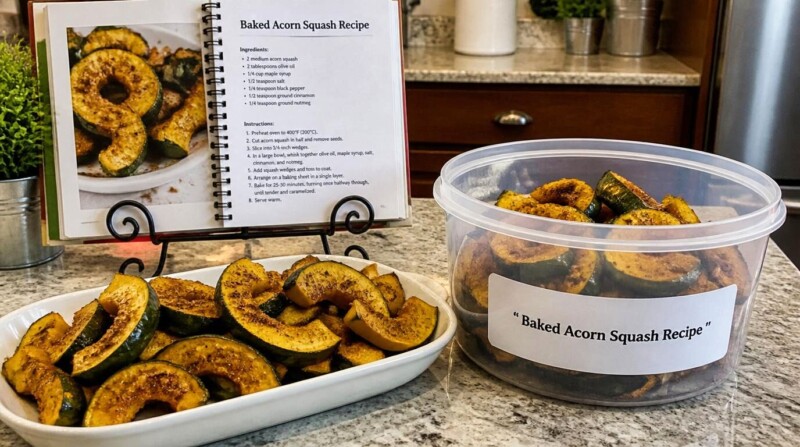
Baked Acorn Squash Recipe Storage Tips
• Allow the baked squash to cool before transferring it into storage containers.
• Store refrigerated in airtight containers to preserve freshness and texture.
• Refrigeration often allows the flavors to deepen and blend further.
• Keep sweet toppings or garnishes separate when possible.
• Reheat gently in the oven, air fryer, or microwave until thoroughly warmed.
• The oven is often best for maintaining texture and caramelization.
• Add a small amount of butter or oil during reheating if the squash seems dry.
• Store stuffed squash separately from delicate toppings if practical.
• Individual portions can be stored for convenient meals.
• Freeze cooked squash in airtight freezer-safe containers if desired.
• Wrap tightly to help prevent freezer burn and preserve quality.
• Defrost frozen squash gradually in the refrigerator before reheating.
• The texture may become slightly softer after freezing and thawing.
• Puree leftover squash for soups, casseroles, or baked goods if desired.
• Use clean utensils when handling leftovers to help maintain freshness.
• Keep away from strongly scented foods because cooked squash can absorb surrounding odors.
• Check for signs of spoilage such as mold, sour odors, unusual discoloration, or texture deterioration before consuming leftovers.
• For best quality, enjoy refrigerated and frozen portions while the squash remains tender, sweet, and flavorful.
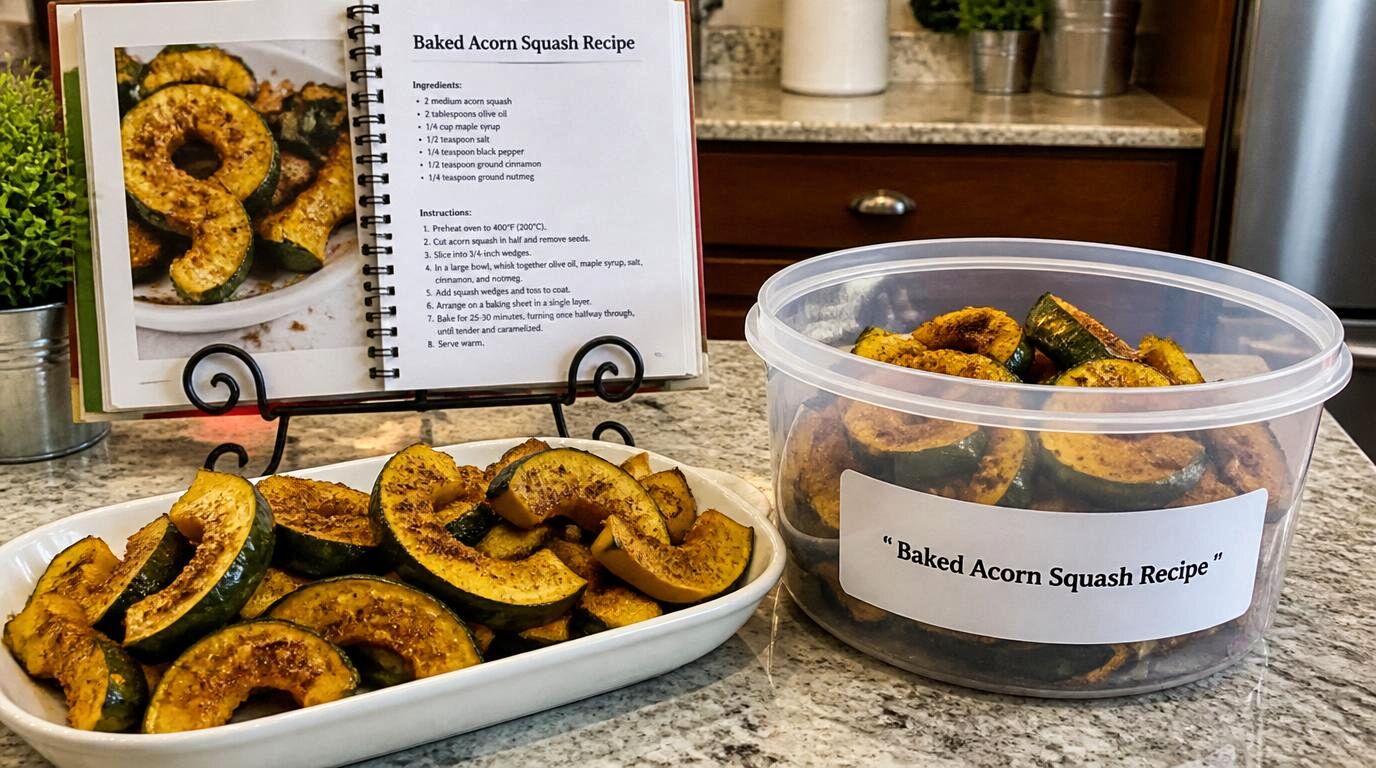
Baked Acorn Squash Recipe
Ingredients
- 2 medium acorn squashes
- 4 tablespoons unsalted butter
- 1/4 cup brown sugar
- 2 tablespoons maple syrup
- 1/2 teaspoon ground cinnamon
- 1/4 teaspoon salt
- 1/4 teaspoon ground black pepper
Method
- Preheat your oven to 400°F (200°C).
- Carefully cut each acorn squash in half lengthwise.
- Using a spoon, remove the seeds and stringy fibers from the center of each half.
- Place the squash halves cut-side up in a baking dish large enough to hold them in a single layer.
- In a small saucepan over low heat, melt the butter.
- Once melted, stir in the brown sugar, maple syrup, cinnamon, salt, and black pepper.
- Continue stirring until the sugar begins to dissolve and the mixture is smooth and well combined.
- Remove from the heat.
- Pour the maple butter mixture evenly over the cut surfaces of the squash halves.
- Use a spoon or pastry brush to spread the glaze over the exposed flesh.
- Make sure some of the mixture settles into the cavities for maximum flavor.
- Cover the baking dish tightly with aluminum foil.
- Place the dish in the preheated oven and bake for 50 minutes.
- After 50 minutes, carefully remove the foil.
- Return the squash to the oven and continue baking for an additional 10 minutes, or until the squash is fork-tender and lightly caramelized on top.
- The glaze should be bubbling and slightly thickened.
- Remove the squash from the oven and allow it to cool for a few minutes.
- Spoon any remaining maple-butter glaze from the baking dish over the squash before serving.
- Serve warm as a side dish for roasted meats, poultry, holiday dinners, or fall-inspired meals.
- This Brown Sugar Maple Roasted Acorn Squash is sweet, buttery, and perfectly seasoned with cinnamon. As it bakes, the squash becomes tender while the maple-brown sugar glaze caramelizes into a rich sauce that enhances the squash's natural sweetness.
- Simple yet elegant, it's a comforting seasonal dish that's perfect for family dinners and holiday gatherings alike.
Nutrition
Private Notes
Tried this recipe?
Let us know how it was!Baked Acorn Squash Recipe Frequently Asked Questions
Find practical answers about cutting, roasting time, seasoning, and healthier swaps so you can master any baked acorn squash recipe with confidence. Expect precise steps, timing for 400°F, and filling ideas geared to weeknight or holiday use.
How do you cut and prepare an acorn squash safely for baking?
Start by rinsing the squash and blotting it dry. Place it on a stable cutting board and trim a thin slice from the bottom so it sits flat. Use a large chef’s knife to halve the squash lengthwise from stem to tip, keeping your fingers tucked and using slow, controlled pressure. Scoop seeds and stringy bits with a spoon; roasted seeds make a snack if you wash and dry them first.
If the squash is very hard, microwave it for 30–60 seconds to soften the skin slightly before cutting. You can bake with the skin on — acorn squash skin is edible when tender — but scrape the flesh for certain baked acorn squash recipe variations that need a smoother texture.
Should acorn squash be baked cut-side up or cut-side down?
Bake acorn squash cut-side down on a rimmed baking sheet to concentrate steam and speed tenderness. This method softens the flesh more quickly and prevents excessive browning. For more caramelization, flip the halves cut-side up partway through baking and add butter, sugar, or maple syrup. For a roasted edge, roast cut-side up from the start and baste once or twice during baking.
How long does acorn squash take to bake at 400°F?
At 400°F, bake halves about 3–4 inches across for 35–45 minutes until a fork slides easily into the flesh. Whole squash takes 60–75 minutes; pierce to test doneness. Tent with foil if the tops brown too fast. This timing ensures your baked acorn squash recipe comes out perfectly every time.
For more tips and variations on the baked acorn squash recipe, visit Simply Recipes for additional inspiration.
What are the best seasonings for a savory baked acorn squash?
I favor olive oil, kosher salt, and freshly ground black pepper as a base for a delicious baked acorn squash recipe. I add garlic powder, smoked paprika, or ground cumin for warmth and depth. Fresh herbs like thyme, sage, or rosemary pair well, and a sprinkle of grated Parmesan or crumbled feta adds savory umami to any baked acorn squash recipe. For a spicy kick, I use red pepper flakes or a drizzle of chili oil just before serving to enhance the baked acorn squash recipe.
How can you make baked acorn squash healthier without losing flavor?
I reduce butter and swap part of it for olive oil or a light brushing of broth to cut saturated fat in my baked acorn squash recipe. I replace brown sugar with a modest drizzle of pure maple syrup or boost flavor with herbs, citrus zest, and spices. Using Greek yogurt or a sprinkle of toasted nuts provides creaminess and texture instead of heavy cream in your baked acorn squash recipe, while roasting seeds for garnish adds fiber and healthy fats without many calories.
For more ideas on how to perfect your baked acorn squash recipe, check out this helpful guide. Experimenting with seasonings and healthy swaps will help you create a baked acorn squash recipe that suits your taste and dietary needs. With the right ingredients, your baked acorn squash recipe can be both nutritious and full of flavor. Whether you choose savory, spicy, or herbaceous options, a baked acorn squash recipe offers versatility for any meal. Try different combinations to find your favorite baked acorn squash recipe and enjoy the wholesome taste it brings to your table.
What are some popular fillings for stuffed acorn squash halves?
I use a baked acorn squash recipe with grain-based mixtures like quinoa or farro combined with sautéed mushrooms, onion, and chopped kale for a hearty vegetarian option. Sausage, apple, and herb stuffing create a savory-sweet holiday-style filling in a baked acorn squash recipe. These combinations let you customize your baked acorn squash recipe for any occasion.
Another baked acorn squash recipe involves wild rice, cranberries, toasted pecans, and chopped herbs for texture and contrast. For a quick weeknight baked acorn squash recipe, I spoon in warmed canned chickpeas tossed with lemon, garlic, and parsley. You can find more creative ideas for a baked acorn squash recipe at Simply Recipes. Try different baked acorn squash recipe combinations to find your favorite version. The baked acorn squash recipe is versatile, allowing you to experiment with a variety of ingredients. A baked acorn squash recipe makes a nutritious and satisfying meal for any night of the week.
