
I love how a simple roasted acorn squash recipe can transform a weeknight dinner or holiday table with minimal effort. Roast halves or wedges until caramelized and tender, then season with butter, maple, herbs, or spices for a versatile side that balances sweet and savory. My approach keeps the method straightforward so you get reliably delicious results with little fuss.
I’ll walk you through why acorn squash lends itself so well to roasting, share essential tips that save time and boost flavor, and offer make-ahead and creative variations to suit any menu. You’ll learn practical technique and tasteful options that make this roasted acorn squash recipe one you’ll return to again and again. This roasted acorn squash recipe brings versatility and comfort to your kitchen.
Origins And Evolution
Indigenous peoples of North and Central America cultivated a variety of winter squash, including acorn squash, for centuries. Their knowledge of planting, storing, and pairing these squashes formed the culinary foundation that reached European settlers. Acorn squash, with its hard shell and long storage life, became practical for winter months and helped it spread across regional diets.
Cooking techniques evolved from simple roasting over embers to oven roasting, glazing, and stuffing, reflecting broader changes in kitchens and ingredient availability. Modern home cooks amplify its mild flesh with sweet, savory, or spicy accents. Acorn squash is milder and less dense than some winter squashes, so I treat it differently in recipes, making the roasted acorn squash recipe adaptable with butter, maple, cheese, nuts, or herbs.
I often consult historical and recipe sources to understand variations and traditions. For a concise history and practical recipes, I reference a guide to roasting and serving acorn squash from contemporary recipe collections like this roasted acorn squash overview.
Essential I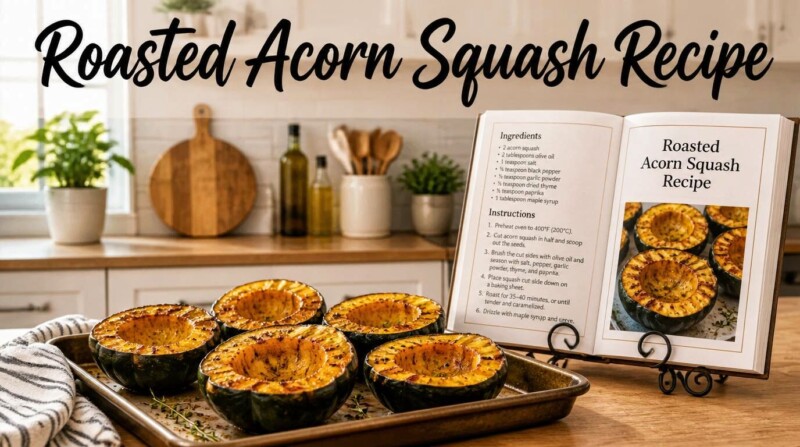 nsights
I prefer roasting acorn squash halves for even caramelization and easier scooping. Roasting acorn squash at 400°F gives a tender interior and nicely browned edges in about 35–45 minutes. I use a light coating of olive oil or melted butter to encourage browning and add flavor.
For a vegetarian roasted acorn squash recipe, stick with olive oil or a dairy-free butter alternative; both work well when roasting acorn squash. A sprinkle of ground cinnamon highlights the squash’s natural sweetness without overpowering it. I often combine cinnamon with a pinch of salt and a drizzle of maple or honey for balance.
Line the baking sheet with parchment paper to prevent sticking and simplify cleanup. Parchment also helps the edges caramelize without burning. For texture, roast cut-side down for softer flesh and a glossy finish, or cut-side up if you want a caramelized, slightly crisp surface. I check doneness with a fork; it should slide in easily when the squash is ready.
Use roasted acorn squash as a simple side, mash it, or stuff the cavities for a composed vegetarian main. Small tweaks—butter vs. olive oil, a dusting of cinnamon, or different roasting times—let you tailor the roasted acorn squash recipe to the meal. For a basic reference on technique and variations, consult a reliable recipe on oven roasted acorn squash (https://cookingwithlaura.com/recipe/roasted-acorn-squash/).
Expert Suggestions
Roast acorn squash at a steady 400°F (200°C) to get caramelized edges without drying the flesh. A short shake of the pan halfway through promotes even browning. I like to flavor the squash simply with olive oil, salt, and black pepper.
For herbal notes, sprinkle chopped fresh thyme or rosemary before roasting; thyme gives a subtle citrusy lift while rosemary adds piney depth. If I want brightness after baking, I scatter fresh parsley over the slices. Parsley refreshes the dish and contrasts the squash’s sweetness with a clean, herbaceous finish.
A pinch of ground nutmeg goes a long way. I add just a little to highlight the natural sugars and warm the profile without making it overtly spiced. For serving suggestions, pair roasted acorn squash recipe with grains like farro or quinoa, or stuff halved squash with a savory filling of sautéed mushrooms and herbs. It works equally well alongside roasted chicken, pan-seared fish, or a simple green salad.
To make leftovers shine, toss cooled roasted squash into salads, mash it with butter and a splash of lemon, or fold it into grain bowls. Store extra slices in an airtight container for up to four days to preserve texture and flavor. This roasted acorn squash recipe adapts well to different meals and occasions.
Advance Preparation Methods
I often roast acorn squash ahead to save time on busy nights. Roasting whole or halved in advance keeps texture and flavor while letting me finish dishes quickly. For make-ahead roasting, halve, seed, and brush the flesh with oil or butter, then roast until just tender.
After cooling, store the halves tightly wrapped in the refrigerator for up to 4 days; reheating in a 375°F oven for 10–15 minutes restores caramelized edges. Remove the flesh and store it pureed for faster use. Puree the roasted flesh, cool it, then portion into airtight containers or freezer bags. Frozen puree stays good for about 3 months and thaws in the fridge overnight.
To reheat roasted wedges or slices, spread them on a baking sheet with space between pieces and warm at 400°F for 8–12 minutes to re-crisp edges. For faster meal prep, saute cubes from chilled roasted squash in a hot skillet with oil or butter for 4–6 minutes until edges brown. This roasted acorn squash recipe makes advance prep simple and effective.
- Refrigerate roasted halves: up to 4 days.
- Refrigerate puree: 3–4 days.
- Freeze puree: about 3 months.
When planning, label containers with dates and use airtight packaging to protect flavor and texture. For roasted acorn squash recipe ideas that use whole or pureed squash, consult trusted recipe guides to adapt seasoning and serving suggestions.
Creative Alternatives
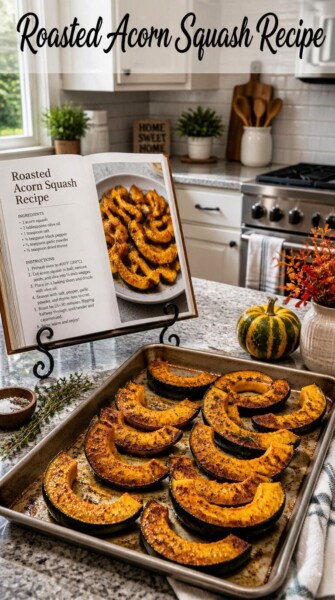
I often turn roasted acorn squash into a showstopping main by stuffing it. A classic filling combines cooked wild rice, sautéed onions, mushrooms, and chopped herbs; I spoon this mix into halved squash and bake until the edges caramelize. This creates a hearty, gluten-free dinner that pairs well with a simple green salad.
For a richer side, I sprinkle grated Parmesan cheese over warm squash slices and return them to the oven briefly. The cheese crisps and browns, adding savory depth and a pleasant bite. Sometimes I add a few toasted pine nuts for texture. I also explore plant-forward variations when I want lighter fare. A lemony chickpea and herb salad stuffed into the hollowed squash offers bright acidity and protein. Alternatively, I blend roasted squash into a creamy risotto and finish with a dusting of Parmesan for a luxurious comfort dish.
Quick swaps keep the roasted acorn squash recipe fresh for different diets and occasions:
- Vegan: omit Parmesan, use toasted breadcrumbs and nutritional yeast.
- Nut-free: replace nuts with roasted seeds for crunch.
- Make-ahead: assemble stuffed halves, refrigerate, and bake when ready.
Try one new roasted acorn squash recipe combination each season. That approach helps me adapt the recipe to available produce and keep it interesting.
Similar Dishes Overview
I often compare roasted acorn squash to other roasted squash varieties when planning a fall side dish. Roasted squash shares caramelized edges and tender flesh that make it a reliable companion to roasted vegetables and hearty proteins. For a sweeter profile, I reach for roasted butternut squash; its smooth, creamy flesh purees well into soups and makes a comforting fall side dish.
I also use roasted delicata squash when I want quick-cooking wedges with edible skins, which saves time and adds texture to a veggie platter. Roasted kabocha squash offers a denser, sweet-savory bite that stands up as a main in winter squash recipes. Its nutty flavor pairs well with warm spices and maple glazes, similar to how I season acorn squash.
When I compose a mix of roasted vegetables, I include cubes of acorn, butternut, and kabocha alongside carrots and onions for balanced color and flavor. That combination creates a versatile roasted vegetables tray that works for weeknight meals and holiday spreads. For more roasted acorn squash recipe ideas and inspiration, browse collections of roasted acorn squash dishes and broader lists of winter squash recipes to compare techniques, glazes, and stuffing ideas.
Taste And Technique Comparison
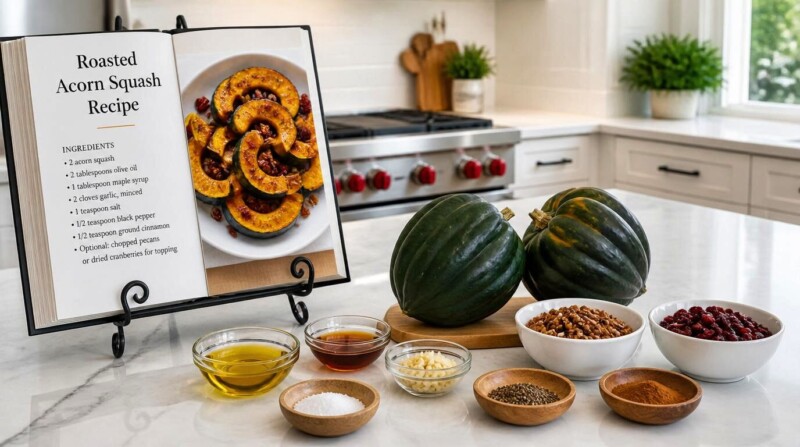
I compare baked acorn squash across two main approaches: sweet and savory. Each method highlights different textures and flavor notes while using similar basic technique. Sweet preparations emphasize caramelization. I roast halves or slices with butter, brown sugar or maple; the sugars deepen and create a glossy, tender interior. For a simple variant, I dust cinnamon and a pinch of salt to balance sweetness.
Savory versions focus on seasoning and texture contrast. I brush olive oil, sprinkle kosher salt and cracked pepper, and add herbs like sage or thyme; roasting develops nutty, earthy flavors. Sometimes I finish with toasted pepitas for crunch and bright citrus to lift the dish. Technique matters: halves vs. slices changes cook time and surface area. I roast halves at 400°F for 35–45 minutes until flesh is fork-tender, which keeps filling space for glazes or stuffing. I cut slices for 20–30 minutes, which yields more caramelized edges.
- Texture: halves = soft, scoopable; slices = caramelized edges, firmer.
- Flavor build: sweet = sugar-driven caramel notes; savory = herbaceous, nutty depth.
- Best uses: baked acorn squash sweet for dessert-style sides; savory for mains and salads.
Test a small batch of each roasted acorn squash recipe to tune sugar, fat, and roast time for your oven and taste.

Roasted Acorn Squash Recipe Cooking Tips
• Roasted Acorn Squash develops a rich, caramelized flavor and tender texture that enhances its natural sweetness.
• Select acorn squash that feels heavy for its size, with firm skin and no soft spots or blemishes.
• Wash the squash thoroughly before preparation.
• Cut the squash carefully in half and remove all seeds and stringy fibers.
• For faster cooking, cut the squash into wedges or slices rather than roasting halves.
• Lightly score the flesh when roasting halves to help seasonings penetrate more deeply.
• Olive oil helps promote browning and caramelization during roasting.
• Season simply with salt and pepper for a savory preparation.
• Cinnamon, nutmeg, maple syrup, brown sugar, or honey complement the squash’s natural sweetness.
• Fresh herbs such as rosemary, sage, thyme, or parsley work well for savory versions.
• Arrange squash pieces in a single layer to ensure even roasting.
• Avoid overcrowding the baking sheet, which can cause steaming instead of roasting.
• Turn wedges or slices halfway through cooking for more even browning.
• Roast until the flesh is fork-tender and the edges are lightly caramelized.
• Toasted pecans, walnuts, pumpkin seeds, or dried cranberries make excellent finishing garnishes.
• A light drizzle of balsamic glaze can add depth to savory preparations.
• The finished squash should be tender inside with slightly caramelized edges.
• Properly roasted acorn squash should have a balance of sweetness, nuttiness, and rich roasted flavor.
Roasted Acorn Squash Recipe Storage Tips
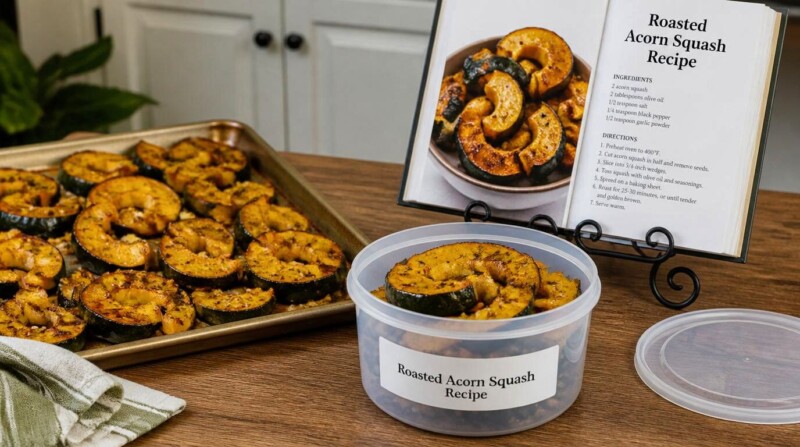
• Allow the roasted squash to cool completely before storing.
• Store refrigerated in airtight containers to preserve freshness and flavor.
• Separate garnishes from the squash when possible to maintain texture.
• Refrigeration often enhances the flavor as seasonings continue to blend.
• Reheat in the oven, toaster oven, or air fryer for the best texture.
• Microwave reheating works well but may soften caramelized edges.
• Add a small amount of olive oil or butter during reheating if desired.
• Roasted squash can be repurposed in salads, grain bowls, soups, pasta dishes, or casseroles.
• Store individual portions for convenient meal preparation.
• Freeze roasted squash in airtight freezer-safe containers if desired.
• Wrap tightly to help prevent freezer burn and moisture loss.
• Defrost frozen squash gradually in the refrigerator before reheating.
• Frozen and thawed squash may become softer but remains excellent for purees and soups.
• Use clean utensils when handling leftovers to help maintain freshness.
• Keep away from strongly scented foods because roasted squash can absorb surrounding odors.
• Check for signs of spoilage such as mold, sour odors, unusual discoloration, or texture deterioration before consuming leftovers.
• Avoid repeated freezing and thawing cycles, which can negatively affect texture.
• For best quality, enjoy roasted squash while it remains tender, flavorful, and pleasantly caramelized.
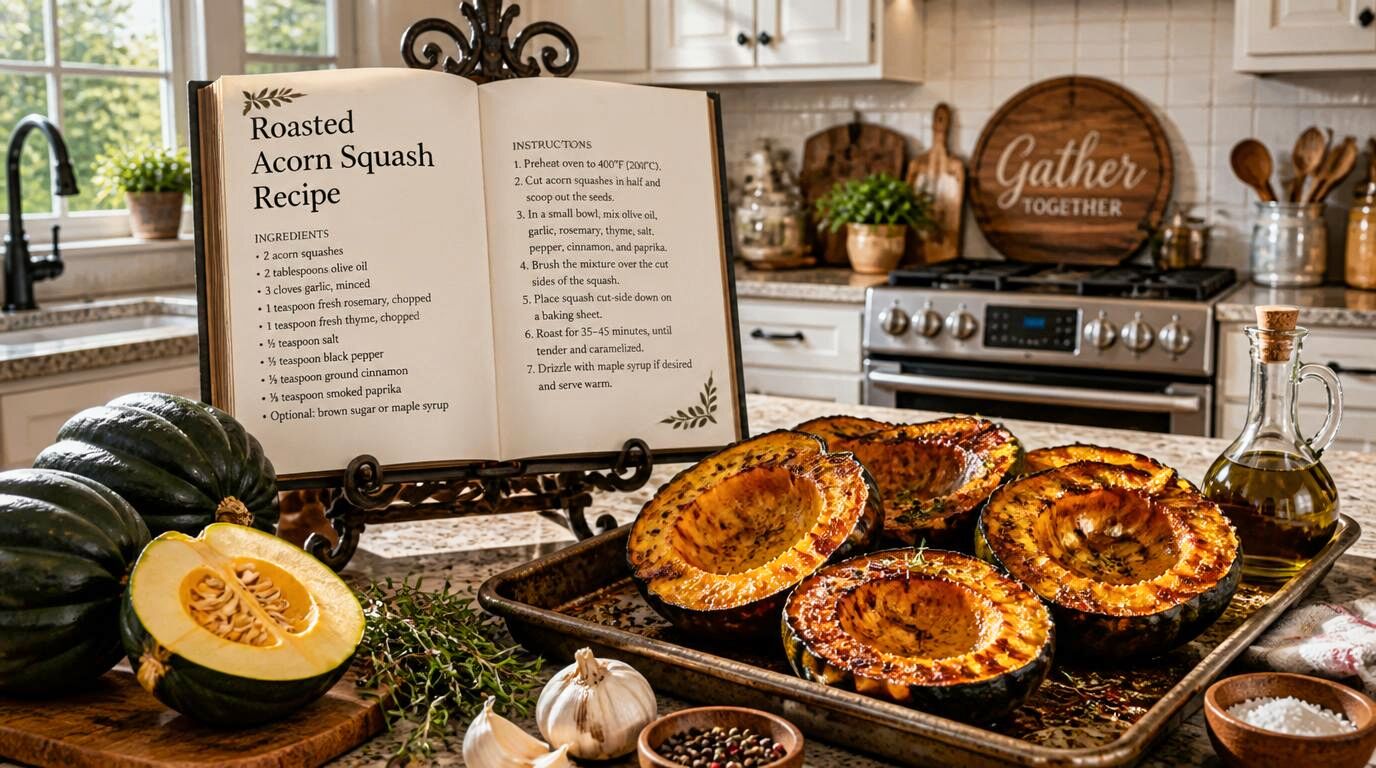
Roasted Acorn Squash Recipe
Ingredients
- 1 acorn squash
- 1 tablespoon butter
- 2 tablespoons brown sugar
- 2 teaspoons maple syrup
- 1 Dash salt kosher
Method
- Preheat your oven to 400°F (200°C).
- If desired, microwave each acorn squash for about 1 minute to make it easier to cut.
- Place the squash on a sturdy cutting board and carefully cut it in half lengthwise from stem to tip using a sharp chef's knife.
- Use a sturdy spoon to scoop out the seeds and stringy fibers from the center of each half.
- Continue scraping until the cavity is smooth and clean.
- Using a sharp paring knife, lightly score the flesh of each squash half in a crosshatch pattern.
- Make cuts approximately ½ inch deep, being careful not to cut through the skin.
- Scoring allows the butter and sweeteners to penetrate the squash as it roasts.
- Place the squash halves cut-side up in a roasting pan or baking dish.
- Pour about ¼ inch of water into the bottom of the pan.
- This helps prevent the squash from drying out during roasting and creates a moist cooking environment.
- Rub ½ tablespoon of butter into the flesh of each squash half.
- If using unsalted butter, sprinkle a small amount of salt over the squash.
- Place 1 tablespoon of brown sugar into the center cavity of each half.
- Drizzle 1 teaspoon of maple syrup over each squash half.
- As the squash roasts, the butter, sugar, and maple syrup will melt together and create a rich caramelized glaze.
- Place the roasting pan in the preheated oven.
- Bake for 1 hour to 1 hour and 15 minutes, or until the squash is extremely tender and the tops are deeply caramelized.
- The flesh should easily yield when pierced with a fork.
- Acorn squash is very forgiving and develops even more flavor as it caramelizes, so avoid undercooking.
- Remove the squash from the oven.
- If any buttery maple-brown sugar sauce remains in the roasting pan or squash cavity, spoon it over the exposed flesh.
- Allow the squash to cool for a few minutes before serving.
- Serve warm as a side dish alongside roasted poultry, pork, ham, or holiday meals.
- The soft flesh can be eaten directly from the shell with a spoon.
- This classic baked acorn squash recipe highlights the squash's natural sweetness with butter, brown sugar, and maple syrup. Slow roasting creates a tender texture and rich caramelized flavor that makes this simple dish a seasonal favorite.
- Perfect for fall dinners, Thanksgiving tables, or cozy family meals, it is both elegant and effortless.
Nutrition
Private Notes
Tried this recipe?
Let us know how it was!Roasted Acorn Squash Recipe Frequently Asked Questions
I answer practical, specific questions about timing, cutting, and flavoring roasted acorn squash so you can get tender flesh, even caramelization with maple syrup, and balanced sweetness with brown sugar. I also explain edible skin, simple cutting methods for halves, slices, or cubes, and healthy seasoning options for your favorite roasted acorn squash recipe.
How long should acorn squash be roasted in the oven, and at what temperature?
Roast acorn squash at 400°F (200°C) for consistent results. Halves typically take 35–50 minutes until a paring knife slips into the flesh; slices or 1-inch cubes finish in 25–35 minutes depending on thickness.
Should acorn squash be peeled before roasting, and is the skin edible?
You do not need to peel acorn squash before roasting. The skin softens and becomes edible after roasting and adds fiber; I leave it on for halves and slices, and sometimes remove it after roasting if I prefer a smoother presentation.
What is the best way to cut acorn squash into halves, slices, or cubes for roasting?
Wash the squash, cut off the stem, then cut through the center from stem to blossom to make clean halves. For slices, trim ends, stand the squash on a flat end, and slice crosswise into 1/2–3/4-inch pieces. For cubes, halve and scoop out seeds, then cut each half into 1-inch wedges and dice across the wedges.
How can I roast acorn squash with brown sugar without it becoming overly sweet or burning?
Use a light, even sprinkle of brown sugar—about 1–2 teaspoons per half—and combine it with melted butter or olive oil to dissolve the sugar and prevent hot spots. Roast at 400°F and check at 25 minutes; if edges darken too fast, cover loosely with foil for the last 10–15 minutes.
What healthy seasonings or toppings pair well with roasted acorn squash?
Enhance your roasted acorn squash recipe by using olive oil, kosher salt, black pepper, and a pinch of smoked paprika or ground cumin for savory depth. For a lighter twist on your roasted acorn squash recipe, add yogurt, chopped parsley, toasted pepitas, or a small drizzle of maple syrup for contrast. These toppings not only boost flavor, but also add nutritional value to your roasted acorn squash recipe, making it a delicious and healthy choice.
To further elevate your roasted acorn squash recipe, experiment with fresh herbs like thyme or rosemary, which pair beautifully with the natural sweetness of the squash. A sprinkle of feta or goat cheese can add a creamy, tangy element to your roasted acorn squash recipe. For more inspiration and tips on creating the perfect roasted acorn squash recipe, visit this comprehensive guide.
Remember, the best roasted acorn squash recipe balances flavor and nutrition. Try combining spices like cinnamon or nutmeg with a touch of honey for a sweeter roasted acorn squash recipe. You can also add crunch to your roasted acorn squash recipe with roasted nuts or seeds. No matter how you season it, a roasted acorn squash recipe is a versatile and healthy addition to any meal.
How can I make roasted acorn squash with maple syrup so it caramelizes evenly?
Mix maple syrup 1:1 with melted butter or oil, then brush a thin layer onto the cut surfaces before roasting. This method thins the syrup, promotes even coating, and helps your roasted acorn squash recipe turn out perfectly. Brush a second light layer halfway through roasting, and roast at 400°F so sugars caramelize without burning. If the edges darken too quickly, tent with foil to protect them and continue roasting your roasted acorn squash recipe to perfection.
Use these techniques for roasted acorn squash halves, whether you prepare a simple side or add slices and cubes to salads or bowls. A roasted acorn squash recipe works well for meal prep or holiday dinners. For step-by-step guidance on cutting and roasting, refer to a practical roast guide like this roasting tutorial. Experiment with your roasted acorn squash recipe by adding spices or herbs for extra flavor.
Try making a roasted acorn squash recipe with different toppings like pecans, cranberries, or feta cheese. The roasted acorn squash recipe delivers a caramelized, nutty flavor that pairs well with many dishes. When you follow these steps, your roasted acorn squash recipe will have a beautiful golden finish and delicious taste.
Include a roasted acorn squash recipe in your weekly meal rotation for a nutritious and flavorful option. The roasted acorn squash recipe is simple, versatile, and perfect for fall. Enjoy experimenting with your favorite roasted acorn squash recipe variations for family dinners or gatherings.
