
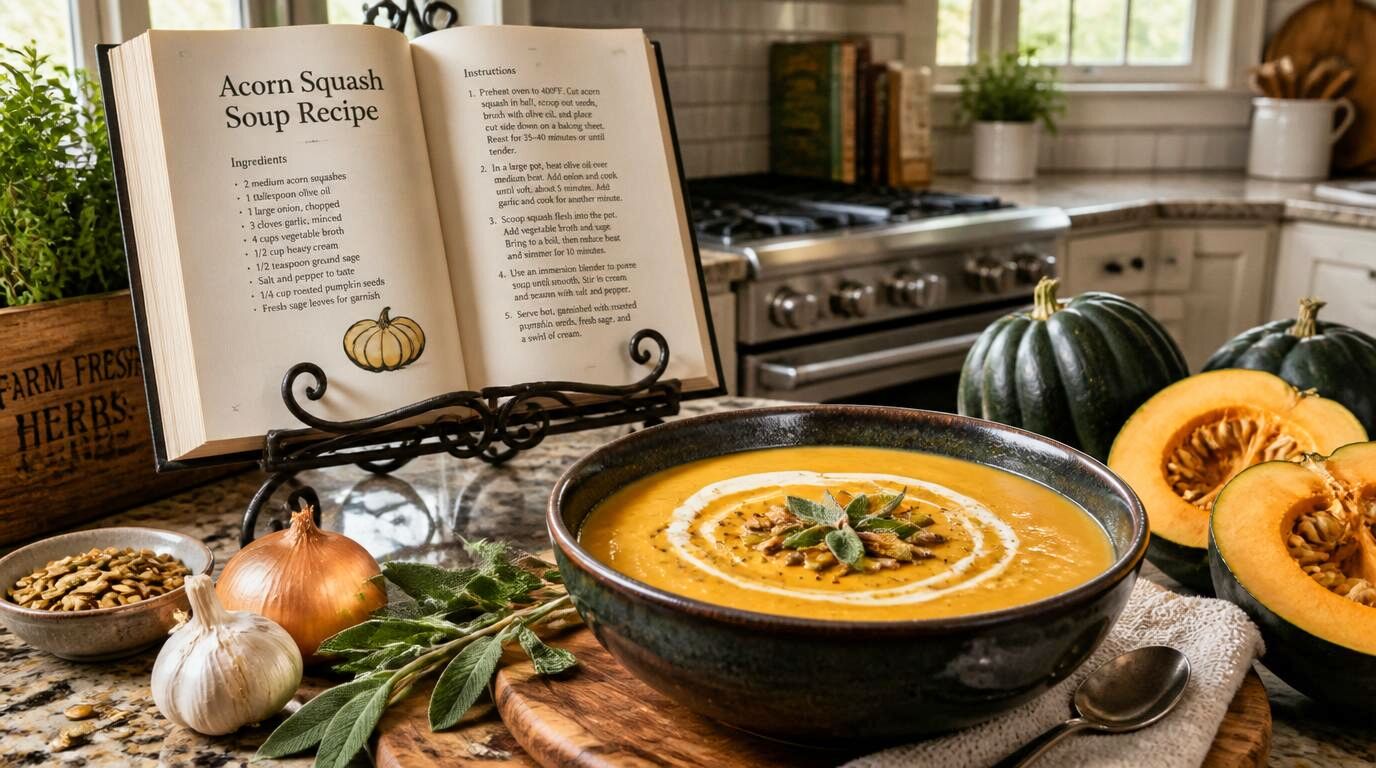
If you want a cozy, flavorful acorn squash soup recipe that’s simple to make and fits weeknight cooking or a holiday menu, this acorn squash soup recipe is for you. I show you how to roast acorn squash, sauté aromatics in olive oil, and blend everything with vegetable broth for a velvety, well-balanced soup. This acorn squash soup recipe delivers creamy texture and warm fall spices with minimal fuss, so you can serve a comforting bowl in about an hour.
This acorn squash soup recipe features background and key flavors, chef’s tips for best texture, and make-ahead and variation ideas to suit dietary needs. You’ll find practical guidance on roasting, seasoning, and using pantry staples to elevate this acorn squash soup recipe without unnecessary steps.
Description and Historical Information
I describe acorn squash soup as a smooth, mildly sweet puree that balances earthy squash with warm spices. I often finish it with a touch of cream, coconut milk, or a sprinkle of toasted seeds for texture. This acorn squash soup recipe highlights those classic elements.
Acorn squash (Cucurbita pepo) has been grown in North America for centuries. Indigenous peoples cultivated and used various winter squashes long before European contact, and those practices shaped regional foodways. Modern cooks now adapt roasted squash for soups and purees, and this acorn squash soup recipe reflects that tradition.
Many contemporary versions of acorn squash soup recipes add aromatic ingredients like garlic, onion, and warming spices such as cinnamon, cumin, or nutmeg to deepen flavor. Acorn squash roasts quickly compared with larger winter squashes, yielding a sweet, slightly fibrous flesh that purees well. For a concise reference, you can explore a roasted-acorn-squash soup technique from Savas Kitchen.
| Attribute | Acorn Squash | Butternut Squash |
|---|---|---|
| Flesh texture | Slightly fibrous | Smooth, creamy |
| Roasting time | Shorter | Longer |
| Flavor | Mildly sweet, nutty | Rich, sweet |

Key Insights and Highlights
This versatile acorn squash soup recipe balances natural sweetness with savory aromatics. Roasting the squash deepens flavor and adds caramelized notes that stovetop-only methods can’t match. The acorn squash soup recipe uses simple aromatics—onion, garlic, and a mild spice like nutmeg or cinnamon—to enhance the squash without overpowering it.
For a lighter acorn squash soup recipe, I use yogurt or coconut milk; for richer results, cream or butter works well. This acorn squash soup recipe adapts easily: add apple or carrot for sweetness, or curry powder and ginger for warmth and complexity. Texture matters, so I strain or blend until velvety and finish with acid (lemon or apple cider vinegar) to brighten the bowl.
- Prep time: typically 15–30 minutes.
- Roast time: 30–50 minutes depending on squash size.
- Serves: usually 4 as a starter, 2–3 as a main.
Serve your acorn squash soup recipe with crusty bread, toasted seeds, or herb oil for contrast. When testing variations, I adjust seasoning after blending because sweetness concentrates during cooking.
Chef’s Tips
I roast the squash until the flesh is deeply caramelized; that step builds the base flavor for any acorn squash soup recipe. I cut the squash into even halves or wedges so it cooks uniformly and browns without burning. A drizzle of extra virgin olive oil on the cut surfaces before roasting encourages browning and adds a clean, fruity note that balances the soup’s sweetness.
Scoop the roasted acorn squash into the pot while still warm for this acorn squash soup recipe. Warm roasted squash blends more smoothly and yields a silkier soup with less effort. Reserve the seeds, clean them, toss with a little oil and salt, then toast them until golden. Toasted pumpkin seeds make a crunchy, nutty garnish that contrasts the velvety soup.
For more richness in your acorn squash soup recipe, finish with a small splash of cream or coconut milk near the end and taste as you go to keep the balance between sweet and savory. Make quick homemade croutons from day-old bread: cube the bread, toss with olive oil and herbs, then bake until crisp. Season in layers: salt when roasting, taste after blending, and adjust at the end for the perfect acorn squash soup recipe.
Make-Ahead Instructions
I roast the acorn squash and sauté the aromatics up to 24 hours in advance to save time on the day I plan to serve the acorn squash soup recipe. Roasted squash keeps well in an airtight container in the refrigerator and speeds up assembly. I finish the full soup base (squash plus stock and seasonings), cool it quickly, and refrigerate for up to 3 days. Reheat gently on the stovetop, whisking or stirring while it comes to a simmer to preserve texture and flavor.
For longer storage, freeze the cooled acorn squash soup recipe in meal-sized portions in freezer-safe containers for up to 3 months. Thaw overnight in the refrigerator, then reheat slowly; avoid boiling after adding dairy to prevent curdling. Store garnishes separately so crispy toppings such as bacon, croutons, or toasted seeds maintain their texture when added just before serving.
- Prepare roasted squash and vegetables: up to 24 hours ahead.
- Cooked soup (refrigerator): 3 days.
- Cooked soup (freezer): 3 months.
When reheating from frozen, place the container in the refrigerator for 24 hours, then warm the soup in a saucepan over low heat. If the acorn squash soup recipe thickens after cooling, thin it with a splash of stock or water and adjust seasoning before serving. For best results with dairy-enriched recipes, temper any cream or yogurt: add a ladle of hot soup to the dairy, whisk, then stir back into the pot. This process prevents separation and keeps the acorn squash soup recipe velvety.

Creative Variations
Experiment with spice profiles to change the acorn squash soup recipe’s character without adding complexity. A simple turmeric-forward version brightens the color and adds warm, earthy notes; toast a teaspoon of turmeric with a pinch of black pepper to maximize absorption and flavor. For a smoky, savory twist, use cumin. Bloom ground cumin in olive oil with onions and garlic before adding the roasted squash. The cumin’s aroma deepens the broth and pairs well with a squeeze of lime or a dollop of yogurt.
Blend in coconut milk for a creamier, slightly tropical finish. Coconut balances turmeric’s bitterness and complements cumin’s warmth in an acorn squash soup recipe. For a lighter bowl, substitute low-sodium vegetable stock and finish with a drizzle of olive oil. Try a few garnish combinations to change the final impression quickly:
- Crispy sage leaves and toasted pepitas for crunch.
- Cilantro, lime zest, and a smear of chili paste for brightness and heat.
- Greek yogurt swirl with a pinch of smoked paprika for richness.
Make a harissa-cumin mash and stir it in at the end for a concentrated punch. Add a small amount of apple or pear purée for subtle sweetness that contrasts turmeric’s earthiness. Each adjustment keeps the base acorn squash soup recipe intact while letting you tailor the soup to the season or your mood. For additional recipe ideas and variations, see a collection of curated acorn squash soups that inspired some of my tweaks: 33 Delicious Acorn Squash Recipes for Cozy Soups
Related Recipes
I often pair an acorn squash soup recipe with other squash-based soups to vary texture and flavor. A classic is butternut squash soup; it’s smoother and slightly sweeter, which balances the nuttier, firmer quality of acorn squash. Adapt the same roasting and spice techniques between recipes. For a creamy butternut version, roast the squash and blend with stock and a splash of cream or coconut milk for richness.
Use the acorn squash soup recipe as a template for seasonal riffs. Swap spices like curry, nutmeg, or thyme, or fold in roasted apples or carrots for extra depth without changing the method. Serve these soups alongside crisp garlic bread. The toasted garlic and butter or olive oil contrast the soup’s creaminess and add a textural counterpoint.
If you want vegetarian or vegan options, choose vegetable broth and plant-based cream alternatives. Many recipes that work for acorn squash translate well to butternut squash and still pair nicely with simple garlic bread. For more inspiration, visit Simply Recipes’ acorn squash soup recipe.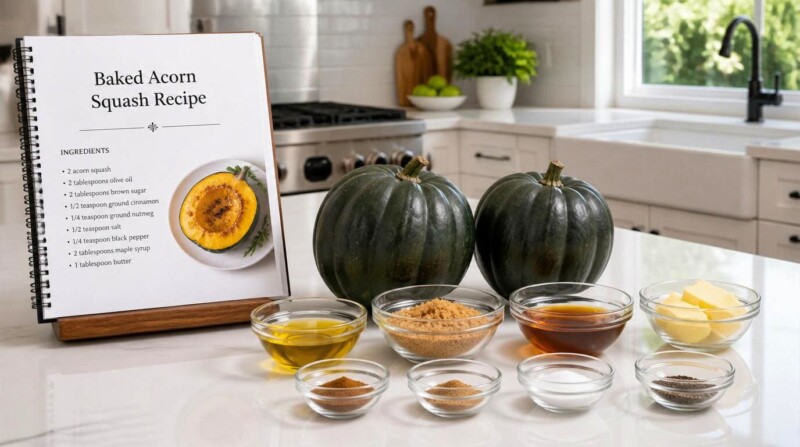
Recipe Comparison and Analysis
I compared several popular acorn squash soup recipe approaches to clarify trade-offs in flavor, texture, and technique. Recipes range from simple roasted-squash purées to versions enriched with cream, butter, or coconut milk; each choice shifts richness and mouthfeel. Common aromatics include onion, garlic, and thyme, while spices like cinnamon, nutmeg, and cumin create either warming or savory profiles depending on amounts used.
- Texture: Roasting the squash concentrates sweetness and yields a silkier puree. Boiling is faster but can produce a more fibrous finish unless strained.
- Fat: Butter or half-and-half increases silkiness and carries spices. Coconut milk gives a dairy-free creaminess and pairs well with curry notes.
- Add-ins: Add carrot or apple for extra natural sweetness; some cooks blend in roasted delicata squash for a lighter, sweeter variation that still roasts well.
Roasting whole or halved squash takes longer but requires less hands-on work and deepens flavor. Stovetop sauté-plus-simmer methods save time and simplify weeknight cooking. Here’s a quick comparison table for decision-making:
| Goal | Best technique | Typical additions |
|---|---|---|
| Deep, caramelized flavor | Roast squash first | Butter, nutmeg, thyme |
| Quick weeknight soup | Sauté vegetables, simmer | Cream or coconut milk |
| Dairy-free | Roast + coconut milk | Curry spices, cilantro |
I chose elements from multiple acorn squash soup recipe versions to balance convenience and flavor, and I often test by swapping acorn with delicata squash to explore a sweeter, thinner texture.

Acorn Squash Soup Recipe Cooking Tips
• Acorn Squash Soup is known for its creamy texture, naturally sweet flavor, and comforting autumn-inspired warmth.
• Choose firm acorn squash with dull, dark green skin and no soft spots.
• Roasting the squash before blending deepens its sweetness and adds richer flavor.
• Cut the squash carefully and scoop out the seeds before cooking.
• Olive oil, butter, or a neutral oil can help the squash caramelize during roasting.
• Onions, garlic, carrots, and celery provide a savory base for the soup.
• Vegetable broth or chicken broth creates the main cooking liquid.
• Cinnamon, nutmeg, ginger, thyme, or sage pair especially well with acorn squash.
• Simmer the vegetables until fully tender before blending.
• Blend until smooth for a creamy, velvety texture.
• Add cream, coconut milk, or evaporated milk if a richer soup is desired.
• Use broth gradually when blending to control the final thickness.
• Maple syrup, honey, or brown sugar can be added sparingly to enhance sweetness.
• Balance sweetness with salt, pepper, herbs, or a small splash of vinegar or lemon juice.
• Avoid boiling heavily after adding dairy, which can affect texture.
• Garnish with toasted seeds, herbs, cream, croutons, or crispy bacon if desired.
• The flavor should balance sweet squash, savory aromatics, warm spices, and a smooth creamy finish.
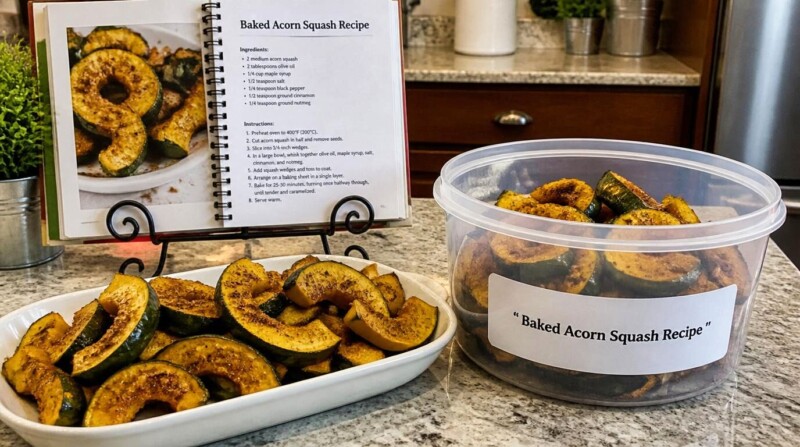
Acorn Squash Soup Recipe Storage Tips
• Allow the soup to cool before transferring it into storage containers.
• Store refrigerated in airtight containers to preserve freshness and flavor.
• Refrigeration often improves the flavor as the squash, spices, and aromatics continue to blend.
• Stir thoroughly before reheating because the soup may thicken or separate slightly during storage.
• Add a small amount of broth, water, milk, or cream if the soup becomes too thick.
• Reheat gently on the stovetop or in the microwave until thoroughly heated.
• Avoid vigorous boiling, especially if the soup contains dairy or coconut milk.
• Store garnishes separately to maintain their texture.
• Individual portions can be stored for convenient meals.
• Freeze portions in airtight freezer-safe containers if desired.
• Leave a small amount of expansion space when freezing liquids.
• Wrap tightly to help prevent freezer burn and preserve quality.
• Defrost frozen soup gradually in the refrigerator before reheating.
• Blend briefly after thawing if the texture separates.
• Use clean utensils when serving leftovers to help maintain freshness.
• Keep away from strongly scented foods because soups readily absorb surrounding odors.
• Check for signs of spoilage such as sour odors, mold, unusual discoloration, or texture changes before consuming leftovers.
• For best quality, enjoy refrigerated and frozen portions while the soup remains smooth, creamy, and flavorful.
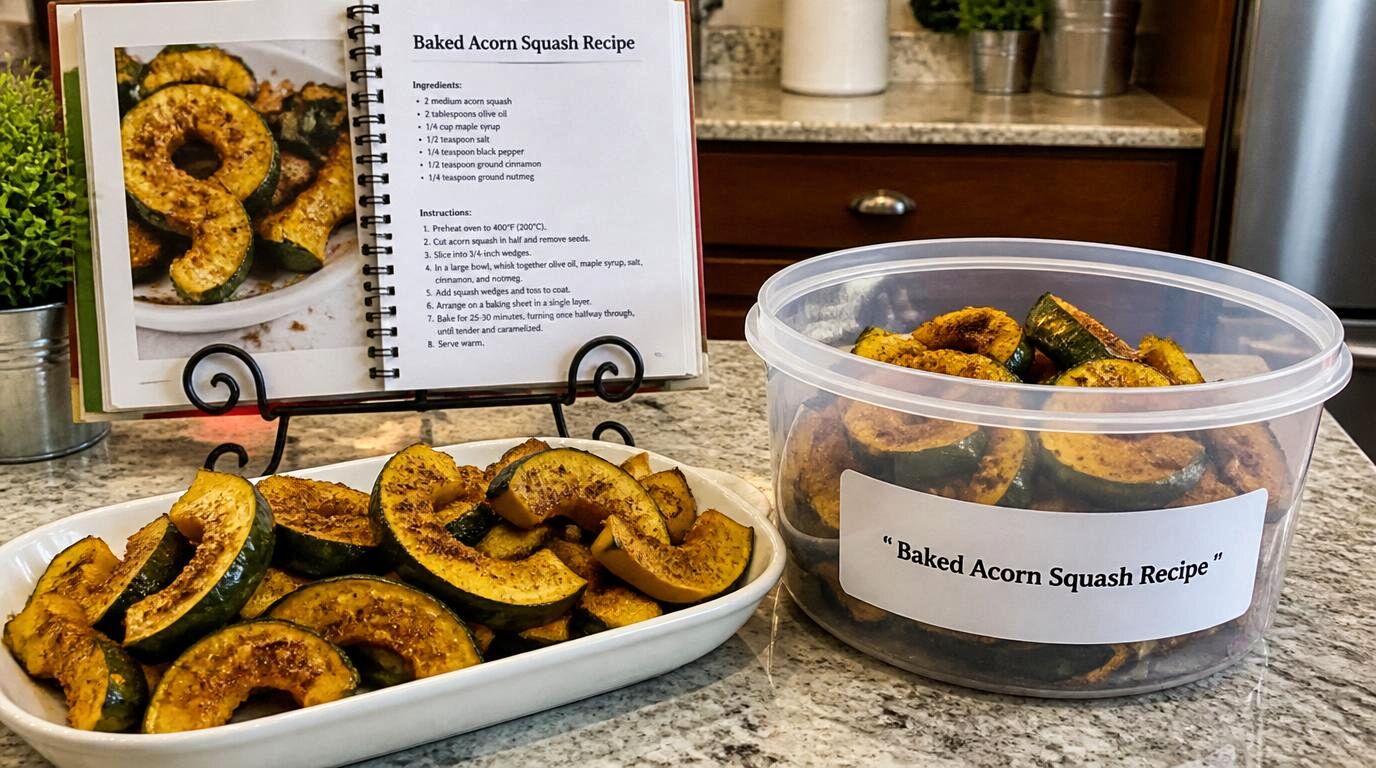
Acorn Squash Soup Recipe
Ingredients
- 2 medium acorn squash about 3 pounds
- 3 cloves garlic unpeeled
- 2 tablespoons olive oil extra-virgin
- 1 large yellow onion chopped
- 2 medium carrots chopped
- 1 teaspoon sea salt plus more for sprinkling
- ¼ teaspoon nutmeg
- ⅛ teaspoon cayenne pepper
- 4 cups vegetable broth
- 1 tablespoon thyme leaves plus more for garnish fresh
- 2 tablespoons lemon juice fresh
- 1 teaspoon maple syrup
- black pepper Freshly ground
- Pepitas for garnish, optional
- Microgreens for garnish, optional
Method
- Preheat your oven to 400°F (200°C) and line a baking sheet with parchment paper.
- Cut the acorn squash in half lengthwise and scoop out the seeds.
- Drizzle the cut sides with olive oil and season with salt and black pepper.
- Place the squash halves cut-side down on the prepared baking sheet.
- Wrap the garlic cloves in a small piece of aluminum foil with a drizzle of olive oil and a pinch of salt.
- Place the foil packet on the baking sheet alongside the squash.
- Roast for 35 to 45 minutes, or until the squash is very tender when pierced with a fork.
- Remove from the oven and allow everything to cool until easy to handle.
- Unwrap the garlic and gently squeeze the softened cloves from their skins.
- Scoop the roasted squash flesh from the shells and measure out 2½ cups.
- Reserve any extra squash for another use.
- Discard the squash skins.
- Heat the olive oil in a large pot or Dutch oven over medium heat.
- Add the onion, carrots, and salt.
- Cook for 5 to 8 minutes, stirring occasionally, until the vegetables have softened.
- Add the nutmeg, cayenne pepper, and several grinds of black pepper.
- Stir and cook for about 30 seconds until fragrant.
- Add the 2½ cups roasted squash, roasted garlic, vegetable broth, and thyme leaves.
- Stir well to combine.
- Bring the mixture to a gentle simmer.
- Cook uncovered for approximately 20 minutes, stirring occasionally to allow the flavors to meld together.
- Remove the pot from the heat and allow the soup to cool slightly.
- Carefully transfer the soup to a blender.
- Add the lemon juice and maple syrup.
- Blend until completely smooth and creamy.
- If necessary, blend in batches and take care when blending hot liquids.
- Return the soup to the pot if additional warming is needed.
- Taste and adjust seasoning with additional salt and pepper if desired.
- Ladle the soup into serving bowls.
- Garnish with a drizzle of olive oil, fresh thyme leaves, pepitas (pumpkin seeds), and microgreens.
- Serve warm with crusty bread or a simple salad.
- This Roasted Acorn Squash Soup is silky, rich, and packed with comforting fall flavors. Roasting the squash and garlic develops natural sweetness and depth, while thyme, nutmeg, and a touch of maple syrup create a perfectly balanced soup.
- Elegant enough for holiday meals yet simple enough for a cozy weeknight dinner, it's a delicious way to celebrate seasonal squash.
Nutrition
Private Notes
Tried this recipe?
Let us know how it was!Acorn Squash Soup Recipe Frequently Asked Questions
I focus on practical, testable steps and specific ingredient choices to help you roast squash, build creaminess without heaviness, and streamline prep while keeping the acorn squash soup recipe flavorful and nutritious.
How do you roast acorn squash to maximize flavor for soup?
Halve the squash, scoop out seeds, and score the flesh so heat penetrates evenly. Roast cut-side down on a rimmed baking sheet at 425°F (220°C) for 30–40 minutes until the flesh is very tender and caramelized at the edges. Toss the halves with a little oil and a light sprinkle of salt before roasting to deepen the Maillard reaction. For more savory depth, roast alongside a halved onion and garlic cloves; add these straight into the blender or pot with the squash for the acorn squash soup recipe base.
What ingredients create a creamy texture without making the soup too heavy?
For an acorn squash soup recipe, I combine roasted squash with a moderate amount of unsweetened coconut milk or low‑fat cream to create a silky texture. Pureeing hot roasted squash with a small quantity of starchy potato or a peeled, cooked carrot adds body without relying on heavy cream. I thin the mixture with vegetable or chicken stock to achieve the perfect spoon-coating consistency, and I finish with a splash of acid like apple cider vinegar or lemon juice to brighten the flavor.
Can coconut milk be used as a substitute for dairy, and how does it change the flavor?
Yes, you can use coconut milk as a substitute for dairy in an acorn squash soup recipe. I prefer full‑fat or light coconut milk depending on how rich I want the soup; full‑fat provides a creamier mouthfeel, while light keeps the calories lower. Coconut milk adds a subtle tropical sweetness and roundness that enhances roasted acorn squash, especially when paired with savory aromatics like thyme or sage.
For an acorn squash soup recipe, I start with 1/2 to 1 cup of coconut milk for a 4-serving pot and adjust as needed. If you want less coconut flavor, use light coconut milk or mix it with a neutral unsweetened plant milk.
What is the simplest method to make this soup with minimal prep and cleanup?
To simplify an acorn squash soup recipe, I microwave or oven‑roast whole acorn squashes, then scoop the flesh into a blender with sautéed onion, garlic, and stock. After blending, I return the soup to the pot to warm and season, which reduces the number of pans needed. I roast squash and aromatics on the same sheet pan, and I use neutral stock cartons and preminced garlic to minimize chopping and dishes.
A handheld immersion blender works well for an acorn squash soup recipe, allowing you to blend everything in one pot. This approach streamlines both prep and cleanup while still delivering a flavorful soup.
How can you make the soup healthier while keeping it rich and satisfying?
For a healthier acorn squash soup recipe, I replace heavy cream with low‑fat coconut milk or a 1:1 mix of plain low‑fat yogurt and stock. I blend in a small peeled potato or cauliflower to increase fiber and add body while reducing added fat. Roasted carrots or red bell pepper boost vitamin A and C, and I finish with a sprinkle of toasted pepitas for protein and texture instead of croutons.
By making these adjustments to your acorn squash soup recipe, you keep the soup rich and satisfying without extra calories. You can find more healthy soup ideas at EatingWell.
Try experimenting with your acorn squash soup recipe by varying the vegetables and garnishes to suit your tastes. With these tips, your acorn squash soup recipe will be both nutritious and delicious. Enjoy the ease and comfort of a homemade acorn squash soup recipe any time of year.
What are the best seasonings and garnishes to pair with this type of squash soup?
I season my acorn squash soup recipe with kosher salt, freshly ground black pepper, and a pinch of ground nutmeg to enhance the squash’s natural sweetness. Fresh thyme, sage, or a bay leaf added during simmering brings a classic savory balance to any acorn squash soup recipe. These herbs infuse the acorn squash soup recipe with aromatic depth, making each spoonful comforting and flavorful.
For garnish, I use toasted pepitas, a drizzle of coconut milk or olive oil, and chopped chives to add color and texture to the acorn squash soup recipe. A spoonful of Greek yogurt adds a pleasant tang to the acorn squash soup recipe, and you can serve it with crusty bread or a simple green salad for a complete meal. If you want more inspiration for your acorn squash soup recipe, you can visit Simply Recipes for additional ideas.
Experimenting with different toppings can elevate your acorn squash soup recipe and suit your personal taste. Try adding roasted garlic or a sprinkle of smoked paprika for a twist on your acorn squash soup recipe. No matter how you customize it, the acorn squash soup recipe remains a cozy and satisfying dish, perfect for autumn and winter gatherings.
