
This acorn squash salad recipe delivers caramelized squash, bright greens, and a tangy dressing that comes together in under an hour, perfect for weeknights or holiday sides. You’ll love how simple ingredients transform into a seasonal showstopper with minimal fuss.
This acorn squash salad recipe offers background and history, key takeaways, expert tips, make-ahead guidance, and recipe variations so you can customize texture and flavor to suit your table. You’ll find practical comparisons to similar salads and answers to common questions that make the acorn squash salad recipe straightforward to execute.
Background and History
Indigenous peoples in the Americas first cultivated acorn squash for food security and storage. Archaeobotanical finds show they selected and preserved squash for long shelf life and versatile cooking.
Acorn squash belongs to the species Cucurbita pepo, a group that includes summer squashes like zucchini. That botanical link explains why you see acorn squash in both roasted autumn salads and lighter summer dishes.
European colonists adopted native squashes and combined them with Old World ingredients like nuts, cheeses, and vinegars. Modern acorn squash salad recipes often pair roasted acorn squash with greens, seeds, and sweet-tart elements for balanced texture and flavor.
Contemporary variations use pomegranate arils, maple vinaigrette, or goat cheese to highlight contrasts of sweet, tangy, and creamy. For examples of modern preparations and dressings, see a maple-dressed version that pairs squash with pomegranate and hazelnuts and a roasted-squash salad featuring cranberries and pumpkin seeds.
Key Takeaways
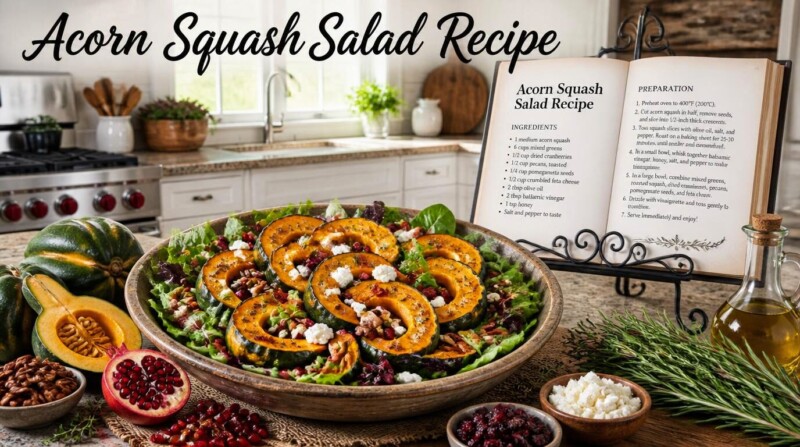
Roasting the acorn squash deepens its sweetness and adds caramelized texture. Roasted acorn squash salad pairs well with tangy dressings and crunchy toppings for balanced contrast.
Simple dressings like maple vinaigrette or lemon-tahini brighten the squash without overpowering it. You can find a variety of dressing ideas and pairings in recipes such as this Roasted Acorn Squash Salad with Tahini Dressing.
Add a mix of textures: peppery greens, creamy cheese, seeds or nuts, and dried fruit all work well. These elements make the acorn squash salad recipe satisfying as a main or complementary side dish.
Roast squash cut-side down at moderate heat to keep it tender and reduce bitterness. Slicing uniform pieces helps them cook evenly and brown attractively.
Prepare components ahead when possible; roasted squash and toasted nuts store well for a day. Assemble just before serving to preserve freshness and prevent wilted greens.
- Roast: enhances flavor and texture.
- Dressings: maple vinaigrette or lemon-tahini recommended.
- Add-ins: arugula/greens, goat cheese, pepitas, dried cranberries/pomegranate.
- Timing: roast and toast ahead; assemble before serving.
Expert Tips
Roast acorn squash at 425°F to get caramelized edges without drying the flesh. Toss wedges in a thin coating of olive oil and a pinch of salt before roasting to help browning and flavor.
For dressing balance, use a simple vinaigrette: 3 parts olive oil to 1 part apple cider vinegar, a touch of maple or honey, and mustard to emulsify. Whisk vigorously or shake in a jar to make a smooth homemade salad dressing that clings to greens and roasted squash.
Roast squash in uniform pieces so cooking time stays consistent. If short on time, par‑cook in the microwave for 2 minutes to speed roasting without losing texture.
Taste and adjust acidity. If the apple cider vinegar feels sharp, add a little more oil or a small amount of sweetener. If the dressing is flat, a squeeze of lemon brightens it instantly.
For texture contrast, sprinkle toasted pepitas or hazelnuts just before serving. Dress greens lightly and toss with warm roasted acorn squash so the leaves wilt slightly and absorb the homemade salad dressing.
Store leftover dressing in a sealed jar in the fridge for up to a week. Let it come to room temperature and re‑emulsify by shaking before using.
Make-Ahead Guidance
Roast the acorn squash and cool it completely before storing. Once cooled, transfer the cubes to an airtight container and refrigerate for up to 3 days to preserve texture and flavor.
Keep crunchy ingredients separate. Toasted nuts, pepitas, and pomegranate arils stay in their own containers and add them just before serving to maintain crispness.
Prepare the dressing ahead and chill it. Most maple or tahini dressings keep well for 4–5 days in the fridge; give the dressing a quick whisk or shake to re-emulsify before tossing.
Assemble just before serving when possible. For buffet or potluck use, layer greens, roasted squash, and toppings in a bowl and bring the dressing alongside for final toss tableside.
Reheat roasted squash in a 375°F (190°C) oven for 8–10 minutes or briefly in a skillet to regain warmth without drying. Microwaving works for speed but watch closely to avoid soggy edges.
- Roasted squash: airtight, 3 days (fridge)
- Dressing: sealed jar, 4–5 days (fridge)
- Nuts/seeds/arils: separate, up to 5 days (fridge)
Label containers with dates to track freshness and prevent waste.
Recipe Variations
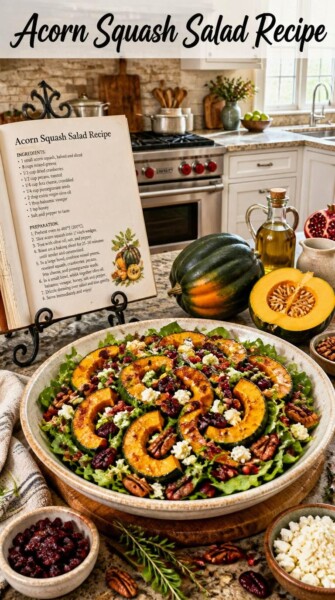
Swap sweeteners to adjust the dressing’s character. Use maple syrup or honey for a floral sweetness, or a touch of brown sugar for deeper caramel notes. A squeeze of lemon juice brightens the dressing, while balsamic vinegar adds savory acidity to your acorn squash salad recipe.
Vary the cheese depending on richness and texture. Try crumbled feta for tang and salt or blue cheese for a more pungent, creamy bite. Either pairs well with roasted squash and bitter greens in your acorn squash salad recipe.
Change dried fruit and seeds to add chew and color. Sprinkle dried cranberries or dried cherries for tart-sweet contrast, or toss in pomegranate seeds for bursts of freshness. Toasted nuts like pecans or wallets add crunch to your acorn squash salad recipe.
For extra indulgence, use candied pecans instead of raw nuts. They provide a sweet crunch that complements maple or honey dressings. Keep them on the side if guests prefer less sweetness in your acorn squash salad recipe.
Switch squash varieties to alter texture and flavor. Roasted butternut squash yields a smooth, sweet flesh; delicata squash keeps its skin and roasts quickly with a creamier bite. Add warm spices like cinnamon, nutmeg, or a pinch of smoked paprika to emphasize fall notes in your acorn squash salad recipe.
Related Culinary Inspirations
Turn the roasted squash salad concept into other seasonal salads by swapping grains or greens. For a heartier winter squash salad, add farro or wheat berries; the chew contrasts nicely with soft roasted acorn squash in your acorn squash salad recipe.
Use the same maple-balsamic or spiced-maple-cider vinaigrette from fall salad experiments to tie ingredients together. That dressing brightens peppery arugula or bitter radicchio without overpowering pomegranate arils or toasted nuts in your acorn squash salad recipe.
For a holiday salad or Thanksgiving side dish, layer warm squash over mixed greens and scatter dried cranberries, pecans, and crumbled goat cheese. The result feels festive and pairs well with roast meats and vegetarian mains in your acorn squash salad recipe.
Adapt the fall squash salad into a seasonal salad bowl: roasted acorn squash, lentils or roasted chickpeas, shaved Brussels sprouts, and a scattering of pepitas. It travels well and works as a make-ahead dish for gatherings, making your acorn squash salad recipe versatile.
For a lighter option, serve thinly sliced roasted squash on baby spinach with a squeeze of lemon and a drizzle of maple vinaigrette. It keeps the flavors bright while staying true to the fall and winter squash profile in your acorn squash salad recipe.
Comparative Recipe Analysis
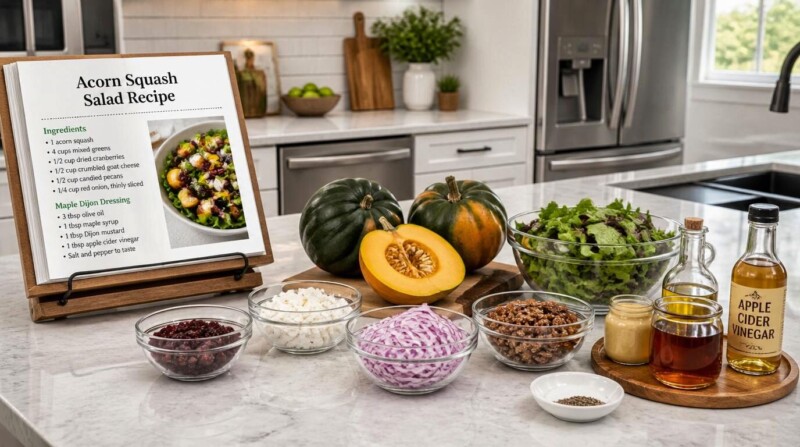
Compare versions of roasted acorn squash salads by focusing on texture, flavor balance, and ease of assembly. Texture ranges from soft, caramelized squash to crisp greens and crunchy seeds; prioritize contrasts that hold up after tossing in your acorn squash salad recipe.
Flavor profiles tilt toward sweet-savory combinations. Some recipes emphasize maple or maple-tahini dressings for sweetness and creaminess, while others highlight lemon-tahini or spiced maple-cider vinaigrettes for brighter acidity. Choose dressing based on the supporting ingredients in your acorn squash salad recipe.
Ingredient lists differ in composition and complexity. Several recipes add pomegranate arils or dried cranberries for pops of acidity and color, and nuts or pepitas for crunch. Include a tangy cheese or dairy-free cream to add richness and bind flavors in your acorn squash salad recipe.
Preparation time and technique vary. Roasting squash slices vs. cubes affects caramelization and plating; sliced, caramelized rounds create a more elegant presentation, while cubes mix easily into grains. Adapt the method to the meal context—quick weeknight versus holiday centerpiece in your acorn squash salad recipe.
Combine elements: a warm roasted squash, peppery greens, toasted seeds, and a lightly sweet dressing. For examples of maple-forward and tahini-dressed approaches, review a maple-roasted variation and a maple tahini option respectively: Maple Roasted Squash Salad and Acorn Squash Salad with Maple Tahini Dressing. These approaches can enhance your acorn squash salad recipe.

Acorn Squash Salad Recipe Cooking Tips
• Acorn Squash Salad combines sweet roasted squash with fresh greens, vegetables, nuts, cheese, and a flavorful dressing.
• Choose acorn squash that feels heavy for its size and has firm, unblemished skin.
• Roast the squash until tender and lightly caramelized to maximize flavor.
• Cut the squash into uniform cubes or wedges for even cooking and an attractive presentation.
• Allow the roasted squash to cool slightly before adding it to the salad.
• Mixed greens, spinach, arugula, kale, or romaine all pair well with acorn squash.
• Toasted pecans, walnuts, almonds, or pumpkin seeds add crunch and complement the squash’s natural sweetness.
• Dried cranberries, cherries, raisins, or pomegranate seeds provide color and a pleasant sweet-tart contrast.
• Feta, goat cheese, blue cheese, or Parmesan add richness and depth of flavor.
• Red onions, shallots, or thinly sliced apples can provide additional texture and flavor.
• A vinaigrette made with olive oil, balsamic vinegar, maple syrup, honey, or Dijon mustard works especially well.
• Season the squash while roasting to enhance its flavor before combining it with the salad.
• Add delicate greens just before serving to maintain freshness and texture.
• Toss the salad gently to avoid breaking up the roasted squash pieces.
• Serve the salad slightly warm or fully chilled depending on preference.
• Balance sweet, savory, crunchy, and tangy ingredients for the best flavor profile.
• Fresh herbs such as parsley, thyme, or sage can enhance the overall flavor.
• Properly prepared acorn squash salad should be colorful, flavorful, and well-balanced.
Acorn Squash Salad Recipe Storage Tips
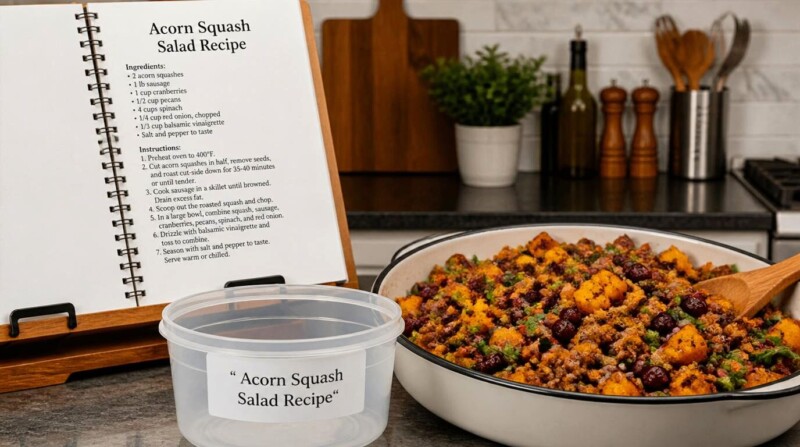
• Store the salad in airtight containers in the refrigerator.
• Keep the dressing separate whenever possible to prevent the greens from becoming soggy.
• Store roasted squash separately if preparing the salad in advance.
• Add nuts, seeds, and crunchy toppings just before serving to maintain texture.
• Refrigeration often allows flavors to blend while preserving freshness.
• Delicate greens may wilt if dressed too far in advance.
• Reassemble the salad shortly before serving for the best presentation and texture.
• Store cheese toppings separately when practical.
• Roasted squash can be refrigerated and used in salads for several days.
• Individual salad components often store better separately than fully assembled salads.
• Avoid freezing assembled salads because the greens and vegetables may lose texture.
• Frozen roasted squash can be thawed and added to freshly prepared salads later.
• Use clean utensils when handling leftovers to help maintain freshness.
• Keep away from strongly scented foods because greens and vegetables can absorb surrounding odors.
• Check for signs of spoilage such as wilted greens, sour odors, slime, unusual discoloration, or texture deterioration before consuming leftovers.
• Discard dressing if it develops off odors or separation that cannot be remixed.
• For best quality, enjoy the salad while the greens remain crisp and the squash remains tender and flavorful.
• Refresh leftovers with freshly added greens, nuts, or dressing before serving.
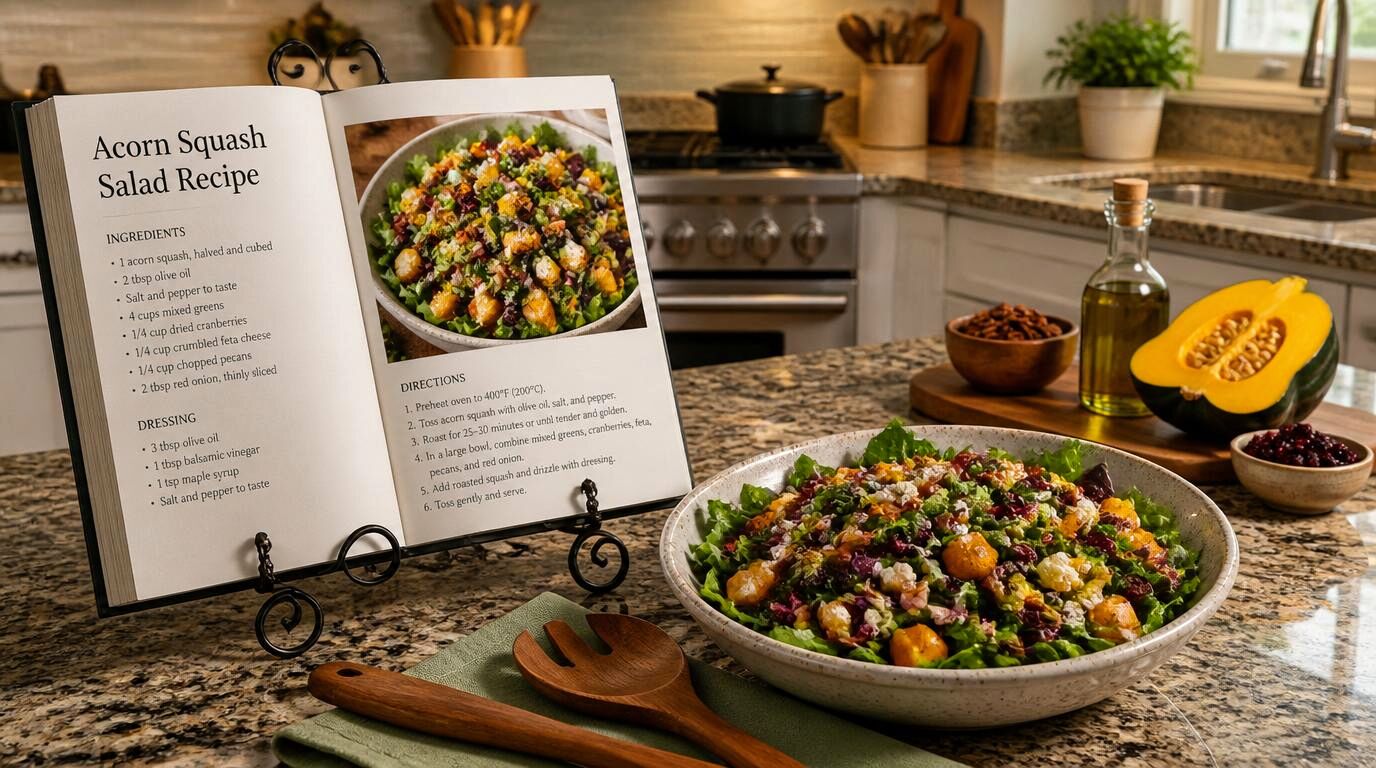
Acorn Squash Salad Recipe
Ingredients
- 2 small acorn squash 1 to 1 ½ pound each, cut in half and sliced into 1-inch slices
- 2 tablespoons olive oil or coconut or avocado oil
- 2 tablespoons maple syrup
- ⅛ teaspoon cinnamon ground
- ½ teaspoon kosher salt
- Pinch black pepper ground
- ¼ cup olive oil
- 2 tablespoons vinegar apple cider
- 1 tablespoon maple syrup
- ½ teaspoon salt kosher
- ¼ teaspoon black pepper
- 3 cups salad greens washed and dried
- 2 cups arugula washed and dried
- 1 cup quinoa bulgur or wild rice*, optional cooked
- ½ cup cranberries roughly chopped dried
- ¼ cup pomegranate seeds optional
- 4 ounces goat cheese crumbled
- ½ cup pepitas aka pumpkin seeds, lightly toasted*
Method
- Preheat your oven to 400°F (200°C).
- Line two baking sheets with parchment paper and set aside.
- Arrange the acorn squash slices in a single layer on the prepared baking sheets.
- In a small bowl, whisk together the olive oil, maple syrup, ground cinnamon, salt, and black pepper.
- Using a pastry brush, coat both sides of each squash slice with the maple-cinnamon mixture.
- Make sure the slices are evenly coated to encourage caramelization during roasting.
- Place the baking sheets in the preheated oven.
- Roast for 15 minutes, then remove the trays and carefully flip each squash slice.
- Return the squash to the oven and roast for another 15 minutes, or until the slices are tender and lightly browned around the edges.
- Remove from the oven and allow the squash to cool slightly while preparing the salad.
- In a large salad bowl, combine the olive oil, apple cider vinegar, salt, and black pepper.
- Whisk until the dressing is well blended.
- This bowl will also be used to assemble the salad, helping ensure the greens are evenly coated.
- Add the salad greens and arugula to the bowl with the vinaigrette.
- Toss gently until all the leaves are lightly coated.
- Add the cooked quinoa, dried cranberries, and pomegranate seeds.
- Toss again to distribute the ingredients evenly throughout the salad.
- Transfer the dressed salad mixture to a large serving platter or salad bowl.
- Arrange the roasted acorn squash slices attractively over the top.
- Sprinkle with crumbled goat cheese and pepitas (pumpkin seeds).
- Taste and adjust the seasoning with additional salt and pepper if desired.
- Serve immediately while the squash is still slightly warm or at room temperature.
- This salad works beautifully as a light main course, holiday side dish, or elegant addition to a fall-inspired meal.
- This colorful autumn salad combines sweet roasted acorn squash, nutty quinoa, tart cranberries, juicy pomegranate seeds, creamy goat cheese, and crunchy pepitas. The maple-cinnamon roasted squash pairs perfectly with the bright apple cider vinaigrette, creating a balance of sweet, savory, tangy, and earthy flavors.
- Beautiful, nutritious, and packed with seasonal ingredients, it's a dish that's as impressive on the table as it is satisfying to eat.
Nutrition
Private Notes
Tried this recipe?
Let us know how it was!Acorn Squash Salad Recipe Frequently Asked Questions
Find practical, testable tips for roasting, pairing, dressing, and prepping components so the acorn squash salad recipe stays flavorful and textured. Use precise times, temperatures, and ingredient combinations that work with greens like arugula, spinach, and baby kale and grains such as quinoa, farro, and wild rice in your acorn squash salad recipe.
How do you roast acorn squash for a salad so it stays tender but not mushy?
Halve and seed the squash, then slice into ½–¾-inch crescents for even cooking. Toss slices with 1–2 tablespoons olive oil, ¼ teaspoon salt, and a light sprinkle of smoked paprika, roast at 425°F (220°C) on a single layer for 20–25 minutes, turning once halfway through.
Check for fork-tenderness at 18 minutes to avoid overcooking. For caramelized edges without soft centers, roast at 450°F for 12–15 minutes after the initial 18-minute check. This method ensures your acorn squash salad recipe has the best texture.
What greens pair best with roasted acorn squash in a salad?
Peppery arugula contrasts the squash’s sweetness. Spinach gives a tender, mild base, while baby kale adds sturdiness for heartier grains like farro or wild rice in your acorn squash salad recipe.
Mixed greens add variety in texture and flavor. Avoid delicate lettuce if tossing the salad vigorously with warm squash in your acorn squash salad recipe.
Which dressings complement roasted acorn squash salad without overpowering it?
Choose a maple‑Dijon vinaigrette (2 parts oil to 1 part vinegar, 1 part maple syrup, 1 teaspoon Dijon) for a balanced sweet-tang profile. A lemon‑tahini dressing pairs well when you want creamy, nutty notes without masking the squash in your acorn squash salad recipe.
Keep dressings light when serving with goat cheese or ancient grains so the squash and greens remain front and center in your acorn squash salad recipe.
How can you make a roasted acorn squash salad with goat cheese that balances sweet and tangy flavors?
Crumble 2–3 tablespoons goat cheese per serving and scatter it over warm squash so it softens slightly without melting completely. Add tart elements like pomegranate arils or a squeeze of lemon and a drizzle of balsamic reduction to cut the goat cheese’s richness in your acorn squash salad recipe.
Finish with a handful of toasted pepitas or chopped toasted hazelnuts for crunch and a small spoonful of maple syrup in the dressing to tie sweetness and acidity together in your acorn squash salad recipe.
What are the healthiest add-ins for an acorn squash salad to increase protein and fiber?
When making an acorn squash salad recipe, I add cooked quinoa or farro for protein and a chewy texture; ½ cup cooked per person is a good portion. I mix in wild rice or other ancient grains for extra fiber and a nutty mouthfeel. These grains enhance the acorn squash salad recipe and provide long-lasting energy.
To increase protein in an acorn squash salad recipe, I fold in roasted chickpeas, grilled chicken, or tofu. I boost fiber with pomegranate seeds, toasted pumpkin seeds, and a generous portion of baby kale or mixed greens. Adding these ingredients to your acorn squash salad recipe ensures a nutritious and satisfying meal.
For even more variety in your acorn squash salad recipe, try sprinkling hemp seeds or chia seeds on top. Incorporate black beans or lentils for a hearty texture and additional protein. Find more creative ideas for your acorn squash salad recipe at EatingWell.
Every acorn squash salad recipe benefits from a mix of colors, flavors, and textures. The combination of grains, legumes, seeds, and greens creates a balanced dish. Experiment with different ingredients to find your favorite acorn squash salad recipe and enjoy a healthy, delicious meal every time.
How far in advance can you prepare roasted acorn squash salad components without losing texture?
When making an acorn squash salad recipe, I roast squash up to 48 hours ahead and store it in an airtight container in the fridge. I briefly reheat the squash or serve it slightly warm to restore tenderness in the acorn squash salad recipe. I cook grains like quinoa, farro, or wild rice 2–3 days ahead and keep them chilled separately, which works well for the acorn squash salad recipe.
I wash and dry greens just before serving, but I’ll wash and spin them up to 24 hours ahead and store them in a dry container with paper towels. When preparing an acorn squash salad recipe, I assemble only 30–60 minutes before serving if the dressing is on the salad. Otherwise, I dress just before plating to ensure the acorn squash salad recipe stays fresh and crisp.
For more tips on the best acorn squash salad recipe, check out this helpful guide. Using these strategies, you can prepare an acorn squash salad recipe efficiently and maintain great texture. Remember to store each component separately to keep your acorn squash salad recipe tasting its best. If you want to experiment, try different grains or greens in your acorn squash salad recipe for variety. Preparing ahead allows you to enjoy a delicious acorn squash salad recipe even on busy days. With these tips, your acorn squash salad recipe will be a standout dish at any meal.
