
This acorn squash pasta recipe makes a creamy, satisfying dish using roasted squash—no cream needed—so you get rich texture and true comfort in every bite.I show you how roasted acorn squash becomes a silky sauce that clings to pasta, delivering classic fall comfort food flavors with bright sage and a sprinkle of Parmesan.
Let’s explore my favorite variations, chef tips, and make-ahead tricks so you can tailor the acorn squash pasta recipe to meatless dinners, busy evenings, or a special autumn meal. If you want a dependable, slightly elevated comfort-food pasta that highlights seasonal squash, this guide gets you there. The acorn squash pasta recipe is perfect for anyone looking to bring out the best in fall flavors.
Description and Historical Information
Acorn squash, a small, ribbed winter squash with sweet, nutty flesh, browns beautifully when roasted. Roasted acorn squash adds depth to sauces because caramelized edges create savory-sweet complexity. I use acorn squash puree to form a silky base for pasta sauces or soups, and pureeing roasted acorn squash concentrates the flavor and creates a creamy texture without heavy cream, making it ideal for vegetarian acorn squash pasta recipes.
Whole roasted acorn squash highlights caramelization and texture, while puree offers consistency and ease of blending into an acorn squash pasta recipe. Roasting cut squash at high heat develops browned flavor before mashing or puréeing. Acorn squash’s origins trace back to the Americas, where Indigenous peoples cultivated many squash varieties, which explains why acorn squash became common in North American autumn cuisine and why it features in so many acorn squash pasta recipes today.
Modern acorn squash pasta recipe variations often pair the squash with sage, Parmesan, garlic, or browned butter. These pairings emphasize the squash’s natural sweetness and create a balanced, comforting acorn squash pasta recipe sauce.
7 Key Take Aways
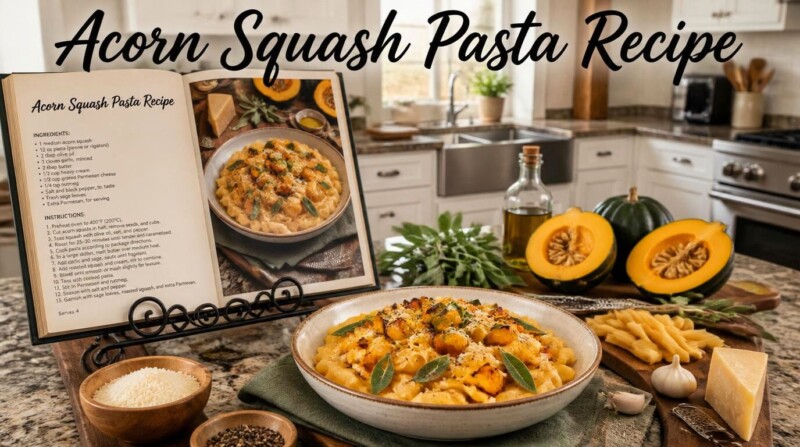
Roasting the acorn squash for your acorn squash pasta recipe concentrates its sweetness and creates a silky sauce base. Roasting at high heat caramelizes the edges and makes scooping the flesh easier. Using a blender or immersion blender achieves a smooth, velvety sauce without heavy cream, letting the squash carry flavor while keeping the acorn squash pasta recipe lighter.
Pair the sauce with sturdy pasta shapes (fettuccine, rigatoni, or shells) so the sauce clings well. Short pasta works when you want bites that hold pockets of squash. Balance sweetness with savory elements: browned butter, sage, garlic, or Parmesan add depth, and a squeeze of lemon or a splash of vinegar brightens the final acorn squash pasta recipe.
Add texture with toasted nuts or crispy breadcrumbs for contrast. Hazelnuts, walnuts, or panko tossed in butter give a pleasant crunch. Adjust seasoning gradually and taste often; salt, pepper, and nutmeg can transform the squash, so season the sauce before tossing with pasta. The acorn squash pasta recipe adapts to vegetarian, gluten-free, or nut-free variations and pairs well with roasted autumn vegetables or a simple green salad.
Chef’s Tips
Roast the acorn squash with a generous drizzle of olive oil to encourage caramelization and deepen flavor for your acorn squash pasta recipe. Cut the squash into even pieces so they cook uniformly and finish faster. Use an immersion blender to puree the roasted squash directly in the pot for a silky sauce with minimal fuss. If the sauce seems thick, thin it with reserved pasta water a little at a time until it reaches your desired consistency.
Crisp fried sage leaves in a small pan with a touch of olive oil; they add a crisp, herbal finish and a beautiful garnish to your acorn squash pasta recipe. Drain them on paper towel and sprinkle them atop the plated pasta right before serving to preserve their texture. Taste as you go and adjust salt and pepper after pureeing, since roasting concentrates flavors.
Fold in grated Parmesan off the heat to keep the cheese from becoming grainy and to maintain a glossy finish in your acorn squash pasta recipe. Toast chopped walnuts or pine nuts in a dry skillet and fold them into the pasta for a nuttier note. Reserve a few squash cubes roasted extra-crisp for textural contrast and visual appeal in your acorn squash pasta recipe.
Make-Ahead Instructions
Roast the acorn squash and cool it completely before storing for your acorn squash pasta recipe. This step preserves flavor and saves time on the day you assemble the pasta. Scoop the flesh into an airtight container and refrigerate for up to 4 days, or freeze mashed or puréed squash in portioned freezer bags for up to 3 months if you need longer storage.
Cook the pasta slightly under al dente when prepping ahead for your acorn squash pasta recipe. Toss the drained pasta with a little olive oil to prevent sticking and allow for quick reheating without losing texture. Make the sauce in advance and keep it in a separate container from any proteins or greens; reheat gently over low heat with a splash of pasta water to restore creaminess.
Check leftover acorn squash for freshness and aroma before combining it with other ingredients in your acorn squash pasta recipe. Cold squash blends well into a warm sauce; warm it first if the kitchen is already busy. Label containers with the date and contents so you can rotate refrigerated items easily. Small prep steps—roasted squash, cooked pasta, and toasted nuts—make day-of assembly for your acorn squash pasta recipe take under 10 minutes.
Variations
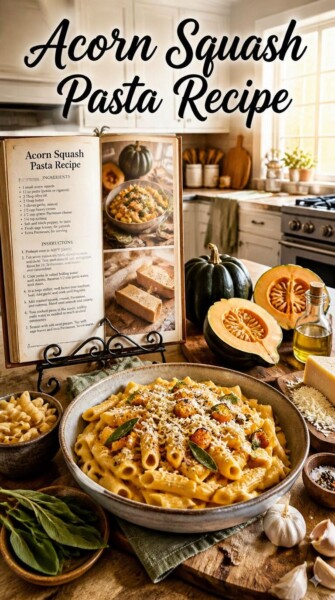
Swap acorn squash for butternut squash when you want a smoother, sweeter sauce in your acorn squash pasta recipe. Butternut yields a silkier puree and slightly richer flavor, pairing well with sage and browned butter. For a lighter, dairy-free acorn squash pasta recipe, blend roasted squash with olive oil, nutritional yeast, and lemon zest for a creamy mouthfeel without cream or cheese, and add leafy greens like spinach.
Use gluten-free pasta in your acorn squash pasta recipe for guests with sensitivities. Rice, corn, or legume-based pastas hold up well if you undercook them by a minute and toss immediately with the sauce to finish cooking. To add protein, fold in diced roasted chicken, Italian sausage, or crispy chickpeas. Each choice changes texture: chicken stays tender, sausage adds spice, and chickpeas give a nutty bite.
Rotate between fresh sage, thyme, or rosemary for herb and spice variations in your acorn squash pasta recipe. Add a pinch of smoked paprika or red pepper flakes for warmth without overwhelming the squash’s sweetness. Finish some versions of your acorn squash pasta recipe with toasted nuts—pumpkin seeds or toasted walnuts add crunch and contrast. A light dusting of Parmesan or a spoonful of ricotta changes richness depending on how indulgent you want the dish.
Related Recipes
Pair your acorn squash pasta recipe with other autumnal dishes that share its sweet, nutty profile. A simple brown butter sauce with toasted hazelnuts and fresh sage echoes the squash’s richness while adding crunch and a toasty aroma. Try a brown butter variant inspired by this brown butter acorn squash pasta.
For a creamier option, make a roasted squash and Parmesan sauce that mirrors the same savory-sweet balance as the main acorn squash pasta recipe. Roasting the squash beforehand deepens the flavor and keeps the sauce silky; a similar approach appears in this creamy acorn squash pasta recipe.
When you want a lighter plate, swap fettuccine for a short pasta and toss in sautéed garlic, fresh sage, and a squeeze of lemon to brighten your acorn squash pasta recipe. That quick, weeknight-friendly idea follows the same practical style found in these efficient acorn squash and pasta recipes for busy weeknights. For more inspiration, check out this comprehensive acorn squash recipe collection.
Recipe Comparison
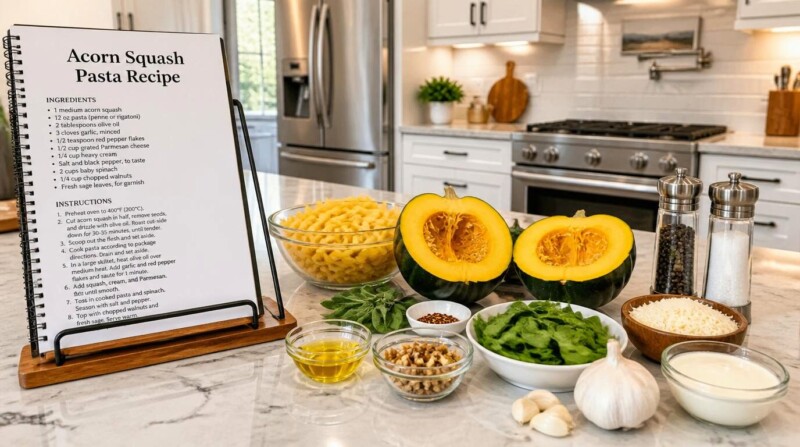
I compared several acorn squash pasta recipe approaches to find what balances flavor, texture, and ease. Roasted-squash purée sauces, chunky roasted squash tosses, and tomato-based arrabbiata variations each offer unique benefits. Roasted-squash purée creates a silky, creamy coating that clings to pasta and gives a rich mouthfeel without heavy cream. Add a splash of pasta water for a silky emulsion in your acorn squash pasta recipe.
Chunky roasted squash pieces keep distinct texture and caramelized edges, requiring less hands-on blending and adding bite to your acorn squash pasta recipe. Pair them with toasted nuts and fresh herbs for contrast. Tomato-forward versions, like arrabbiata, highlight acidity and spice against the squash’s sweetness, shortening prep and adding a bright counterpoint. Anchor the sauce with garlic and a touch of sugar if the tomatoes taste sharp.
Quick comparison (high-level):
- Flavor: Purée = rich; Chunky = sweet + caramelized; Tomato = bright + spicy.
- Prep time: Purée = moderate; Chunky = low to moderate; Tomato = low.
- Texture: Purée = smooth; Chunky = varied; Tomato = saucy.
- Best match: Purée suits fettuccine or tagliatelle; Chunky works with penne or rigatoni; Tomato pairs with penne or spaghetti.
Find a practical collection of acorn squash pasta recipe inspiration and specific recipes including both creamy and arrabbiata styles at this roundup of acorn squash and pasta recipes.
Acorn Squash Pasta Recipe Cooking Tips
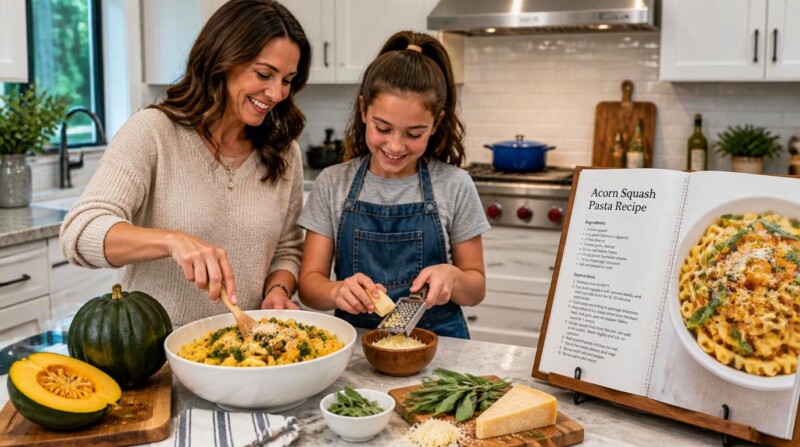
• Acorn Squash Pasta combines the sweet, nutty flavor of roasted acorn squash with tender pasta for a comforting meal.
• Choose acorn squash that feels heavy for its size and has firm skin without blemishes.
• Roast the squash until tender and lightly caramelized to develop the richest flavor.
• Remove the seeds and fibrous center completely before cooking.
• Puree the roasted squash for a smooth sauce or leave it in small cubes for added texture.
• Pasta shapes such as penne, rigatoni, fettuccine, farfalle, or shells work especially well.
• Reserve some pasta cooking water to help create a silky sauce.
• Garlic, shallots, onions, and sage pair exceptionally well with acorn squash.
• Butter, olive oil, cream, or mascarpone can add richness to the sauce.
• Parmesan, Pecorino Romano, goat cheese, or Gruyère complement the squash’s sweetness.
• Nutmeg, black pepper, thyme, rosemary, or sage enhance the flavor profile.
• Toasted walnuts, pecans, pine nuts, or pumpkin seeds add crunch and contrast.
• Add spinach, kale, mushrooms, or roasted vegetables for extra color and nutrition.
• Cook pasta until al dente to maintain texture when combined with the sauce.
• Adjust the sauce consistency with broth, cream, or reserved pasta water as needed.
• Balance the squash’s sweetness with savory seasonings and a touch of acidity if desired.
• Properly prepared acorn squash pasta should be creamy, flavorful, and well-balanced.
• Serve immediately while hot and garnish with cheese, herbs, or toasted nuts.
Acorn Squash Pasta Recipe Storage Tips
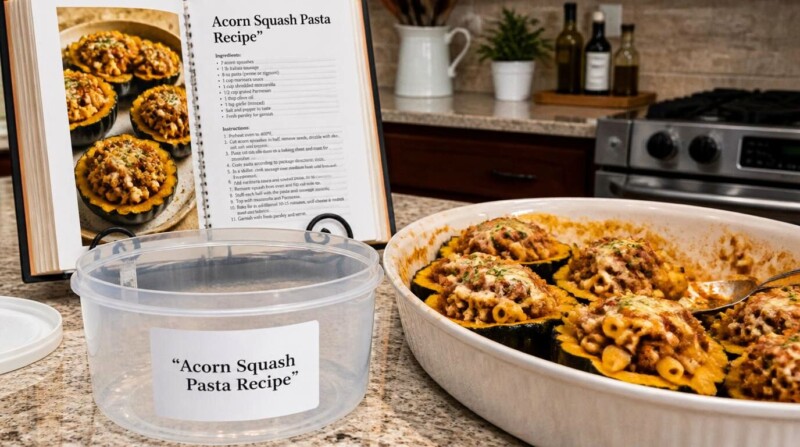
• Allow the pasta to cool before transferring it into storage containers.
• Store refrigerated in airtight containers to preserve freshness and flavor.
• Refrigeration often allows the sauce flavors to blend further.
• The sauce may thicken during storage as the pasta absorbs moisture.
• Add a small amount of broth, milk, cream, or water when reheating if needed.
• Reheat gently on the stovetop or in the microwave until thoroughly heated.
• Stir occasionally during reheating to distribute the sauce evenly.
• Store additional cheese or crunchy toppings separately when possible.
• Individual portions can be stored for convenient lunches or dinners.
• Freeze sauce separately from pasta when possible for the best texture.
• Freeze complete pasta dishes only if necessary, as pasta texture may soften after thawing.
• Use airtight freezer-safe containers to help preserve quality.
• Defrost frozen portions gradually in the refrigerator before reheating.
• Use clean utensils when serving leftovers to help maintain freshness.
• Keep away from strongly scented foods because pasta dishes can absorb surrounding odors.
• Check for signs of spoilage such as sour odors, mold, unusual discoloration, or texture deterioration before consuming leftovers.
• Avoid repeated freezing and thawing cycles.
• For best quality, enjoy refrigerated and frozen portions while the sauce remains creamy and the pasta retains its texture.
Acorn Squash Pasta Recipe
Ingredients
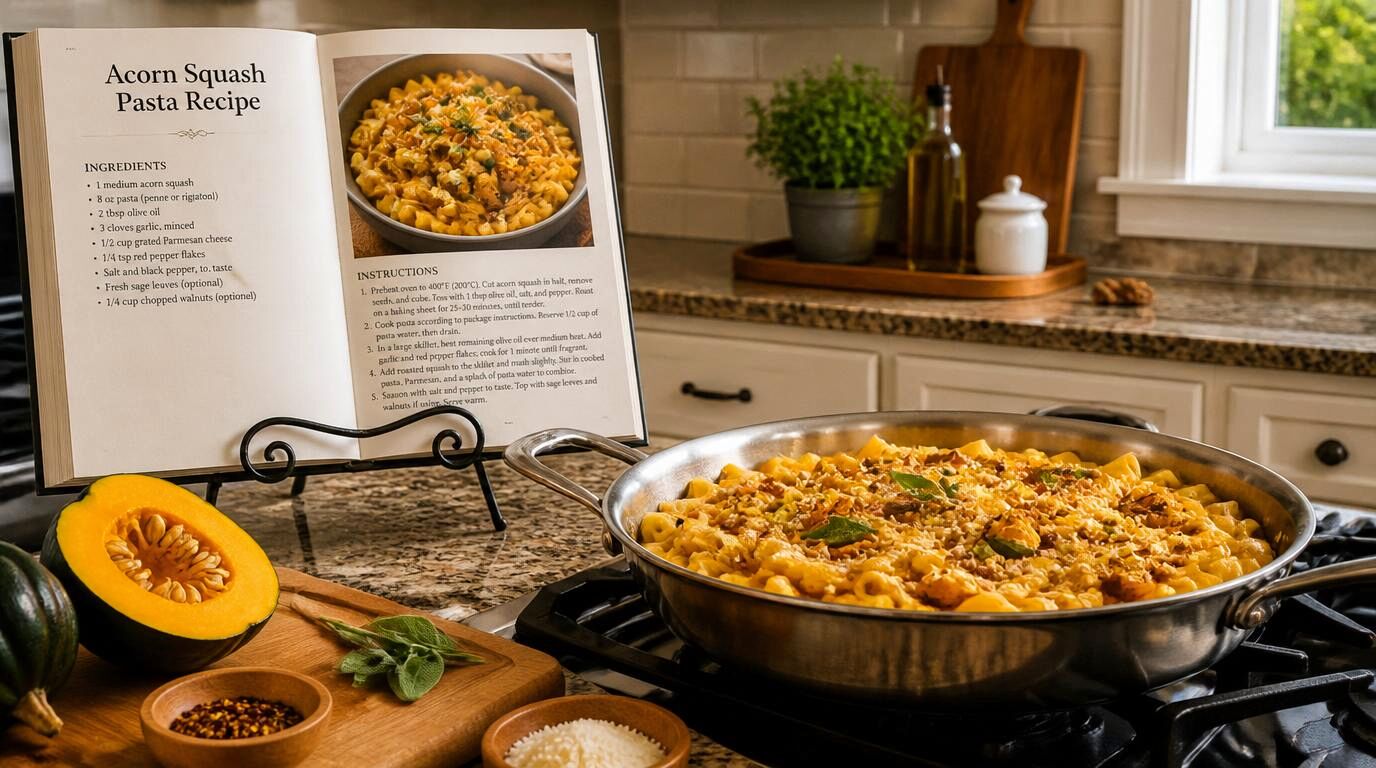
- 1 medium acorn squash
- 1 tablespoons olive oil
- ¼ teaspoon salt
- ¼ teaspoon black pepper freshly ground
- 8 oz pasta bow-tie or farfalle
- 1 tablespoon olive oil
- 12 oz sausage smoked sausage fully cooked I used andouille sausage
- 1 cup heavy cream
- 4 oz spinach fresh
- thyme fresh
- salt and pepper
- red pepper flakes
Method
- Preheat your oven to 400°F (200°C).
- Carefully slice the acorn squash in half lengthwise.
- Using a spoon, scoop out and discard the seeds and stringy fibers from the center.
- Place the squash halves cut-side up on a baking sheet.
- Drizzle the exposed flesh with olive oil and rub it evenly over the surface.
- Season generously with salt and black pepper.
- Turn the squash halves cut-side down on the baking sheet.
- Roast for approximately 30 minutes, or until the flesh is tender and easily pierced with a fork.
- Remove from the oven and allow the squash to cool slightly.
- Once cool enough to handle, scoop the roasted flesh from the shells into a medium bowl.
- Mash with a fork until smooth to create a squash purée.
- Measure out 1 cup of the purée for the sauce.
- While the squash is roasting, bring a large pot of salted water to a boil.
- Add the pasta and cook according to the package directions, usually about 10 minutes, until al dente.
- Drain the pasta and set aside.
- Heat 1 tablespoon olive oil in a large high-sided skillet over medium heat.
- Slice the cooked sausage into coin-shaped pieces.
- Add the sausage to the skillet and cook for approximately 5 minutes on one side.
- Turn the slices and cook for another 3 minutes, until nicely browned.
- If necessary, drain any excess grease from the skillet.
- To the same skillet with the sausage, add the 1 cup of acorn squash purée, heavy cream, and half of the fresh thyme leaves.
- Stir until smooth and well combined.
- Bring the mixture to a gentle simmer over medium heat.
- Reduce the heat to medium-low and continue cooking for about 3 minutes, stirring occasionally, until the spinach has wilted and the sauce is creamy and heated through.
- Combine the Pasta
- Toss thoroughly until all of the pasta is evenly coated with the creamy squash sauce.
- Allow everything to cook together for another minute or two so the flavors can fully combine.
- Sprinkle the remaining fresh thyme leaves over the pasta.
- Add red pepper flakes to taste for a touch of heat and color.
- Give the pasta one final toss before serving.
- Serve immediately while hot.
- For extra richness, garnish with freshly grated Parmesan cheese if desired.
- Pair with a simple green salad and crusty bread for a complete meal.
- This creamy acorn squash pasta combines sweet roasted squash, savory sausage, tender spinach, and fresh thyme in a rich, comforting sauce. The squash adds natural sweetness and velvety texture, while the sausage brings hearty flavor and depth.
- Perfect for autumn dinners or cozy weeknight meals, this dish balances comfort and elegance in every bite.
Nutrition
Private Notes
Tried this recipe?
Let us know how it was!Acorn Squash Pasta Recipe Frequently Asked Questions
Here are answers to common questions about preparing an acorn squash pasta recipe with a silky, flavorful sauce and easy weeknight steps.
How do you make a creamy squash sauce for pasta without heavy cream?
Roast or simmer acorn squash until very tender, then blend it with warm vegetable broth and a splash of olive oil until smooth. Stir in grated Parmesan cheese off-heat to enrich and thicken the sauce without curdling; add a pinch of red pepper flakes for heat if you like. If the sauce is too thick, loosen it with reserved pasta water a tablespoon at a time to achieve a velvety consistency that coats linguine or fettuccine in your acorn squash pasta recipe.
What is the best way to roast acorn squash for a smooth pasta sauce?
Halve and seed the squash, then cut into 1-inch wedges so pieces roast evenly and caramelize. Toss with a little oil, salt, and pepper, and roast at 425°F (220°C) until the flesh is fork-tender and browned at the edges, about 30–40 minutes. Scoop the flesh while hot into a blender with warm vegetable broth and a couple of garlic cloves; blending hot improves silkiness for the acorn squash pasta recipe sauce.
Which pasta shapes pair best with roasted squash sauce?
Long, flat noodles like fettuccine and linguine pick up creamy acorn squash pasta recipe sauce well and provide an even coating per bite. Shorter shapes with pockets—bow-tie pasta or small shells—work when you want sauce to cling in little pockets and add textural contrast. Match the sauce thickness to the shape: thin sauce for linguine, slightly chunkier for bow-tie pasta in your acorn squash pasta recipe.
How can you make a brown butter and sage squash pasta sauce without burning the butter?
Melt unsalted butter over medium-low heat and watch for small foaming bubbles; swirl constantly once foam appears. When the milk solids turn golden-brown and smell nutty, remove the pan from heat, then quickly stir in torn sage leaves so they crisp without burning. Combine this brown butter and sage with pureed acorn squash pasta recipe sauce and finish with Parmesan; add red pepper flakes sparingly to balance richness.
What ingredients can boost protein and make the dish a complete meal?
Stir in cooked white beans or lentils to integrate seamlessly into creamy acorn squash pasta recipe sauce for plant-based protein. Toss in shredded roasted chicken or cubed pan-seared tofu for higher protein and texture contrast. Finish with extra grated Parmesan to add both flavor depth and about 7–8 grams of protein per ounce to your acorn squash pasta recipe.
How do you store and reheat leftover squash pasta while keeping the sauce creamy?
When making an acorn squash pasta recipe, cool the pasta and sauce separately if possible, then place them in airtight containers in the refrigerator for up to 3–4 days. You can keep your acorn squash pasta recipe fresh by storing it this way. This method works for all kinds of acorn squash pasta recipe variations.
To reheat your acorn squash pasta recipe, use low heat and add a splash of vegetable broth or reserved pasta water, stirring frequently until the sauce loosens and becomes creamy again. Stirring helps the acorn squash pasta recipe maintain its texture and flavor. Always make sure to reheat your acorn squash pasta recipe slowly for the best results.
If you prefer using the oven, cover the dish and reheat your acorn squash pasta recipe at 325°F (160°C). Add a few tablespoons of broth to keep the acorn squash pasta recipe from drying out. This technique ensures your acorn squash pasta recipe stays moist and creamy. For more tips on reheating pasta, visit Serious Eats.
