
This acorn squash casserole recipe blends roasted acorn squash into a silky, savory-sweet filling topped with a crunchy pecan or breadcrumb crust, giving you a make-ahead, crowd-pleasing dish with minimal fuss. I’ll walk you through why the roast-first approach deepens sweetness and how small swaps let you tailor the casserole to your taste.
This acorn squash casserole recipe evolved from rustic bakes into modern casseroles, with chef-tested tips to prevent sogginess and quick variations for savory or sweet finishes. Expect clear make-ahead instructions, a comparison of common versions, and answers to the practical questions you’ll want before you start baking.
Description and Historical Information
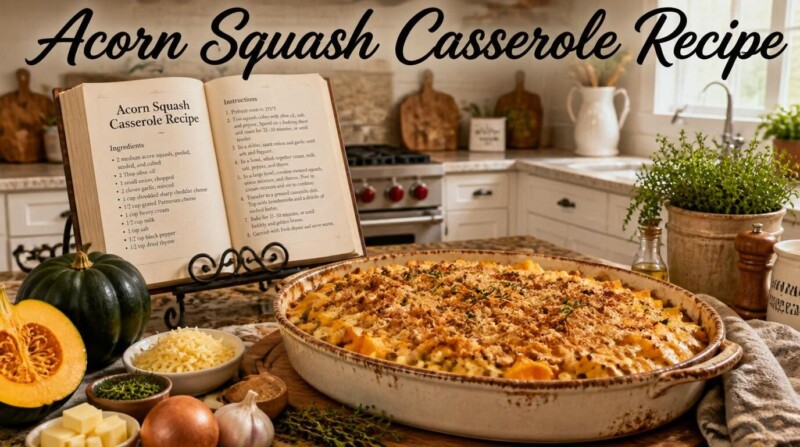
I describe acorn squash casserole as a comforting baked dish that blends the nutty sweetness of roasted acorn squash with creamy binders and a crunchy topping. I roast the squash first to deepen its flavor and create a smooth base for the casserole. The acorn squash casserole recipe belongs to a broad family of squash casserole recipes rooted in North American home cooking.
Its lineage traces back to simple preparations that emphasized local squash varieties and pantry staples, evolving into versions that use eggs, dairy, breadcrumbs, Parmesan, or pecans for texture and savor. See a classic take on a squash casserole with crunchy pecan topping.
Roasting concentrates sweetness and yields a creamy texture ideal for blending. I use roasted acorn squash or other roasted squash varieties as the mashed base, which lets me control moisture and seasoning before baking. Regional and seasonal differences shaped the acorn squash casserole recipe: some cooks favor savory elements like Parmesan and herbs, while others add brown sugar, vanilla, or pecans for a slightly sweet profile.
Historical accounts link these casseroles to traditional preparations that honored harvest abundance and simple techniques. I respect those origins when I craft my own acorn squash casserole recipe, aiming to let the squash’s natural flavor remain central.
Key Takeaways
I recommend this acorn squash casserole recipe as a reliable Thanksgiving side dish that balances sweet and savory notes. The squash mashes into a smooth, slightly sweet base while a pecan or breadcrumb topping adds crisp contrast. Roasting the squash first deepens flavor and reduces prep time on the day of serving.
You can roast ahead and assemble later, making this acorn squash casserole recipe a practical fall comfort food for busy holiday schedules. Texture matters: aim for a velvety filling and a golden, crunchy topping. Small adjustments—brown sugar for sweetness or Parmesan for savoriness—let you tailor the casserole to your menu and guests.
- Use firm, evenly sized acorn squashes for predictable roasting.
- Cool roasted flesh slightly before blending to avoid watery filling.
- Toast nuts and brown butter for more aromatic topping.
This dish pairs well with roasted poultry and savory gravies. It stands up to rich mains while adding warmth and seasonal character to the plate. For straightforward recipes and variations, consult a trusted recipe like this Acorn Squash Casserole: Cozy, Sweet & Crunchy Fall Favorite.
Chef’s Tips
I brown the butter briefly before adding it to the acorn squash casserole recipe. Brown butter adds a nutty, complex flavor that deepens the dish without overpowering the acorn squash. When roasting the squash, I roast cut-side down on a rimmed pan to concentrate caramelization, which creates a sweeter, creamier roasted squash filling.
I scoop and drain the roasted squash well before mashing. Excess moisture can make the casserole loose, so I press the flesh in a colander or let it sit in a sieve for 10–15 minutes. For texture contrast, I brown the butter, then toss it with breadcrumbs or chopped pecans for a golden, crunchy topping that complements the silky filling.
I season the filling generously but taste as I go. Acorn squash is naturally sweet; I balance it with a touch of salt, a bright acid like lemon juice, or a small amount of grated Parmesan when I want a savory note. If I need to make the acorn squash casserole recipe ahead, I prepare the roasted squash and filling one day in advance and keep them chilled.
I assemble and bake just before serving for the best color and texture. When adapting to dietary needs, I replace brown butter with olive oil or a vegan butter for similar richness. I test consistency—add an extra egg or a tablespoon of flour if the filling feels too loose.
Make-Ahead Instructions
I prepare the filling for the acorn squash casserole recipe up to the point before the final bake when I want to save time. I roast and mash the acorn squash, mix in the butter, spices, and any dairy called for, then transfer the mixture to the casserole dish and smooth the top.
I cover the assembled but unbaked acorn squash casserole recipe tightly with plastic wrap or foil and refrigerate for up to 24 hours. Let it sit at room temperature for about 15–30 minutes before baking to remove chill and promote even cooking. For longer storage I freeze the casserole after assembly in a double layer of plastic and foil, or use a freezer-safe container, and freeze for up to 3 months.
I keep the topping separate to preserve texture. Store streusel or pecan topping in an airtight container in the fridge for 24–48 hours, or freeze it in a zip-top bag for up to 3 months. Sprinkle the topping on just before baking.
- From refrigerated: bake at the recipe temperature until bubbling and golden, about 20–30 minutes.
- From frozen: bake covered at 350°F (175°C) for 45–60 minutes, then uncover to brown the topping.
I label containers with date and contents to track freshness and avoid guesswork.
Variations
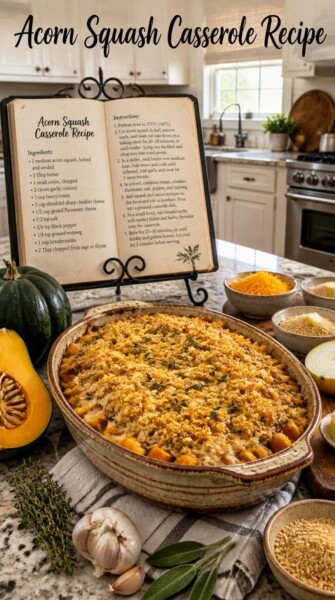
I often start with a classic pecan topping for a crunchy finish on my acorn squash casserole recipe. Toast chopped pecans with a little brown sugar and butter, then sprinkle over the casserole before baking for a traditional contrast to the soft squash. For a richer option I use a brown butter pecan topping, browning the butter first to deepen the flavor, mixing in pecans and a touch of maple, then pressing lightly so it forms a crisp, caramelized crust as it bakes.
Sometimes I prefer a pecan crumble topping that is nuttier and less sweet. I combine finely chopped pecans with oats, flour, and cold butter, then scatter it over the squash for a textural, streusel-like layer. I vary the filling to complement the toppings, adding a little cinnamon and nutmeg to balance the pecan sweet notes, or a pinch of cayenne or chopped jalapeño for subtle heat.
When I want a make-ahead acorn squash casserole recipe, I roast the squash and prepare the pecan topping separately. I assemble and refrigerate, then bake just before serving to keep the crumble crisp. Try one of these variations to match your meal: go nut-forward with a pecan crumble, deepen flavor with brown butter pecan topping, or keep it classic with a simple pecan topping. For more inspiration, see a roundup of casserole approaches like those at Acorn Squash Casserole Recipes
Related Recipes
I often pair this acorn squash casserole recipe with variations that echo its sweet-and-savory profile. One favorite is a classic sweet potato casserole, which uses mashed sweet potatoes, brown sugar, and a crunchy pecan topping for a similar texture contrast and deeper sweetness. Try a lighter version by swapping some sugar for maple syrup and adding a touch of citrus zest to balance the richness.
I also recommend a simple baked acorn squash when I want an easy side with minimal hands-on time. I halve and roast the squash with butter, salt, and a sprinkle of brown sugar; the caramelized flesh makes a great stand-alone side or an ingredient to mash into an acorn squash casserole recipe. For a savory twist, I roast the halves with garlic and thyme and finish them with grated Parmesan.
If I want to expand the menu, I add a vegetable gratin or a creamy cauliflower bake to complement the casserole’s flavors. For holiday meals, I sometimes serve a green bean almondine alongside the sweet potato casserole for color and crunch.
- Sweet potato casserole: rich, sweet, and nut-topped; pairs well with turkey and roasted meats.
- Baked acorn squash: quick, caramelized, and versatile; works as both side dish and mash base.
Recipe Comparison
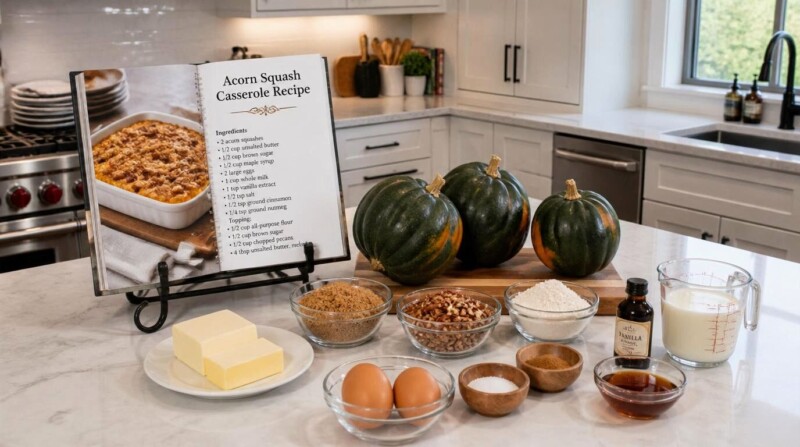
I compare this acorn squash casserole recipe to other winter squash casserole recipes by focusing on texture, sweetness, and topping choices. Some versions lean savory with Parmesan and breadcrumbs, while others highlight brown sugar and pecans for a sweeter finish. I prefer a balanced approach: roasted acorn squash for caramelized flavor, a lightly sweetened custard base, and a crunchy topping.
The crunchy topping can be Parmesan-breadcrumb for a savory contrast or a brown-butter pecan mix for a sweeter, richer profile. Key differences at a glance:
- Preparation: roasted squash versus steamed or canned affects depth of flavor.
- Binding agents: eggs and half-and-half create a custardy bake; creamier casseroles use more dairy.
- Toppings: herb-breadcrumbs add savory crunch; pecan streusel brings nuttiness and caramel notes.
I adjust sweetness based on side dishes and crowd preferences. If serving with savory mains, I keep sugar low and emphasize herbs and cheese. For holiday menus, I increase brown sugar and include a pecan topping for a festive, dessert-like side. For specific variations and inspiration, I look to tested recipes such as a savory Parmesan-breadcrumb version and a brown-butter pecan version to guide proportions and baking times.
Acorn Squash Casserole Recipe Cooking Tips
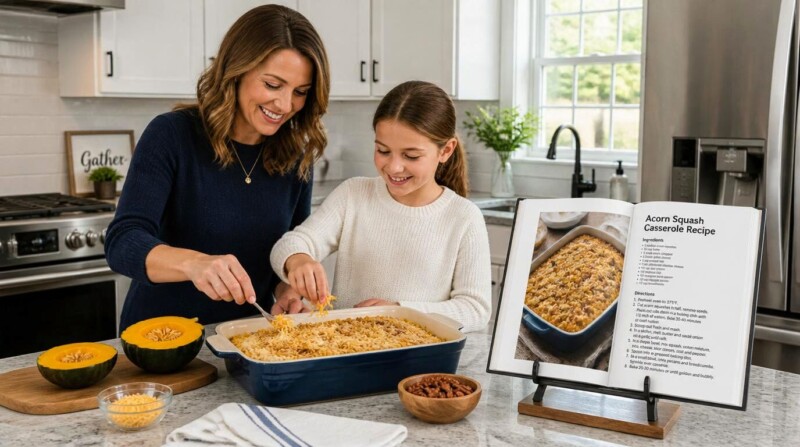
• Acorn Squash Casserole is a comforting dish that highlights the squash’s naturally sweet flavor and creamy texture.
• Choose acorn squash that feels heavy for its size and has firm, dark green skin.
• Roast or steam the squash until tender before incorporating it into the casserole.
• Remove all seeds and fibrous material before cooking.
• Mash or puree the cooked squash for a smoother casserole texture.
• Butter, cream, sour cream, or cream cheese can add richness and improve texture.
• Eggs are often used to help bind the casserole and provide structure.
• Brown sugar, maple syrup, honey, cinnamon, nutmeg, and ginger complement the squash’s natural sweetness.
• For a savory version, use garlic, onions, herbs, and cheese instead of sweet seasonings.
• Cheddar, Gruyère, Parmesan, or mozzarella can add richness to savory casseroles.
• Pecans, walnuts, breadcrumbs, or crushed crackers make excellent toppings.
• Mix ingredients thoroughly to ensure even flavor distribution.
• Use a properly greased baking dish to prevent sticking.
• Bake until the casserole is heated through and lightly browned on top.
• Avoid overbaking, which can dry out the casserole.
• Allow the casserole to rest briefly before serving to improve texture and slicing.
• Properly prepared acorn squash casserole should be creamy, flavorful, and evenly cooked.
• Serve as a side dish for holiday meals or everyday dinners.
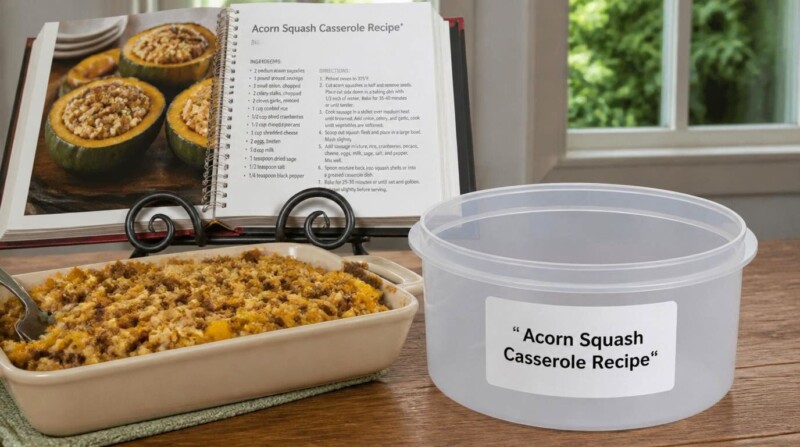
Acorn Squash Casserole Recipe Storage Tips
• Allow the casserole to cool completely before storing.
• Store refrigerated in airtight containers or tightly covered baking dishes.
• Refrigeration often enhances flavor as the ingredients continue to blend.
• Reheat in the oven for the best texture and even warming.
• Microwave reheating is convenient for individual portions.
• Cover during reheating to help retain moisture.
• Add a small amount of cream, milk, or broth if the casserole appears dry.
• Store crunchy toppings separately when possible to maintain texture.
• Individual portions can be stored for convenient meals.
• Freeze casserole portions in airtight freezer-safe containers if desired.
• Wrap tightly to help prevent freezer burn and preserve quality.
• Defrost frozen portions gradually in the refrigerator before reheating.
• Texture may soften slightly after freezing and thawing.
• Use clean utensils when serving leftovers to help maintain freshness.
• Keep away from strongly scented foods because casseroles readily absorb odors.
• Check for signs of spoilage such as mold, sour odors, unusual discoloration, or texture deterioration before consuming leftovers.
• Avoid repeated freezing and thawing cycles, which can affect quality.
• For best quality, enjoy refrigerated and frozen portions while the casserole remains creamy, flavorful, and moist.
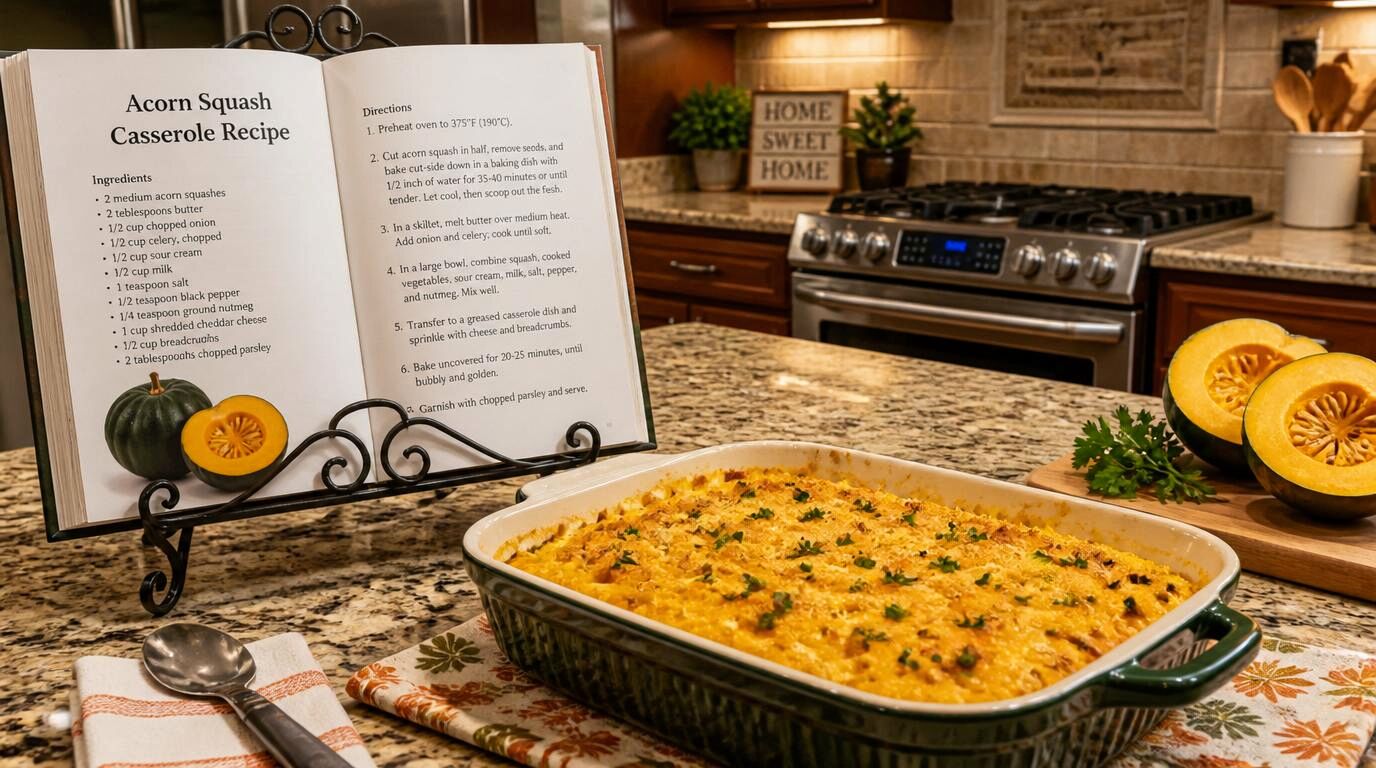
Acorn squash Casserole
Ingredients
- 2 acorn squash about 1 1/2 pounds each, halved and seeded
- 2 tablespoons olive oil extra-virgin
- ¾ cup whole milk
- 2 large eggs lightly beaten
- 1 tablespoon shallot finely chopped
- 1 teaspoon garlic minced
- ⅔ cup cheese finely grated Parmesan divided
- ¾ teaspoon salt ground divided
- ½ teaspoon pepper divided
- 1 ½ cups bread fresh whole-wheat sourdough breadcrumbs
- 2 tablespoons butter melted unsalted
- 2 tablespoons parsley chopped fresh flat-leaf
- 1 tablespoon sage chopped fresh
- 1 tablespoon rosemary chopped fresh
Method
- Preheat your oven to 425°F (220°C) with a rack positioned in the upper third of the oven.
- Line a large baking sheet with aluminum foil.
- Arrange the squash halves on the baking sheet with the cut sides facing upward.
- Brush the exposed flesh lightly with oil.
- Place the squash in the oven and roast for approximately 40 minutes, or until the flesh is very tender when pierced with a fork.
- Remove from the oven and allow the squash to cool for about 10 minutes, or until it can be handled comfortably.
- Reduce the oven temperature to 350°F (175°C).
- Using a spoon, scoop the roasted squash flesh into a large mixing bowl.
- Mash thoroughly with a potato masher or large fork until smooth.
- Add the milk, eggs, shallot, garlic, ⅓ cup Parmesan cheese, ½ teaspoon salt, and ¼ teaspoon black pepper.
- Stir until all ingredients are evenly combined and the mixture is smooth and creamy.
- Lightly grease a 7-by-11-inch baking dish.
- Pour the squash mixture into the prepared dish and spread it into an even layer.
- In a medium bowl, combine the breadcrumbs, melted butter, parsley, sage, rosemary, the remaining ⅓ cup Parmesan cheese, and the remaining ¼ teaspoon each of salt and black pepper.
- Mix until the breadcrumbs are evenly coated and the herbs are distributed throughout.
- Sprinkle the breadcrumb mixture evenly over the squash filling.
- Place the casserole in the preheated 350°F (175°C) oven.
- Bake for 28 to 30 minutes, or until the filling is fully set and heated through.
- The edges should be lightly bubbling and the center should no longer appear loose.
- Switch the oven to the broil setting.
- Place the casserole under the broiler and cook for 1 to 3 minutes, watching carefully.
- Broil just until the topping becomes golden brown and crisp.
- Do not leave it unattended, as the breadcrumb topping can brown very quickly.
- Remove the casserole from the oven and allow it to rest for a few minutes before serving.
- Spoon portions onto individual plates and serve warm.
- This casserole pairs beautifully with roasted poultry, pork, beef, or as part of a holiday meal.
- This butternut squash casserole combines creamy roasted squash with savory Parmesan, garlic, and shallots, all topped with a crisp herb-seasoned breadcrumb crust. The combination of sage, rosemary, and parsley brings classic autumn flavors, while the Parmesan adds richness and depth.
- Elegant enough for holiday gatherings yet simple enough for family dinners, this casserole is a comforting and flavorful way to showcase sweet roasted squash.
Nutrition
Private Notes
Tried this recipe?
Let us know how it was!Acorn Squash Casserole Recipe Frequently Asked Questions
I focus on practical steps you can use immediately: choosing and prepping squash, core ingredients for a classic acorn squash casserole recipe, quick assembly methods, seasoning pairings, lighter swaps, and vegan substitutions. I also note what to serve alongside the casserole and clear instructions on how to make it with minimal fuss.
How do I choose and prepare acorn squash for a casserole?
Pick acorn squash that feels heavy for its size with a deep, dark green rind and minimal soft spots. Lighter patches or orange streaks are fine; avoid squash with large bruises or mushy areas. I cut the squash in half lengthwise, scoop out seeds with a spoon, then peel if the acorn squash casserole recipe calls for mashed squash.
For roasting, I halve and roast at 400°F (205°C) cut-side down for 25–35 minutes until tender; for faster prep I cube and roast 20–25 minutes. If the recipe asks for mashed squash, I scoop the cooked flesh from the rinds and mash or pulse in a food processor. If the acorn squash casserole recipe uses roasted cubes, I toss them with oil, salt, and pepper before roasting to add flavor and prevent sogginess.
What ingredients are essential for an old-fashioned acorn squash casserole?
The backbone is cooked acorn squash, an egg or binder, a dairy element like milk or cream, and a crunchy topping such as breadcrumbs, pecans, or cornflake crumbs. I add a small amount of sweetness—brown sugar or maple syrup—for the classic sweet-savory balance.
I often include butter for richness and salt to enhance flavor. For texture, add chopped onions or a light breadcrumb-parmesan topping and bake until set and golden. For more on acorn squash casserole recipe variations and tips, visit Simply Recipes’ acorn squash guide.
How can I make an easy acorn squash casserole with minimal prep time?
Prepare roasted or steamed squash ahead of time and refrigerate the cooked flesh for up to 2–3 days. Mash the squash, stir in a beaten egg, milk, and seasonings, then transfer the mixture to a greased dish. Top with ready-made crumbs or nuts and bake for 25–30 minutes to create a delicious acorn squash casserole recipe.
Cube raw squash and spread it in a single layer on a sheet pan to speed up roasting, which reduces bake time and eliminates peeling. For an even faster acorn squash casserole recipe, use canned pumpkin as a substitute and adjust spices and sweetness to your preference. This approach ensures you can enjoy an acorn squash casserole recipe even on busy weeknights.
What are the best savory seasoning combinations for an acorn squash casserole?
For a classic savory acorn squash casserole recipe, combine thyme, sage, salt, and black pepper with a touch of nutmeg to enhance the squash’s natural sweetness. For a brighter flavor, mix garlic, rosemary, lemon zest, and Parmesan cheese. These combinations make your acorn squash casserole recipe stand out at any meal.
Add heat to your acorn squash casserole recipe by mixing smoked paprika or cayenne with cumin for a southwestern twist. Finish any savory version with toasted nuts or breadcrumbs to add crunch and contrast. Explore more seasoning inspirations for your acorn squash casserole recipe at Allrecipes.
How can I make a healthier version of an acorn squash casserole without sacrificing flavor?
Swap heavy cream for low-fat milk or unsweetened plain yogurt to maintain creaminess and cut calories in your acorn squash casserole recipe. Use 1–2 tablespoons of olive oil instead of butter and increase herbs and citrus zest for flavor without added salt. These changes help you create a lighter acorn squash casserole recipe without losing taste.
Replace refined sugars with a tablespoon of maple syrup or rely solely on the roasted squash’s natural sweetness. For a healthier topping, mix toasted oats with olive oil and chopped nuts instead of butter-heavy crumbs. With these adjustments, your acorn squash casserole recipe remains both nutritious and delicious.
What substitutions work best to make an acorn squash casserole vegan?
Choose a plant-based milk such as soy, oat, or almond, and use silken tofu blended smooth or a flax “egg” (1 tablespoon ground flax + 3 tablespoons water per egg) as a binder for your acorn squash casserole recipe. Melt vegan butter or use olive oil to add richness to the dish. These swaps help you create an acorn squash casserole recipe that is both creamy and satisfying.
For the crunchy topping in your acorn squash casserole recipe, use nutritional yeast for a savory flavor and add chopped pecans or panko toasted in olive oil. If you need to replace feta or Parmesan, use a vegan grated cheese to maintain a similar texture in your acorn squash casserole recipe. These substitutions keep the dish flavorful and vegan-friendly.
Pair your acorn squash casserole recipe with roasted Brussels sprouts, a simple green salad, or roasted turkey or chicken for a complete meal. For step-by-step guidance on roasting and assembling the dish, check out this practical acorn squash casserole recipe. Using these tips, you can enjoy a delicious acorn squash casserole recipe that fits a vegan lifestyle and pleases a crowd. Try experimenting with different toppings and sides to make your acorn squash casserole recipe unique each time you prepare it.
