Our Big Escape
Keep Your Options Open
  • Home
  • Recipe Roundups
  • World Recipes
  • About Us
  • Contact
Category:

World Recipes

German Peach Kuchen

German Peach Kuchen Recipe

by John October 16, 2023
written by John

German Peach Kuchen

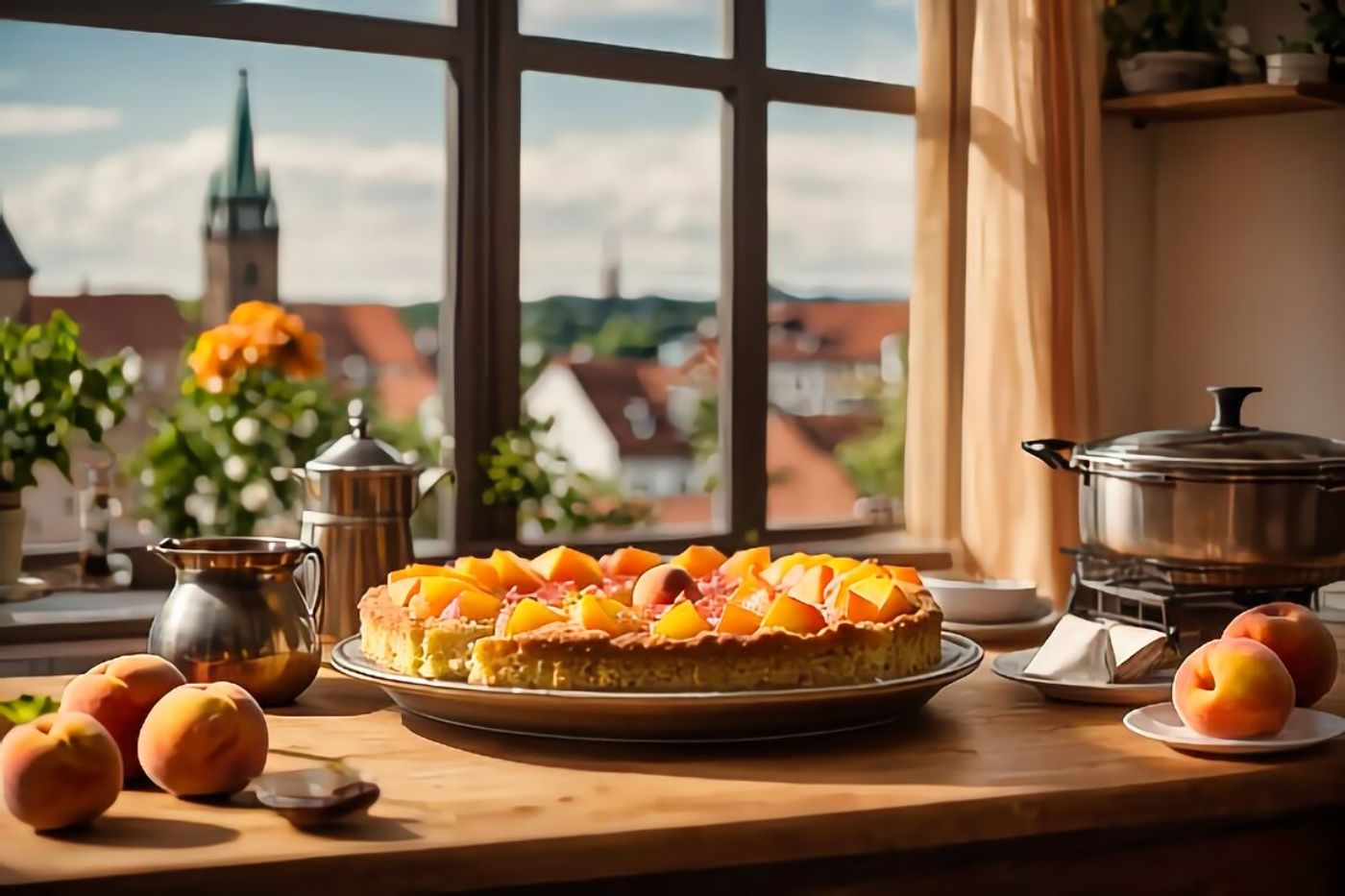
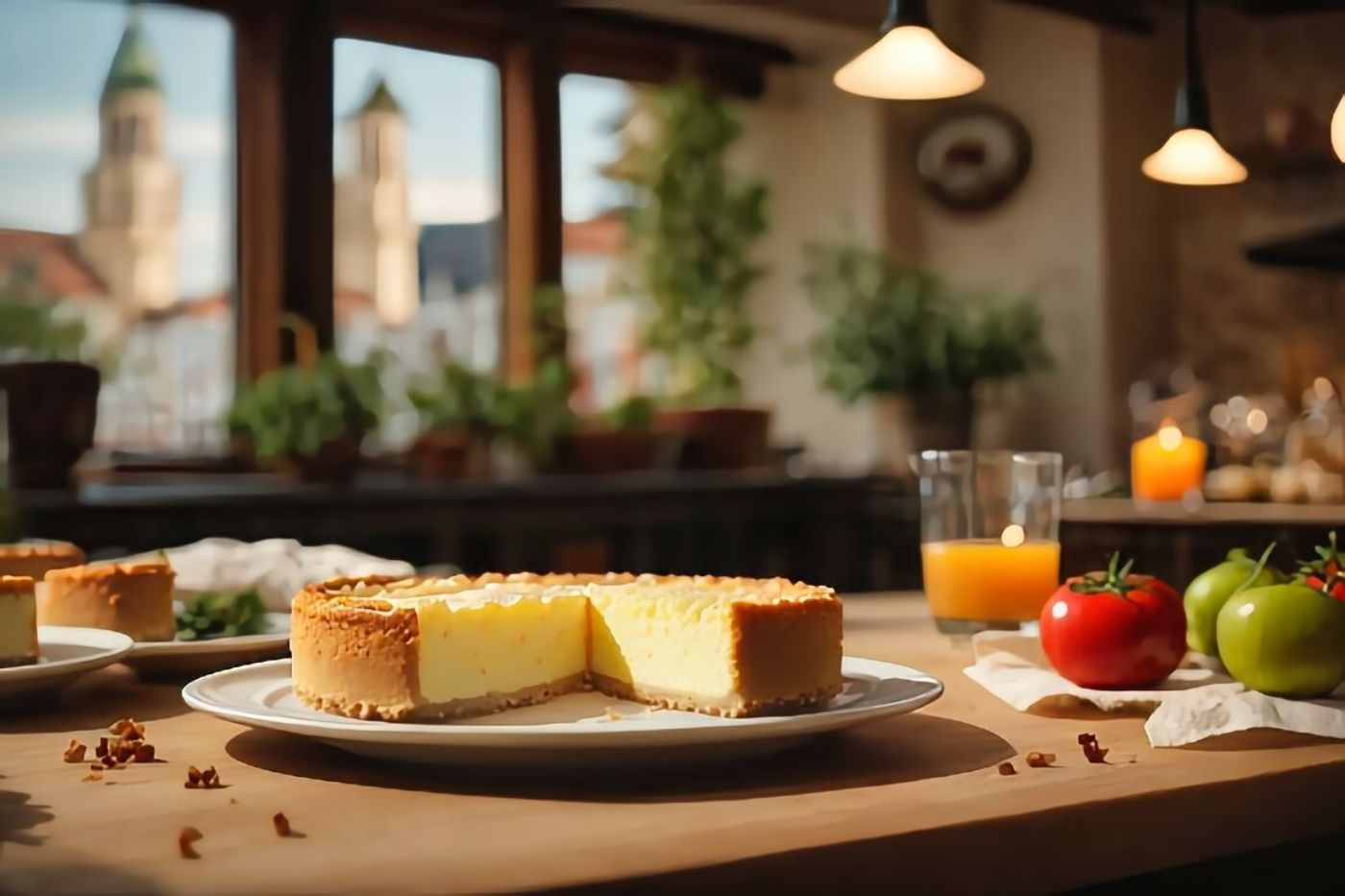
The German Peach Kuchen Recipe is a traditional German dessert that features ripe peaches atop a tender, yeasted cake base. This dessert combines the sweetness of peaches with the soft, slightly sweet dough, creating a delightful contrast in flavors and textures. The cake base is typically made with flour, yeast, sugar, and butter, providing a sturdy yet soft foundation for the peaches. The result is a delectable treat that showcases the natural sweetness of the fruit without being overly sugary. German Peach Kuchen is enjoyed as a dessert or a sweet snack, often accompanied by a cup of coffee or tea.

German Food History:

Germany has a rich culinary history deeply rooted in its diverse regions. Traditional German cuisine is characterized by hearty and wholesome dishes that vary from one area to another. Historically, Germans relied on locally available ingredients, such as grains, meats, and vegetables, to create their meals. The use of spices was modest, allowing the natural flavors of the ingredients to shine.


Want more ideas for Your German Recipe Box?
A lot of great options are in these posts!

24 Traditional German Recipes/a>


You May Want to Join The World Recipes With Our Big Escape

Share your own recipes in our Facebook Group. Find recipes from all over the world. Learn more about International Cuisine and how you can surprise your family with new and exciting foods from all over the world.

For More Photos Visit Our Instagram at World Recipes Daily


Modern Food vs Historic Food:

Compare Historic Germany Food to Modern Germany Food and its Evolution:
Historic German food was shaped by agricultural practices and regional influences. Common ingredients included rye and wheat, which were used to make bread and various types of dumplings. Meat, particularly pork, was a staple, and sausages like bratwurst and liverwurst remain popular today.

In contrast, modern German cuisine has evolved with global influences and changing tastes. Fast-food chains and international restaurants have become widespread, offering a variety of options beyond traditional dishes. While classic German recipes still hold a special place in the country’s culinary culture, there is a greater diversity of choices available to today’s German consumers.

German Peach Kuchen Recipe Health Benefits:

The German Peach Kuchen Recipe, while a delicious treat, also offers some health benefits. Peaches, the star ingredient, are a good source of vitamins and dietary fiber. They provide vitamin C, which supports the immune system and skin health, and vitamin A, essential for eye health. Peaches are also low in calories and contain no saturated fats, making them a sensible choice for those watching their calorie intake. Additionally, the yeasted cake base provides carbohydrates for energy, and when consumed in moderation, this dessert can be a part of a balanced diet.

In conclusion, the German Peach Kuchen Recipe is a delightful dessert that marries the sweetness of ripe peaches with a tender cake base. Germany’s food history is marked by hearty, regional cuisine, while modern food options have diversified with global influences. This dessert offers health benefits through its use of peaches and can be enjoyed as part of a balanced diet.

German Peach Kuchen

How To Make Our German Peach Kuchen Recipe

Ingredients (8 Servings)

Crust:
1 cup unsalted cold butter
2 cups sifted all-purpose flour
1/2 teaspoon baking powder
1 teaspoon salt
2 tablespoons granulated sugar from the filling

Filling:

12 peach halves
1 cup granulated sugar divided remove 2 tablespoons for the crust
1 teaspoon cinnamon
2 egg yolks
1 cup full fat sour cream

Instructions

1. Preheat the Oven:

a. Preheat your oven to 350°F (175°C).
b. Ensure the oven is fully heated before baking the kuchen.

2. Prepare the Crust.

a. In a large mixing bowl, combine 1 cup of unsalted cold butter (cut into small pieces) and 2 cups of sifted all-purpose flour.
b. Add 1/2 teaspoon of baking powder and 1 teaspoon of salt to the mixture.
c. Use a pastry cutter or your fingers to blend the butter into the dry ingredients until the mixture resembles coarse crumbs.
d. Incorporate 2 tablespoons of granulated sugar into the mixture.

3. Press Crust into Pan.

a. Grease a 9×13-inch baking dish or pan.
b. Press the prepared crust mixture evenly into the bottom of the greased pan, creating a firm base.

4. Arrange Peach Halves.

a. Place 12 peach halves, cut side up, on top of the crust. Ensure they are evenly spaced.

5. Prepare the Filling.

a. In a separate bowl, combine 1 cup of granulated sugar (remove 2 tablespoons for the crust) and 1 teaspoon of cinnamon.
b. Sprinkle this sugar-cinnamon mixture evenly over the peach halves.

6. Prepare the Egg Mixture.

a. In another bowl, whisk together 2 egg yolks and 1 cup of full-fat sour cream until well combined.

7. Pour Egg Mixture.

a. Pour the egg and sour cream mixture evenly over the peaches and sugar-cinnamon layer.

8. Bake the Kuchen.

a. Place the prepared pan in the preheated oven.
b. Bake for approximately 45-50 minutes, or until the kuchen is set and the top is lightly browned.
c. You can check for doneness by inserting a toothpick into the center; it should come out clean when the kuchen is done.

9. Cool and Serve.

a. Remove the kuchen from the oven and allow it to cool in the pan for about 15-20 minutes.
b. Once cooled, you can cut it into squares or slices and serve.
c. This German Peach Kuchen can be enjoyed warm or at room temperature.

Estimated Prep Time: 20 minutes

Cooking Time: 45-50 minutes

German Peach Kuchen

Pots, Pans and Cooking Equipment Needed for

German Peach Kuchen Recipe

Mixing bowls
9×13-inch baking dish or pan
Whisk
Pastry cutter or fingers for crust preparation
Greasing agent (for the baking dish)
Toothpick (for testing doneness)

Best Way to Store Leftovers From German Peach Kuchen Recipe

a. Store any leftover German Peach Kuchen in an airtight container.
b. Ensure the container has a secure lid to keep the dessert fresh.
c. Place the container in the refrigerator to extend its shelf life.
d. It’s advisable to consume the leftovers within 2-3 days for the best taste and quality.
e. If you need to reheat, do so in the oven to maintain the texture.

Tips and Tricks For Easier Creation

Fresh, ripe peaches are essential for the best flavor.
Ensure the crust is evenly pressed into the pan for uniform results.
Use a pastry cutter or your fingers to blend the butter into the crust mixture thoroughly.
When baking, keep an eye on the kuchen to prevent over-browning.
Allow the kuchen to cool slightly before cutting for cleaner slices.
Experiment with different varieties of peaches for a unique flavor profile.
Serve with a dollop of whipped cream for added indulgence.

Side Dishes and Desserts For the German Peach Kuchen Recipe

a. Vanilla ice cream
b. Whipped cream
c. Fresh berries
d. Custard sauce
e. Almond slices
f. A drizzle of honey
g. A sprinkle of powdered sugar

How To Serve the German Peach Kuchen Recipe

a. Cut the kuchen into squares or slices.
b. Use a spatula to carefully lift each piece onto a dessert plate.
c. Optionally, garnish with a dusting of powdered sugar or a dollop of whipped cream.
d. Serve the kuchen warm or at room temperature.
e. It pairs well with a hot beverage like coffee or tea.

Dietary Substitution For The German Peach Kuchen Recipe

1. Vegan Options for the German Peach Kuchen Recipe:

a. Substitute unsalted cold butter with vegan margarine.
b. Use plant-based yogurt instead of full-fat sour cream.
c. Replace egg yolks with a vegan egg replacer.
d. Opt for coconut sugar or other vegan-friendly sweeteners in place of granulated sugar.
e. Ensure the pie crust is made with vegan-friendly ingredients, such as plant-based butter.

2. Gluten-Free Options for the German Peach Kuchen Recipe:

a. Replace all-purpose flour with a gluten-free flour blend.
b. Ensure the baking powder used is gluten-free.
c. Confirm that the chosen sweeteners are gluten-free.
d. Use a gluten-free pie crust or make one using gluten-free ingredients.
e. Check the cinnamon for any gluten-containing additives.

3. Vegetarian Options for the German Peach Kuchen Recipe:

ipe is vegetarian-friendly.

4. Mediterranean Diet Options for the German Peach Kuchen Recipe:

a. Stick to the original recipe, as it aligns with the Mediterranean diet’s focus on whole, unprocessed ingredients.

5. Keto Diet Options for the German Peach Kuchen Recipe:

a. Replace granulated sugar with a keto-friendly sweetener like erythritol or stevia.
b. Use almond flour instead of all-purpose flour for the crust.
c. Ensure the chosen yogurt for the filling is low in carbohydrates.
d. Substitute the pie crust with a keto-approved crust made from almond flour and butter.
e. Check that the selected sweeteners for the crust and filling are keto-friendly.

6. Heart-Healthy Diet Options for the German Peach Kuchen Recipe:

a. Use a heart-healthy margarine with lower saturated fats instead of butter.
b. Opt for low-fat or fat-free sour cream in place of full-fat sour cream.
c. Replace egg yolks with egg whites for a lower cholesterol option.
d. Consider a reduced-sugar sweetener or use less sugar overall.
e. Ensure the pie crust is made with whole wheat flour for added fiber.

7. Paleo Options for the German Peach Kuchen Recipe:

a. Substitute unsalted cold butter with grass-fed ghee.
b. Use almond flour instead of all-purpose flour for the crust.
c. Replace granulated sugar with a paleo-approved sweetener like maple syrup or honey.
d. Ensure the chosen yogurt for the filling is dairy-free and paleo-friendly.
e. Check that the cinnamon is free of any additives not allowed on the paleo diet.

8. Low Carb Options for the German Peach Kuchen Recipe:

a. Replace granulated sugar with a low-carb sweetener like erythritol or monk fruit.
b. Use almond flour or a low-carb flour blend for the crust.
c. Opt for low-carb yogurt or Greek yogurt in place of full-fat sour cream.
d. Ensure the chosen sweeteners for the crust and filling are low in carbohydrates.
e. Check that the cinnamon is free of added sugars.

9. Whole 30 Options for the German Peach Kuchen Recipe:

a. Use ghee instead of butter for the crust.
b. Ensure the chosen yogurt for the filling is compliant with Whole30 guidelines.
c. Replace granulated sugar with a Whole30-approved sweetener like date paste.
d. Opt for almond flour or coconut flour for the crust, as long as it meets Whole30 criteria.
e. Confirm that the cinnamon contains no non-compliant ingredients.

10. Weight Watchers Options for the German Peach Kuchen Recipe:

a. Adjust portion sizes to fit your Weight Watchers points allowance.
b. Choose low-fat or fat-free sour cream for fewer points.
c. Substitute granulated sugar with a sweetener that aligns with Weight Watchers guidelines.
d. Use cooking spray or a minimal amount of butter for greasing the pan to reduce points.
e. Confirm that the chosen yogurt for the filling is low in points.

11. Low Fat Options for the German Peach Kuchen Recipe:

a. Use a low-fat margarine or spread in place of butter for the crust.
b. Opt for low-fat or fat-free sour cream for the filling.
c. Replace egg yolks with egg whites or an egg substitute for lower fat content.
d. Choose a lower-fat alternative for the pie crust, such as a reduced-fat graham cracker crust.
e. Confirm that the cinnamon contains no added fats.

12. Vegetable Variations for the German Peach Kuchen Recipe:

a. Incorporate sliced or diced fresh apples alongside or instead of peaches.
b. Experiment with other stone fruits like plums or nectarines.
c. Add a layer of thinly sliced zucchini for a unique twist.
d. Consider using mashed sweet potatoes or pumpkin for a fall-inspired variation.
e. Top the kuchen with thinly sliced pears for a different flavor profile.

It’s always recommended to check labels, choose quality ingredients, and consult with a healthcare professional or registered dietitian for personalized advice. Please note that these substitutions are provided as options to align the recipe with various dietary preferences and restrictions. Always check labels and choose ingredients that fit your specific dietary needs. Consult with a healthcare professional or registered dietitian for personalized advice.

German Peach Kuchen

FAQ About The Apfelstrudel (German Apple Strudel) Recipe

What is a German Peach Kuchen Recipe?
The German Peach Kuchen Recipe is a traditional dessert that combines ripe peaches with a yeasted cake base. It’s a classic German treat.

What are the key ingredients in the German Peach Kuchen Recipe?
The main ingredients include peaches, butter, all-purpose flour, baking powder, salt, granulated sugar, cinnamon, egg yolks, and full-fat sour cream.

How do you make the crust for the German Peach Kuchen Recipe?
The crust is made by combining cold unsalted butter with sifted all-purpose flour, baking powder, salt, and a portion of the granulated sugar. It’s pressed into a baking dish to form the base.

Can I make substitutions in the German Peach Kuchen Recipe to accommodate dietary preferences?
Yes, there are various substitutions available for different dietary needs, including options for vegan, gluten-free, and low-carb variations. See the provided substitutions for details.

What are some serving suggestions for the German Peach Kuchen Recipe?
The kuchen can be served warm or at room temperature. It pairs well with side dishes like vanilla ice cream, whipped cream, fresh berries, custard sauce, almond slices, or a drizzle of honey.

Final Thoughts

“We are a couple who has visited and sampled food in every country in the world. We strive to get a local recipe for every dish we place on our blog. Some we have cooked in our kitchen, but most we enjoyed in the restaurants and streets of the world. Our thoughts and opinions are based on the food we loved the most, and you may find them and others you will fall in love with as well. Please enjoy the recipe and comment below.”

The German Peach Kuchen Recipe is a delightful dessert that offers a taste of Germany’s culinary traditions. This classic dish combines the sweetness of ripe peaches with a tender, yeasted cake base. The recipe features key ingredients like peaches, butter, all-purpose flour, baking powder, salt, granulated sugar, cinnamon, egg yolks, and full-fat sour cream.

To create this dessert, you start by preparing the crust, which involves blending cold unsalted butter with sifted all-purpose flour, baking powder, salt, and a portion of the granulated sugar. This mixture forms the sturdy yet soft base for the kuchen. Next, arrange ripe peach halves, cut side up, on top of the crust, followed by a sprinkling of cinnamon and the remaining sugar.

The heart of the German Peach Kuchen lies in its rich and creamy filling. A mixture of egg yolks and full-fat sour cream is combined and poured over the peaches and sugar-cinnamon layer. When baked, this filling becomes a luscious, custard-like texture that complements the sweet peaches and tender crust perfectly.

While we’ve sampled many dishes from around the world, the German Peach Kuchen Recipe holds a special place in our hearts. It embodies the essence of traditional German cuisine, where simple, locally sourced ingredients shine. The kuchen’s balance of flavors and textures is a testament to the culinary expertise of Germany, and it’s a dessert that’s cherished by both locals and visitors alike.

In our culinary journey, we’ve encountered a wide array of dishes, but the German Peach Kuchen Recipe is a testament to the timeless appeal of classic desserts. Its straightforward yet exquisite combination of ingredients highlights the beauty of simplicity in cooking. Whether enjoyed in the comfort of your home or savored in the streets of Germany, this kuchen is a treat that captures the essence of the country’s food culture.

As we continue to explore the world’s cuisine and share our culinary adventures, we hope you’ll find inspiration in the German Peach Kuchen Recipe and discover the joy of experiencing global flavors. We invite you to try this recipe, savor its delightful taste, and share your thoughts with us in the comments below. Enjoy your culinary journey!

German Peach Kuchen

German Peach Kuchen Recipe

592kcal
5 from 1 vote
Pinterest Facebook Share on X
Share Print
Prep 20 minutes mins
Cook 50 minutes mins
Total 1 hour hr 10 minutes mins
The German Peach Kuchen Recipe is a traditional German dessert that features ripe peaches atop a tender, yeasted cake base.
Servings 8 Servings
Course Dessert
Cuisine German

Ingredients

Crust:
  • 1 cup butter unsalted cold
  • 2 cups all-purpose flour sifted
  • 1/2 teaspoon baking powder
  • 1 teaspoon salt
  • 2 tablespoons sugar granulated from the filling
Filling:
  • 12 peaches halves
  • 1 cup sugar granulated divided remove 2 tablespoons for the crust
  • 1 teaspoon cinnamon
  • 2 egg yolks
  • 1 cup sour cream full fat

Equipment

  • Mixing bowls
  • 9x13-inch baking dish or pan
  • whisk
  • Pastry cutter or fingers for crust preparation
  • Greasing agent (for the baking dish)
  • Toothpick for testing doneness

Method

Preheat the Oven:
  1. a. Preheat your oven to 350°F (175°C).
  2. b. Ensure the oven is fully heated before baking the kuchen.
Prepare the Crust.
  1. a. In a large mixing bowl, combine 1 cup of unsalted cold butter (cut into small pieces) and 2 cups of sifted all-purpose flour.
  2. b. Add 1/2 teaspoon of baking powder and 1 teaspoon of salt to the mixture.
  3. c. Use a pastry cutter or your fingers to blend the butter into the dry ingredients until the mixture resembles coarse crumbs.
  4. d. Incorporate 2 tablespoons of granulated sugar into the mixture.
Press Crust into Pan.
  1. a. Grease a 9x13-inch baking dish or pan.
  2. b. Press the prepared crust mixture evenly into the bottom of the greased pan, creating a firm base.
Arrange Peach Halves.
  1. a. Place 12 peach halves, cut side up, on top of the crust. Ensure they are evenly spaced.
Prepare the Filling.
  1. a. In a separate bowl, combine 1 cup of granulated sugar (remove 2 tablespoons for the crust) and 1 teaspoon of cinnamon.
  2. b. Sprinkle this sugar-cinnamon mixture evenly over the peach halves.
Prepare the Egg Mixture.
  1. a. In another bowl, whisk together 2 egg yolks and 1 cup of full-fat sour cream until well combined.
Pour Egg Mixture.
  1. a. Pour the egg and sour cream mixture evenly over the peaches and sugar-cinnamon layer.
Bake the Kuchen.
  1. a. Place the prepared pan in the preheated oven.
  2. b. Bake for approximately 45-50 minutes, or until the kuchen is set and the top is lightly browned.
  3. c. You can check for doneness by inserting a toothpick into the center; it should come out clean when the kuchen is done.

Nutrition

Calories592kcalCarbohydrates76gProtein7gFat31gSaturated Fat18gPolyunsaturated Fat2gMonounsaturated Fat8gTrans Fat1gCholesterol127mgSodium541mgPotassium357mgFiber4gSugar48gVitamin A1687IUVitamin C9mgCalcium73mgIron2mg

Notes

Fresh, ripe peaches are essential for the best flavor.
Ensure the crust is evenly pressed into the pan for uniform results.
Use a pastry cutter or your fingers to blend the butter into the crust mixture thoroughly.
When baking, keep an eye on the kuchen to prevent over-browning.
Allow the kuchen to cool slightly before cutting for cleaner slices.
Experiment with different varieties of peaches for a unique flavor profile.
Serve with a dollop of whipped cream for added indulgence.

Private Notes

Click here to add your own private notes.

Tried this recipe?

Let us know how it was!
October 16, 2023 0 comments
0 FacebookTwitterPinterestEmail
German Schnitzel

German Schnitzel Recipe

by John October 16, 2023
written by John

German Schnitzel

The German Schnitzel Recipe is a traditional dish that features a thin, breaded, and fried piece of meat, typically veal or pork. It’s a beloved classic in German cuisine, known for its simplicity and delicious taste. The key to a good German Schnitzel is achieving a crispy golden-brown crust while keeping the meat tender and juicy on the inside. This dish is often served with lemon wedges, which add a tangy kick to the flavors. The German Schnitzel Recipe has been enjoyed for generations and continues to be a popular choice in German restaurants and homes.

German Food History:

Germany boasts a rich culinary history that has evolved over centuries. The country’s food history reflects its geographic diversity and cultural influences. In ancient times, Germanic tribes relied on agriculture, with grains, vegetables, and meat as dietary staples. With time, trade routes and connections to neighboring countries introduced new ingredients and cooking techniques. The Middle Ages witnessed the emergence of beer and the brewing industry, which is now synonymous with Germany. The Renaissance period brought more refined cooking methods, and the use of spices became prominent.


Want more ideas for Your German Recipe Box?
A lot of great options are in these posts!

24 Traditional German Recipes/a>


You May Want to Join The World Recipes With Our Big Escape

Share your own recipes in our Facebook Group. Find recipes from all over the world. Learn more about International Cuisine and how you can surprise your family with new and exciting foods from all over the world.

For More Photos Visit Our Instagram at World Recipes Daily


 Modern Food vs Historic Food:

The transition from historic German food to modern cuisine has seen significant changes. Historic German food was hearty and based on locally available ingredients, often preserving food through methods like salting and pickling. Modern German cuisine, on the other hand, is influenced by international flavors and techniques. The use of spices, herbs, and international ingredients has expanded the palate of modern German dishes. Additionally, there’s a growing emphasis on health-conscious choices, with lighter cooking methods and a focus on fresh, seasonal produce.

German Schnitzel RecipeHealth Benefits:

The German Schnitzel Recipe, when prepared with lean meat and a minimal amount of oil, can offer some health benefits. Lean cuts of pork or veal provide a good source of protein, which is essential for muscle development and overall body function. The dish can also be rich in vitamins and minerals, especially if accompanied by vegetables. However, it’s important to note that the frying process can add calories and fat to the dish. To make it healthier, one can choose to pan-fry Schnitzel with less oil or opt for oven-baked versions. Additionally, the use of whole-grain breadcrumbs can increase the fiber content, promoting better digestion.

In conclusion, the German Schnitzel Recipe is a cherished part of German cuisine, known for its crispy exterior and tender meat. Germany’s food history is a tale of evolution, influenced by cultural exchanges and culinary developments. The shift from historic to modern German food highlights changes in taste preferences and cooking methods. When prepared mindfully, the German Schnitzel Recipe can offer some health benefits, making it a delightful choice for those looking to enjoy a traditional German dish.

German Schnitzel

How To Make Our German Schnitzel Recipe

Ingredients (8 Servings)

8 boneless pork steaks or chops, (to make Austrian Wienerschnitzel use thin veal cutlets)
salt and freshly ground black pepper
1 cup all-purpose flour combined with 1 teaspoon salt
4 large eggs, lightly beaten
1 1/2 cup plain breadcrumbs
Oil for frying (use a neutral-tasting oil with a high smoke point)

Instructions

1. Begin by preparing the meat.

a. Lay out the boneless pork steaks or chops on a clean, dry surface.
b. Season each piece with salt and freshly ground black pepper to taste.

2. Set up your breading station.

a. In a shallow dish, combine 1 cup of all-purpose flour with 1 teaspoon of salt.
b. In another shallow dish, place the lightly beaten eggs.
c. In a third shallow dish, spread out 1 1/2 cups of plain breadcrumbs.

3. Bread the pork.

a. Take a seasoned pork steak or chop and coat it thoroughly in the flour mixture, pressing the flour onto the meat.
b. Next, dip the floured meat into the beaten eggs, ensuring an even coating.
c. Finally, place the meat in the breadcrumbs, pressing the breadcrumbs onto the meat to create a solid crust. Repeat this process for each piece of pork.

4. Heat the frying oil.

a. In a large skillet or frying pan, add enough neutral-tasting oil to cover the bottom generously.
b. Heat the oil over medium-high heat until it reaches a temperature of around 350-375°F (175-190°C). You can test the readiness by dropping a breadcrumb into the oil; it should sizzle and brown.

5. Fry the schnitzel.

a. Carefully place the breaded pork into the hot oil. You may need to do this in batches to avoid overcrowding the pan.
b. Cook each piece for about 3-4 minutes on each side, or until they are golden brown and crispy.
c. As you cook, place the schnitzel on a plate lined with paper towels to drain any excess oil.

6. Serve the German Schnitzel.

a. Transfer the fried schnitzel to a serving platter.
b. Optionally, you can garnish it with lemon wedges before serving.

Estimated Prep Time: 15 minutes

Estimated Cooking Time: 20-30 minutes (depending on batch size and pan size)

German Schnitzel

Pots, Pans and Cooking Equipment Needed for The Apfelstrudel German Schnitzel Recipe

Large skillet or frying pan for frying the schnitzel
Shallow dishes or plates for breading the meat (3 in total)
Tongs or a fork for handling the meat
Paper towels for draining excess oil

Best Way to Store Leftovers From The German Schnitzel Recipe

a. Store any leftover German Schnitzel in an airtight container in the refrigerator.
b. To maintain its crispiness, place a paper towel between the schnitzel slices.
c. Consume leftover schnitzel within 2-3 days for the best taste and texture.
d. Avoid freezing as the breading may become soggy when thawed.
e. Reheat in an oven or toaster oven to maintain its crunchiness.
f. Do not microwave, as it can make the schnitzel lose its crispy coating.

Tips and Tricks For Easier Creation

Pound the meat to an even thickness for uniform cooking.
Use fresh breadcrumbs for a better crust.
Preheat the oil to the correct temperature to ensure a crispy finish.
Press the breadcrumbs onto the meat firmly to create a secure coating.
Fry in batches to avoid overcrowding the pan.
Keep an eye on the oil temperature to prevent burning.
Use a meat thermometer to ensure the pork is cooked to a safe internal temperature.

Side Dishes and Desserts For the German Schnitzel Recipe

a. Potato salad
b. Cucumber salad
c. Red cabbage slaw
d. Sauerkraut
e. Mashed potatoes
f. Steamed vegetables
g. Spaetzle (German egg noodles)

How To Serve the German Schnitzel Recipe

a. Place the schnitzel on a serving platter.
b. Garnish with lemon wedges if desired.
c. Serve hot and enjoy with your chosen side dishes.
d. Consider a drizzle of fresh lemon juice for added flavor.
e. Offer mustard or a creamy sauce as condiments for dipping.
f. Accompany with a glass of German beer or white wine for an authentic experience.

Dietary Substitution For German Schnitzel Recipe

1. Vegan Options for the German Schnitzel Recipe:

a. Substitute boneless pork steaks with thin slices of eggplant.
b. Replace eggs with a vegan egg replacer or a mixture of water and ground flaxseed.
c. Use almond or soy milk in place of eggs for dipping.
d. Replace breadcrumbs with crushed, seasoned cornflakes for a vegan-friendly breading.
e. Opt for vegetable oil or coconut oil for frying instead of animal-based oil.

2. Gluten-Free Options for the German Schnitzel Recipe:

a. Replace all-purpose flour with gluten-free all-purpose flour.
b. Use gluten-free breadcrumbs or crushed gluten-free cornflakes for breading.
c. Ensure the seasoning used is gluten-free.
d. Confirm that the eggs used are gluten-free.
e. Check the oil used for frying to ensure it’s gluten-free.

3. Vegetarian Options for the German Schnitzel Recipe:

a. Substitute boneless pork steaks with thin slices of halloumi cheese.
b. Use vegetarian-friendly breadcrumbs for breading.
c. Ensure the seasoning used is vegetarian.
d. Confirm that the eggs used are from vegetarian sources.
e. Opt for vegetable oil or coconut oil for frying.

4. Mediterranean Diet Options for the German Schnitzel Recipe:

a. Use extra virgin olive oil for frying instead of neutral oil.
b. Serve the schnitzel with a side of Greek salad with fresh tomatoes, cucumbers, and feta cheese.
c. Garnish with lemon wedges and fresh herbs for added Mediterranean flavor.
d. Accompany with a tzatziki sauce made from yogurt, cucumber, and garlic.
e. Consider adding olives and capers to the breading mixture for a Mediterranean twist.

5. Keto Diet Options for the German Schnitzel Recipe:

a. Replace all-purpose flour with almond flour or coconut flour for breading.
b. Use crushed pork rinds instead of breadcrumbs for a low-carb option.
c. Ensure the seasoning used is keto-friendly.
d. Confirm that the eggs used are suitable for a keto diet.
e. Use an oil with a high smoke point like avocado oil for frying.

6. Heart-Healthy Diet Options for the German Schnitzel Recipe:

a. Choose lean cuts of pork or veal to reduce saturated fat.
b. Use whole wheat breadcrumbs for added fiber.
c. Opt for olive oil or canola oil for frying instead of oils high in saturated fat.
d. Serve with a side of steamed vegetables or a fresh salad for added nutrients.
e. Use less salt in the breading mixture and season with herbs and spices instead.

7. Paleo Options for the German Schnitzel Recipe:

a. Substitute all-purpose flour with almond flour for breading.
b. Use crushed pork rinds or almond meal instead of breadcrumbs.
c. Ensure the seasoning used is paleo-friendly.
d. Confirm that the eggs used are paleo-approved.
e. Fry in coconut oil or avocado oil for a paleo-friendly choice.

8. Low Carb Options for the German Schnitzel Recipe:

a. Replace all-purpose flour with almond flour or coconut flour for breading.
b. Use crushed pork rinds or almond meal instead of breadcrumbs.
c. Ensure the seasoning used is low in carbs.
d. Confirm that the eggs used are suitable for a low-carb diet.
e. Use an oil with a high smoke point like avocado oil for frying.

9. Whole 30 Options for the German Schnitzel Recipe:

a. Choose high-quality pork or veal, preferably without additives or preservatives.
b. Use almond flour or coconut flour for breading.
c. Ensure the seasoning used is Whole 30 compliant.
d. Confirm that the eggs used are from pastured chickens.
e. Fry in avocado oil or olive oil for a Whole 30-friendly option.

10. Weight Watchers Options for the German Schnitzel Recipe:

a. Use lean cuts of pork or veal to reduce SmartPoints values.
b. Opt for whole wheat breadcrumbs for added fiber.
c. Ensure the seasoning used is low in added sugars and fats.
d. Confirm that the eggs used are part of the Weight Watchers plan.
e. Use a minimal amount of oil for frying to control SmartPoints.

11. Low-Fat Options for the German Schnitzel Recipe:

a. Choose lean cuts of pork or veal with minimal visible fat.
b. Use a minimal amount of oil for frying or consider using an oil spray.
c. Opt for whole wheat breadcrumbs for added fiber.
d. Ensure the seasoning used is low in added fats.
e. Confirm that the eggs used are low in fat.

12. Vegetable Variations for the German Schnitzel Recipe:

a. Substitute boneless pork steaks with thick slices of portobello mushrooms.
b. Use a vegan egg replacer or almond milk for dipping.
c. Bread the mushrooms with seasoned almond flour or gluten-free breadcrumbs.
d. Opt for vegetable oil or coconut oil for frying.
e. Season the mushroom schnitzel with a variety of herbs and spices for flavor.

It’s always recommended to check labels, choose quality ingredients, and consult with a healthcare professional or registered dietitian for personalized advice. Please note that these substitutions are provided as options to align the recipe with various dietary preferences and restrictions. Always check labels and choose ingredients that fit your specific dietary needs. Consult with a healthcare professional or registered dietitian for personalized advice.

German Schnitzel

FAQ About German Schnitzel Recipe

What is the German Schnitzel Recipe?
The German Schnitzel Recipe is a traditional dish made from thin slices of meat, typically pork or veal, coated in breadcrumbs and fried to a crispy golden-brown.

What is the key to achieving a perfect German Schnitzel?
The key to a perfect German Schnitzel is to ensure the meat is thin and evenly pounded, the breading is well-seasoned, and it is fried to a crisp in hot oil.

What are common accompaniments to the German Schnitzel Recipe?
Common accompaniments to the German Schnitzel Recipe include lemon wedges for garnish, potato salad, cucumber salad, red cabbage slaw, and various dipping sauces.

Can the German Schnitzel Recipe be adapted for different dietary preferences?
Yes, the German Schnitzel Recipe can be adapted for different dietary preferences, including vegan, vegetarian, gluten-free, and low-carb options by using suitable substitutions.

What is the origin of the German Schnitzel Recipe?
The German Schnitzel Recipe has its origins in traditional German cuisine and is believed to have evolved over centuries as a popular dish in Germany.

Final Thoughts

“We are a couple who has visited and sampled food in every country in the world. We strive to get a local recipe for every dish we place on our blog. Some we have cooked in our kitchen but most we enjoyed in the restaurants and streets of the world. Our thoughts and opinions are based on the food we loved the most, and you may find them and others you will fall in love with as well. Please enjoy the recipe and comment below.”

The German Schnitzel Recipe is a beloved classic in German cuisine. It consists of thin slices of meat, usually pork or veal, coated in breadcrumbs and fried until crispy and golden brown. This iconic dish is known for its simplicity and delicious taste, making it a favorite not only in Germany but also around the world.

The key to a perfect German Schnitzel lies in the preparation. The meat is pounded until it’s thin and even, ensuring that it cooks quickly and uniformly. Then, it’s seasoned with salt and freshly ground black pepper, enhancing the flavors of the meat. The next step involves coating the meat in a mixture of all-purpose flour and a touch of salt, providing the initial layer for the crispy breading.

After the flour coating, the meat is dipped into beaten eggs, which act as a binding agent. The eggs create a bond between the meat and the final layer of plain breadcrumbs, forming the iconic crispy crust that makes the German Schnitzel so delightful. These breadcrumbs are generously applied, ensuring an even and crunchy coating.

To achieve that perfect golden brown color and crispy texture, the schnitzel is fried in hot oil. A neutral-tasting oil with a high smoke point is used to prevent any unwanted flavors from affecting the dish. The schnitzel is carefully placed in the hot oil and fried for about 3-4 minutes on each side until it’s beautifully golden and crispy.

Traditionally, the German Schnitzel is served with lemon wedges, which add a delightful tangy kick to the flavors. The contrast of the tender meat and the crispy crust, along with the zesty lemon, creates a harmonious and satisfying culinary experience.

Whether enjoyed in a cozy German restaurant or prepared in your own kitchen, the German Schnitzel Recipe is a true crowd-pleaser. Its timeless appeal and straightforward preparation have made it a staple in German cuisine, and it’s a dish that continues to bring joy to food enthusiasts worldwide.

German Schnitzel

German Schnitzel Recipe

230kcal
5 from 1 vote
Pinterest Facebook Share on X
Share Print
Prep 15 minutes mins
Cook 35 minutes mins
Total 50 minutes mins
The German Schnitzel Recipe is a traditional dish that features a thin, breaded, and fried piece of meat, typically veal or pork.
Servings 8 People
Course Main Course
Cuisine German

Ingredients

  • 8 pork boneless steaks or chops
  • salt and freshly ground black pepper
  • 1 cup all-purpose flour combined with 1 teaspoon salt
  • 4 large eggs lightly beaten
  • 1 1/2 cup breadcrumbs plain
  • Oil use a neutral-tasting oil with a high smoke point

Equipment

  • Large skillet or frying pan for frying the schnitzel
  • Shallow dishes or plates for breading the meat (3 in total)
  • Tongs or a fork for handling the meat
  • Paper towels for draining excess oil

Method

Begin by preparing the meat.
  1. a. Lay out the boneless pork steaks or chops on a clean, dry surface.
  2. b. Season each piece with salt and freshly ground black pepper to taste.
Set up your breading station.
  1. a. In a shallow dish, combine 1 cup of all-purpose flour with 1 teaspoon of salt.
  2. b. In another shallow dish, place the lightly beaten eggs.
  3. c. In a third shallow dish, spread out 1 1/2 cups of plain breadcrumbs.
Bread the pork.
  1. a. Take a seasoned pork steak or chop and coat it thoroughly in the flour mixture, pressing the flour onto the meat.
  2. b. Next, dip the floured meat into the beaten eggs, ensuring an even coating.
  3. c. Finally, place the meat in the breadcrumbs, pressing the breadcrumbs onto the meat to create a solid crust. Repeat this process for each piece of pork.
Heat the frying oil.
  1. a. In a large skillet or frying pan, add enough neutral-tasting oil to cover the bottom generously.
  2. b. Heat the oil over medium-high heat until it reaches a temperature of around 350-375°F (175-190°C). You can test the readiness by dropping a breadcrumb into the oil; it should sizzle and brown.
Fry the schnitzel.
  1. a. Carefully place the breaded pork into the hot oil. You may need to do this in batches to avoid overcrowding the pan.
  2. b. Cook each piece for about 3-4 minutes on each side, or until they are golden brown and crispy.
  3. c. As you cook, place the schnitzel on a plate lined with paper towels to drain any excess oil.

Nutrition

Calories230kcalCarbohydrates27gProtein11gFat8gSaturated Fat3gPolyunsaturated Fat1gMonounsaturated Fat3gTrans Fat0.01gCholesterol109mgSodium196mgPotassium154mgFiber1gSugar1gVitamin A137IUVitamin C0.2mgCalcium56mgIron2mg

Notes

Pound the meat to an even thickness for uniform cooking.
Use fresh breadcrumbs for a better crust.
Preheat the oil to the correct temperature to ensure a crispy finish.
Press the breadcrumbs onto the meat firmly to create a secure coating.
Fry in batches to avoid overcrowding the pan.
Keep an eye on the oil temperature to prevent burning.
Use a meat thermometer to ensure the pork is cooked to a safe internal temperature.

Private Notes

Click here to add your own private notes.

Tried this recipe?

Let us know how it was!
October 16, 2023 0 comments
0 FacebookTwitterPinterestEmail
German Currywurst

German Currywurst Recipe

by John October 15, 2023
written by John

German Currywurst

The German Currywurst Recipe is a popular and iconic dish in Germany. It consists of sliced or diced sausages, typically bratwurst or bockwurst, served with a savory curry ketchup sauce. The sausages are usually grilled or fried before being smothered in the rich, tangy curry sauce. This dish is known for its bold flavors and is often enjoyed as street food, in restaurants, or even made at home.

German Food History:

Germany has a rich culinary history that spans centuries. Traditional German cuisine is characterized by hearty and comforting dishes, often featuring meat, potatoes, and bread. Historically, Germans relied on locally available ingredients, which shaped their culinary traditions. Cabbage, for example, was a staple in northern Germany, leading to dishes like sauerkraut. In the south, where the climate was more suitable for vineyards, wine production became significant.


Want more ideas for Your German Recipe Box?
A lot of great options are in these posts!

24 Traditional German Recipes/a>


You May Want to Join The World Recipes With Our Big Escape

Share your own recipes in our Facebook Group. Find recipes from all over the world. Learn more about International Cuisine and how you can surprise your family with new and exciting foods from all over the world.

For More Photos Visit Our Instagram at World Recipes Daily


Modern Food vs Historic Food:

Compare Historic Germany Food to Modern Germany Food and its evolution:
Historic German food was primarily based on simple, locally sourced ingredients. Meat, such as pork and beef, played a central role in traditional dishes like sausages and schnitzel. Potatoes, introduced to Germany in the 18th century, became a staple food. Bread varieties, like pretzels and rye bread, were common.

In contrast, modern German cuisine has evolved to incorporate international influences and a wider range of ingredients. This change is partly due to globalization and increased access to ingredients from around the world. As a result, contemporary German cuisine is diverse and embraces a broader spectrum of flavors and cooking techniques.

German Currywurst Recipe Health Benefits:

The German Currywurst Recipe, like many traditional dishes, is hearty and satisfying. However, it’s essential to note that it may not be considered a health-conscious choice due to its high calorie and fat content. Sausages are typically rich in calories and saturated fats, and the curry ketchup sauce often contains added sugar and sodium.

On a positive note, sausages used in the recipe provide a good source of protein, and the curry sauce may contain some antioxidants from the spices used. However, it’s crucial to consume this dish in moderation as part of a balanced diet to avoid excessive intake of unhealthy fats and sugars.

In summary, the German Currywurst Recipe is a flavorful and beloved German dish featuring sausages and curry ketchup sauce. Germany’s food history is marked by hearty and traditional cuisine, while modern German food has evolved to include diverse ingredients and flavors. However, this dish, like many comfort foods, should be enjoyed in moderation to maintain a healthy diet.

German Currywurst

How To Make Our German Currywurst Recipe

Ingredients (8 Servings)

6 (15 ounce) cans tomato sauce
2 pound kielbasa
4 tablespoons chili sauce
1/2teaspoon onion salt
2 tablespoon white sugar
2 teaspoon ground black pepper
1 pinch paprika
Curry powder to taste

Instructions

1. Prepare the Curry Ketchup Sauce.

a. In a large saucepan, combine 6 (15 ounce) cans of tomato sauce.
b. Add 4 tablespoons of chili sauce.
c. Stir in 1/2 teaspoon of onion salt.
d. Incorporate 2 tablespoons of white sugar.
e. Season with 2 teaspoons of ground black pepper.
f. Add a pinch of paprika.
g. Sprinkle curry powder to taste.
h. Simmer the sauce over low heat, stirring occasionally, until it thickens, usually for about 20-25 minutes.

2. Grill or Fry the Sausages.

a. While the sauce is simmering, prepare 2 pounds of kielbasa sausages.
b. If grilling, preheat the grill to medium-high heat. Grill the sausages for about 10-15 minutes, turning occasionally, until they are cooked through and have grill marks.
c. If frying, heat a skillet over medium heat with a small amount of oil. Fry the sausages for approximately 10-12 minutes, turning them to ensure even cooking. They should be browned and cooked through.

3. Slice or Dice the Sausages.

a. Once the sausages are cooked, remove them from the grill or skillet.
b. Slice or dice the sausages into bite-sized pieces.

4. Combine Sausages and Curry Ketchup Sauce.

a. Transfer the sliced or diced sausages into the simmered curry ketchup sauce.
b. Stir gently to coat the sausages evenly with the sauce.
c. Continue to simmer for an additional 5 minutes to allow the flavors to meld together.

5. Serve.

a. The German Currywurst is now ready to be served.
b. Portion the sausages and sauce onto plates or into serving dishes.
c. It is commonly served with a side of fries or bread for dipping.
d. Enjoy your delicious homemade German Currywurst!

Estimated Prep Time: 10 minutes

Cooking Time: Approximately 35-40 minutes

German Currywurst

Pots, Pans and Cooking Equipment Needed for The German Currywurst Recipe

Large saucepan for making the curry ketchup sauce
Grill or skillet for cooking the sausages
Stirring utensil for mixing the sauce
Knife and cutting board for slicing or dicing the sausages
Plates or serving dishes for presentation
Optional: Frying pan if frying sausages instead of grilling

Best Way to Store Leftovers From The German Currywurst Recipe

a. Transfer any leftovers into an airtight container to maintain freshness.
b. Store the container in the refrigerator to keep the German Currywurst fresh.
c. Ensure that the sausages are fully immersed in the curry ketchup sauce to prevent drying out.
d. Consume within 2-3 days for the best taste and quality.
e. Reheat in a microwave or on the stovetop until heated through before serving.
f. Discard any leftovers that have been stored for an extended period or if they appear spoiled.

Tips and Tricks For Easier Creation

Slice the sausages evenly for uniform cooking.
Adjust the amount of curry powder according to your desired level of spiciness.
Use a high-quality chili sauce for a richer flavor.
Consider grilling the sausages for a smoky touch or frying for a crispier texture.
Make the curry ketchup sauce in advance for quicker preparation.
Serve with fresh bread or fries for a satisfying meal.
Experiment with different types of sausages for variety.

Side Dishes and Desserts For the The German Currywurst Recipe

a. French fries or potato wedges for a classic pairing.
b. Crusty bread rolls for soaking up the flavorful sauce.
c. Coleslaw for a refreshing contrast.
d. Pickles or sauerkraut for a tangy accompaniment.
e. Mixed green salad with a light vinaigrette dressing.
f. Roasted vegetables like bell peppers and onions for added depth.
g. Potato salad for a traditional German side dish.

How To Serve the German Currywurst Recipe

a. Plate the sliced or diced sausages generously.
b. Spoon the curry ketchup sauce over the sausages.
c. Arrange any chosen side dishes on the same plate.
d. Optionally, garnish with fresh herbs like parsley or cilantro.
e. Serve hot and enjoy your German Currywurst meal.
f. Provide utensils and napkins for convenience to your guests.

Dietary Substitution For The German Currywurst Recipe

1. Vegan Options for the German Currywurst Recipe:

a. Substitute kielbasa with vegan sausages made from plant-based ingredients.
b. Use vegan tomato sauce without any dairy or animal products.
c. Replace chili sauce with a vegan-friendly chili sauce or hot sauce.
d. Omit the white sugar or use a vegan sweetener like agave nectar.
e. Ensure the curry powder is free from animal-derived ingredients.
f. Use a pinch of smoked paprika for smoky flavor.
g. Check all ingredients for vegan certification.

2. Gluten-Free Options for the German Currywurst Recipe:

a. Confirm that the tomato sauce is gluten-free, as some brands may contain gluten.
b. Choose gluten-free kielbasa or sausages.
c. Opt for gluten-free chili sauce.
d. Replace onion salt with gluten-free onion powder.
e. Verify that the curry powder is gluten-free.
f. Ensure all spices and seasonings are gluten-free.
g. Serve with gluten-free bread or fries if desired.

3. Vegetarian Options for the German Currywurst Recipe:

a. Substitute kielbasa with vegetarian sausages made from plant-based or dairy ingredients.
b. Use tomato sauce without meat or meat by-products.
c. Replace chili sauce with a vegetarian-friendly alternative.
d. Omit the white sugar or use a vegetarian sweetener like honey.
e. Ensure the curry powder is vegetarian-friendly.
f. Use a pinch of smoked paprika for added flavor.
g. Verify all ingredients for vegetarian suitability.

4. Mediterranean Diet Options for the German Currywurst Recipe:

a. Choose leaner sausages or use turkey or chicken sausages.
b. Opt for a tomato sauce with no added sugar or preservatives.
c. Use a quality chili sauce with natural ingredients.
d. Replace white sugar with a small amount of honey or maple syrup.
e. Incorporate extra herbs like oregano and basil into the curry sauce.
f. Serve with a side of Mediterranean-style salad with olives and feta.
g. Pair with whole-grain pita bread or couscous.

5. Keto Diet Options for the German Currywurst Recipe:

a. Select low-carb kielbasa or sausages.
b. Use a tomato sauce with no added sugar or use a sugar substitute.
c. Choose a chili sauce without added sugars or carbs.
d. Omit the white sugar entirely or use a keto-friendly sweetener.
e. Ensure the curry powder is free from added sugars.
f. Serve with keto-friendly side dishes like cauliflower rice or zucchini noodles.
g. Check all ingredients for their carb content.

6. Heart-Healthy Diet Options for the German Currywurst Recipe:

a. Opt for lean turkey or chicken sausages to reduce saturated fat.
b. Choose a low-sodium or no-salt-added tomato sauce.
c. Select a chili sauce with reduced sodium or no added salt.
d. Omit the white sugar or use a sugar substitute suitable for heart health.
e. Ensure the curry powder is free from added salt.
f. Serve with a side of steamed vegetables or a salad for added fiber and nutrients.
g. Check all ingredients for their sodium content.

7. Paleo Options for the German Currywurst Recipe:

a. Use kielbasa or sausages made from paleo-friendly ingredients.
b. Ensure the tomato sauce and chili sauce have no added sugars or processed additives.
c. Omit the white sugar or use a paleo-approved sweetener like honey or coconut sugar.
d. Confirm that the curry powder is free from non-paleo ingredients.
e. Serve with roasted sweet potatoes or grilled vegetables.
f. Check all ingredients for paleo compliance.
g. Focus on whole, natural foods in the preparation.

8. Low Carb Options for the German Currywurst Recipe:

a. Select low-carb sausages or kielbasa.
b. Use a tomato sauce with no added sugar or low-carb alternative.
c. Choose a chili sauce without added sugars or carbs.
d. Omit the white sugar entirely or use a low-carb sweetener.
e. Ensure the curry powder is free from added sugars and excess carbs.
f. Serve with low-carb side dishes like cauliflower mash or broccoli.
g. Check all ingredients for their carb content.

9. Whole 30 Options for the German Currywurst Recipe:

a. Use sausages with no added sugars, sulfites, or artificial additives.
b. Choose a tomato sauce with no added sugar, soy, or dairy products.
c. Select a chili sauce without added sugars, soy, or non-compliant ingredients.
d. Omit the white sugar entirely.
e. Ensure the curry powder contains only compliant ingredients.
f. Serve with roasted vegetables and a side of compliant sweet potatoes.
g. Verify all ingredients for Whole30 adherence.

10. Weight Watchers Options for the German Currywurst Recipe:

a. Calculate and adjust the points for kielbasa or sausages based on Weight Watchers guidelines.
b. Use a tomato sauce with reduced sugar and calculate the points accordingly.
c. Select a chili sauce with lower points or calculate the points for the amount used.
d. Adjust the points for the sweetener used, if any.
e. Ensure the curry powder contains no hidden ingredients with points.
f. Serve with a side of steamed vegetables or a light salad.
g. Calculate the total points for the entire meal.

11. Low-Fat Options for the German Currywurst Recipe:

a. Choose low-fat or turkey sausages to reduce fat content.
b. Use a tomato sauce labeled as low-fat or no-fat.
c. Select a chili sauce with minimal fat content.
d. Omit the white sugar or use a low-fat sweetener.
e. Ensure the curry powder contains minimal fat.
f. Serve with steamed vegetables or a green salad for a low-fat meal.
g. Check all ingredients for their fat content.

12. Vegetable Variations for the German Currywurst Recipe:

a. Replace kielbasa with grilled or roasted vegetable skewers.
b. Use vegetable-based tomato sauce or a homemade tomato sauce with fresh vegetables.
c. Create a chili sauce using blended roasted red peppers and spices.
d. Omit the white sugar or use a natural sweetener like pureed dates.
e. Enhance the curry flavor with roasted vegetables like bell peppers, carrots, and zucchini.
f. Serve with additional vegetable sides or a mixed vegetable salad.
g. Ensure all components are vegetable-based for a fully vegetarian variation.

It’s always recommended to check labels, choose quality ingredients, and consult with a healthcare professional or registered dietitian for personalized advice. Please note that these substitutions are provided as options to align the recipe with various dietary preferences and restrictions. Always check labels and choose ingredients that fit your specific dietary needs. Consult with a healthcare professional or registered dietitian for personalized advice.

German Currywurst

FAQ About The German Currywurst Recipe

What is German Currywurst, and where did it originate?
German Currywurst is a popular dish made of sliced or diced sausages, typically bratwurst or bockwurst, served with a curry ketchup sauce. It originated in Berlin, Germany, in the late 1940s and has since become a beloved street food and comfort dish in Germany.

What are the key ingredients in the German Currywurst Recipe?
The main ingredients in the German Currywurst Recipe include sausages (kielbasa or similar), tomato sauce, chili sauce, onion salt, white sugar, ground black pepper, paprika, and curry powder. These ingredients come together to create the flavorful curry ketchup sauce.

How is the German Currywurst Recipe typically served?
German Currywurst is commonly served as a street food snack or in restaurants. It is often sliced or diced, smothered in the curry ketchup sauce, and served with a side of fries or bread for dipping. It can also be accompanied by pickles or sauerkraut.

Can the German Currywurst Recipe be customized to fit different dietary preferences?
Yes, the German Currywurst Recipe can be customized to fit various dietary preferences. It can be adapted to be vegan, vegetarian, gluten-free, keto, and more by using suitable substitutions for the sausages and sauce ingredients.

Are there any health benefits associated with the German Currywurst Recipe?
While German Currywurst is a flavorful and satisfying dish, it may not be considered a health-conscious choice due to its high calorie and fat content. However, sausages used in the recipe provide protein, and the curry sauce may contain some antioxidants from the spices. It’s essential to consume it in moderation as part of a balanced diet.

Final Thoughts

“We are a couple who has visited and sampled food in every country in the world. We strive to get a local recipe for every dish we place on our blog. Some we have cooked in our kitchen, but most we enjoyed in the restaurants and streets of the world. Our thoughts and opinions are based on the food we loved the most, and you may find them and others you will fall in love with as well. Please enjoy the recipe and comment below.”

The German Currywurst Recipe is a classic and beloved street food dish that hails from Berlin, Germany. It consists of sliced or diced sausages, most commonly bratwurst or bockwurst, smothered in a delectable curry ketchup sauce.

Originating in post-war Berlin in the late 1940s, the German Currywurst quickly gained popularity and has since become an iconic part of German cuisine. It’s a simple yet flavorful dish that represents a fusion of culinary influences.

The preparation of the German Currywurst Recipe is straightforward. The sausages are typically grilled or fried until they achieve a perfect crispiness, then sliced or diced into bite-sized pieces. They are generously coated with a rich and aromatic curry ketchup sauce, creating a harmonious blend of flavors.

The sauce itself is a key component of the dish, featuring ingredients such as tomato sauce, chili sauce, onion salt, white sugar, ground black pepper, and, of course, curry powder. The curry powder provides the dish with its distinctive and mildly spicy flavor, which is both satisfying and memorable.

German Currywurst is often served as a street food snack, enjoyed at food stalls and local eateries throughout Germany. It’s commonly accompanied by a side of crispy fries or bread, perfect for soaking up the flavorful sauce. Additionally, it pairs well with pickles or sauerkraut, adding a tangy contrast to the dish.

One of the remarkable aspects of the German Currywurst Recipe is its adaptability to different dietary preferences. With suitable substitutions, it can be made to cater to vegan, vegetarian, gluten-free, and keto diets, among others. This versatility ensures that this beloved dish can be enjoyed by a wide range of individuals.

In summary, the German Currywurst Recipe is a culinary gem that has stood the test of time. Its roots in Berlin’s vibrant street food culture and its ability to adapt to various dietary preferences make it a cherished and enduring dish. Whether enjoyed on the bustling streets of Berlin or prepared in your own kitchen, the German Currywurst is sure to delight your taste buds with its flavorful simplicity.

German Currywurst

German Currywurst Recipe

466kcal
5 from 1 vote
Pinterest Facebook Share on X
Share Print
Prep 10 minutes mins
Cook 35 minutes mins
Total 45 minutes mins
The German Currywurst Recipe is a popular and iconic dish in Germany. It consists of sliced or diced sausages, typically bratwurst or bockwurst, served with a savory curry ketchup sauce.
Servings 8 People
Course Main Course
Cuisine German

Ingredients

  • 90 oz tomato sauce
  • 2 pound kielbasa
  • 4 tbsp chili sauce
  • 1/2 tsp onion salt
  • 2 tbsp white sugar
  • 2 tsp ground black pepper
  • 1 pinch paprika
  • Curry powder to taste

Equipment

  • Large saucepan for making the curry ketchup sauce
  • Grill or skillet for cooking the sausages
  • Stirring utensil for mixing the sauce
  • Knife and cutting board for slicing or dicing the sausages
  • Plates or serving dishes for presentation
  • Optional: Frying pan if frying sausages instead of grilling

Method

Prepare the Curry Ketchup Sauce.
  1. a. In a large saucepan, combine 6 (15 ounce) cans of tomato sauce.
  2. b. Add 4 tablespoons of chili sauce.
  3. c. Stir in 1/2 teaspoon of onion salt.
  4. d. Incorporate 2 tablespoons of white sugar.
  5. e. Season with 2 teaspoons of ground black pepper.
  6. f. Add a pinch of paprika.
  7. g. Sprinkle curry powder to taste.
  8. h. Simmer the sauce over low heat, stirring occasionally, until it thickens, usually for about 20-25 minutes.
Grill or Fry the Sausages.
  1. a. While the sauce is simmering, prepare 2 pounds of kielbasa sausages.
  2. b. If grilling, preheat the grill to medium-high heat. Grill the sausages for about 10-15 minutes, turning occasionally, until they are cooked through and have grill marks.
  3. c. If frying, heat a skillet over medium heat with a small amount of oil. Fry the sausages for approximately 10-12 minutes, turning them to ensure even cooking. They should be browned and cooked through.
Slice or Dice the Sausages.
  1. a. Once the sausages are cooked, remove them from the grill or skillet.
  2. b. Slice or dice the sausages into bite-sized pieces.
Combine Sausages and Curry Ketchup Sauce.
  1. a. Transfer the sliced or diced sausages into the simmered curry ketchup sauce.
  2. b. Stir gently to coat the sausages evenly with the sauce.
  3. c. Continue to simmer for an additional 5 minutes to allow the flavors to meld together.
Serve.
  1. a. The German Currywurst is now ready to be served.
  2. b. Portion the sausages and sauce onto plates or into serving dishes.
  3. c. It is commonly served with a side of fries or bread for dipping.
  4. d. Enjoy your delicious homemade German Currywurst!

Nutrition

Calories466kcalCarbohydrates24gProtein20gFat34gSaturated Fat12gPolyunsaturated Fat4gMonounsaturated Fat15gCholesterol79mgSodium2751mgPotassium1251mgFiber5gSugar15gVitamin A1441IUVitamin C25mgCalcium62mgIron5mg

Notes

Slice the sausages evenly for uniform cooking.
Adjust the amount of curry powder according to your desired level of spiciness.
Use a high-quality chili sauce for a richer flavor.
Consider grilling the sausages for a smoky touch or frying for a crispier texture.
Make the curry ketchup sauce in advance for quicker preparation.
Serve with fresh bread or fries for a satisfying meal.
Experiment with different types of sausages for variety.

Private Notes

Click here to add your own private notes.

Tried this recipe?

Let us know how it was!
October 15, 2023 0 comments
0 FacebookTwitterPinterestEmail
German Style Spaghettiei

German Style Spaghetti Recipe

by John October 15, 2023
written by John

German Style SpaghettieiGerman Style Spaghetti Recipe

German Style Spaghetti Recipe is a dish that blends elements of Italian pasta with German flavors, resulting in a unique culinary experience. This fusion of cuisines offers a delightful twist on traditional spaghetti, incorporating the culinary heritage of Germany.

German Food History:

Germany has a rich culinary history, known for its hearty and flavorful dishes. Traditional German cuisine is characterized by a reliance on meats like pork, beef, and poultry, as well as potatoes, cabbage, and bread. The country’s food traditions have been influenced by its geographical location in Central Europe and its agricultural practices. Over the centuries, German cuisine has evolved, absorbing influences from neighboring countries and international trends.

Modern Food vs Historic Food:

Comparing historic German food to its modern counterpart reveals notable changes. While traditional dishes like sausages, schnitzels, and sauerkraut remain popular, there has been a shift towards lighter and more diverse options in modern German cuisine. International flavors have become integrated into the food scene, reflecting globalization. Furthermore, there is an increased emphasis on healthier ingredients and preparation methods in contemporary German cooking.


Want more ideas for Your German Recipe Box?
A lot of great options are in these posts!

24 Traditional German Recipes/a>


You May Want to Join The World Recipes With Our Big Escape

Share your own recipes in our Facebook Group. Find recipes from all over the world. Learn more about International Cuisine and how you can surprise your family with new and exciting foods from all over the world.

For More Photos Visit Our Instagram at World Recipes Daily


German Style Spaghetti Recipe Health Benefits:

The German Style Spaghetti Recipe brings together the best of both worlds, combining the familiarity of spaghetti with the robust flavors of German cuisine. This dish often incorporates ingredients such as smoked sausages, onions, and various spices. It offers a satisfying and filling meal, thanks to the protein-rich sausages and the carbohydrates from the pasta.

Despite its hearty nature, the German Style Spaghetti Recipe can also have health benefits. Sausages used in the recipe may contain protein, essential vitamins, and minerals like iron and zinc. Onions, a common ingredient, provide dietary fiber and antioxidants. When prepared with a balanced approach, this dish can be a source of energy and nutrients.

In conclusion, the German Style Spaghetti Recipe is a unique culinary creation that bridges the gap between Italian pasta and German flavors. Germany’s food history reflects a love for hearty dishes, but modern cuisine has evolved to include a wider range of flavors and ingredients. This fusion recipe can offer a satisfying meal with potential health benefits when prepared thoughtfully.

German Style Spaghettiei


How To Make Our German Style Spaghetti Recipe

Ingredients (8 Servings)

16 oz uncooked spaghetti
1 lb bacon, chopped
2lb bratwurst sausage, sliced
2 small yellow onion, thinly sliced
2 cup baby Bella or button mushrooms, thinly sliced
16 oz Heifeweizen or other German beer
6 tablespoons unsalted butter
6 tablespoons all-purpose flour
4 cups milk
2 cup cheddar cheese, grated
4 tablespoons stoneground mustard
2 teaspoon apple cider vinegar
1 cup sour cream
2 tablespoon fresh chives, chopped
Kosher salt and freshly ground black pepper, to taste

Instructions

1. Boil the uncooked spaghetti according to package instructions until al dente.

a. Bring a large pot of water to a boil.
b. Add the spaghetti and cook for the recommended time.
c. Drain the cooked spaghetti and set it aside.

2. In a large skillet, cook the chopped bacon until crispy.

a. Place the chopped bacon in a cold skillet.
b. Heat the skillet over medium heat and cook the bacon until it turns crispy.
c. Remove the bacon from the skillet and drain it on paper towels.

3. In the same skillet, add the sliced bratwurst sausage and cook until browned.

a. Place the sliced bratwurst sausage in the skillet with the bacon fat.
b. Cook over medium-high heat until the sausage slices are browned.
c. Remove the sausage from the skillet and set it aside.

4. Add the thinly sliced onions and mushrooms to the skillet and sauté until they become tender.

a. In the skillet, add the sliced onions and mushrooms.
b. Sauté over medium heat until the vegetables become tender.

5. Pour in the Heifeweizen or other German beer and let it simmer for a few minutes.

a. Pour the beer into the skillet with the sautéed vegetables.
b. Allow it to simmer for a few minutes to reduce.

6. In a separate saucepan, melt the unsalted butter over medium heat.

a. Place the saucepan on the stove over medium heat.
b. Add the unsalted butter and melt it.

7. Stir in the all-purpose flour to create a roux.

a. Add the all-purpose flour to the melted butter.
b. Stir continuously to form a smooth roux.

8. Gradually add the milk to the roux, whisking constantly until it thickens.

a. Slowly pour in the milk while whisking.
b. Continue to whisk until the mixture thickens into a creamy sauce.

9. Stir in the grated cheddar cheese until it melts into the sauce.

a. Add the grated cheddar cheese to the creamy sauce.
b. Stir until the cheese is completely melted and incorporated.

10. Mix in the stoneground mustard and apple cider vinegar.

a. Add the stoneground mustard and apple cider vinegar to the cheese sauce.
b. Stir until well combined.

11. Gently fold in the sour cream until the sauce is creamy.

a. Add the sour cream to the cheese mixture.
b. Carefully fold it in until the sauce becomes creamy.

12. Combine the cooked spaghetti, crispy bacon, browned sausage, and sautéed vegetables in a large serving dish.

a. Place the cooked spaghetti, crispy bacon, browned sausage, and sautéed vegetables in a large serving dish.
b. Toss them together to mix.

13. Pour the prepared cheese sauce over the spaghetti mixture and gently toss to coat.

a. Pour the cheese sauce evenly over the spaghetti mixture.
b. Gently toss everything together to ensure even coating.

14. Season with kosher salt and freshly ground black pepper to taste.

a. Sprinkle kosher salt and freshly ground black pepper over the dish.
b. Adjust the seasoning according to your taste.

15. Garnish with chopped fresh chives before serving.

a. Sprinkle the chopped fresh chives over the dish as a garnish.

Estimated Prep Time: 20 minutes

Estimated Cooking Time: 30 minutes

German Style Spaghettiei

Pots, Pans and Cooking Equipment Needed for The German Style Spaghetti Recipe

Large pot for boiling spaghetti
Large skillet for cooking bacon, sausage, and vegetables
Saucepan for making cheese sauce
Whisk for stirring the cheese sauce
Serving dish for mixing and serving the dish
Utensils for stirring and tossing ingredients
Paper towels for draining bacon

Best Way to Store Leftovers From The German Style Spaghetti Recipe

a. Place leftovers in an airtight container.
b. Store in the refrigerator for up to 3 days.
c. Reheat in the microwave or on the stovetop.

Tips and Tricks For Easier Creation

Cook bacon until crispy for added texture.
Slice bratwurst sausage evenly for consistent cooking.
Use fresh mushrooms for better flavor and texture.
Gradually add milk when making the cheese sauce to prevent lumps.
Adjust mustard and vinegar to taste for personalized flavor.
Toss ingredients gently to avoid breaking the spaghetti.
Garnish with fresh chives for a finishing touch.

Side Dishes and Desserts For the The German Style Spaghetti Recipe

a. Coleslaw
b. Garlic bread
c. Mixed green salad
d. Pickles or sauerkraut
e. Roasted vegetables
f. Potato salad
g. Pretzel rolls

How To Serve the German Style Spaghetti Recipe

a. Serve the German Style Spaghetti in individual portions.
b. Garnish with fresh chives for presentation.
c. Accompany with your choice of side dishes.
d. Enjoy with family and friends.
e. Serve hot for the best flavor.
f. Store any leftovers following the storage instructions.

Dietary Substitution For The German Style Spaghetti Recipe

1. Vegan Options for the German Style Spaghetti Recipe:

a. Substitute bacon with vegan bacon alternatives.
b. Use plant-based bratwurst sausage.
c. Replace cheddar cheese with vegan cheese.
d. Use plant-based butter or margarine.
e. Substitute dairy milk with almond, soy, or oat milk.

2. Gluten-Free Options for the German Style Spaghetti Recipe:

a. Use gluten-free spaghetti or pasta.
b. Ensure the beer used is gluten-free.
c. Substitute all-purpose flour with gluten-free flour.
d. Check that the mustard and vinegar are gluten-free.
e. Confirm that the sausage and sour cream are gluten-free.

3. Vegetarian Options for the German Style Spaghetti Recipe:

a. Keep the recipe as is, excluding the bacon.
b. Use vegetarian bratwurst or other meatless sausage.
c. Continue to use dairy-based ingredients.
d. No further substitutions are needed.
e. Vegetarian-friendly.

4. Mediterranean Diet Options for the German Style Spaghetti Recipe:

a. Use whole-grain spaghetti for added fiber.
b. Include extra virgin olive oil in the recipe.
c. Use Greek yogurt instead of sour cream.
d. Enhance with Mediterranean herbs like oregano or basil.
e. Consider adding olives as a garnish.

5. Keto Diet Options for the German Style Spaghetti Recipe:

a. Omit spaghetti entirely or use keto-friendly pasta alternatives.
b. Use low-carb beer or broth instead of regular beer.
c. Substitute flour with almond or coconut flour.
d. Opt for full-fat dairy products.
e. Ensure bacon doesn’t contain added sugars.

6. Heart-Healthy Diet Options for the German Style Spaghetti Recipe:

a. Use lean turkey bacon or turkey sausage.
b. Choose low-sodium broth instead of beer.
c. Use whole wheat flour or almond flour.
d. Opt for reduced-fat cheese.
e. Ensure no additional salt is added to the recipe.

7. Paleo Options for the German Style Spaghetti Recipe:

a. Omit spaghetti or use spiralized vegetables as a substitute.
b. Ensure bacon and sausage are free of additives.
c. Use almond flour or coconut flour.
d. Replace dairy with paleo-friendly alternatives.
e. Double-check mustard and vinegar for paleo compliance.

8. Low Carb Options for the German Style Spaghetti Recipe:

a. Use low-carb pasta or vegetable noodles.
b. Check for low-carb beer options.
c. Substitute flour with almond or coconut flour.
d. Opt for full-fat dairy products.
e. Ensure bacon doesn’t contain added sugars.

9. Whole30 Options for the German Style Spaghetti Recipe:

a. Omit spaghetti or use vegetable noodles.
b. Check for compliant bacon and sausage.
c. Use arrowroot flour instead of all-purpose flour.
d. Opt for compliant mustard and vinegar.
e. Use coconut cream or compliant yogurt instead of sour cream.

10. Weight Watchers Options for the German Style Spaghetti Recipe:

a. Use lean turkey bacon to reduce points.
b. Choose low-fat bratwurst sausage.
c. Use light versions of butter and sour cream.
d. Check for reduced-fat cheese.
e. Adjust portion sizes to fit your points.

11. Low Fat Options for the German Style Spaghetti Recipe:

a. Use turkey bacon or lean ham.
b. Choose low-fat turkey or chicken sausages.
c. Opt for low-fat or skim milk.
d. Use reduced-fat cheddar cheese.
e. Select low-fat sour cream.

12. Vegetable Variations for the German Style Spaghetti Recipe:

a. Add sliced bell peppers for color and crunch.
b. Include zucchini noodles alongside spaghetti.
c. Incorporate diced tomatoes for freshness.
d. Add spinach or kale for extra greens.
e. Mix in roasted eggplant for a unique twist.

It’s always recommended to check labels, choose quality ingredients, and consult with a healthcare professional or registered dietitian for personalized advice. Please note that these substitutions are provided as options to align the recipe with various dietary preferences and restrictions. Always check labels and choose ingredients that fit your specific dietary needs. Consult with a healthcare professional or registered dietitian for personalized advice.

German Style Spaghettiei

FAQ About The German Style Spaghetti Recipe

Final Thoughts

What is the German Style Spaghetti Recipe?
The German Style Spaghetti Recipe is a fusion dish that combines traditional Italian spaghetti with German flavors, featuring ingredients like bacon, bratwurst sausage, mushrooms, and a creamy cheese sauce.

How long does it take to prepare the German Style Spaghetti Recipe?
The preparation time for the German Style Spaghetti Recipe can vary, but it typically takes around 20-30 minutes to prepare the ingredients and cook the dish.

Is the German Style Spaghetti Recipe suitable for vegetarians?
The traditional German Style Spaghetti Recipe includes bacon and sausage, making it non-vegetarian. However, vegetarian alternatives can be used to adapt the recipe to a vegetarian diet.

Can I make the German Style Spaghetti Recipe gluten-free?
Yes, you can make the German Style Spaghetti Recipe gluten-free by using gluten-free pasta, flour, and ensuring that the other ingredients are also gluten-free.

What are some popular side dishes to serve with the German Style Spaghetti Recipe?
Popular side dishes to complement the German Style Spaghetti Recipe include coleslaw, garlic bread, mixed green salad, pickles or sauerkraut, roasted vegetables, potato salad, and pretzel rolls.

Final Thoughts

“We are a couple who has visited and sampled food in every country in the world. We strive to get a local recipe for every dish we place on our blog. Some we have cooked in our kitchen but most we enjoyed in the restaurants and streets of the world. Our thoughts and opinions are based on the food we loved the most, and you may find them and others you will fall in love with as well. Please enjoy the recipe and comment below.”

The German Style Spaghetti Recipe is a delightful fusion of Italian pasta and German flavors. This dish is a culinary journey that brings together elements from two distinct food traditions. The combination of crispy bacon, savory bratwurst sausage, earthy mushrooms, and a creamy cheese sauce makes it a truly unique and satisfying experience.

The recipe begins with the careful selection of ingredients, including uncooked spaghetti, bacon, bratwurst sausage, yellow onions, mushrooms, German beer, butter, all-purpose flour, milk, cheddar cheese, stoneground mustard, apple cider vinegar, sour cream, and fresh chives. These ingredients come together to create a harmonious blend of flavors and textures.

In the German Style Spaghetti Recipe, the spaghetti is boiled to al dente perfection, providing a firm yet tender base for the dish. The bacon is crisped to perfection, adding a smoky and salty element to the overall flavor profile. Slices of bratwurst sausage are browned to create a rich and meaty component.

Thinly sliced yellow onions and mushrooms are sautéed until they become tender, contributing a sweet and earthy quality to the dish. German beer is incorporated, adding depth and complexity to the sauce. A roux is created using butter and all-purpose flour, resulting in a velvety base for the cheese sauce.

The cheese sauce, a key component of the recipe, is made by gradually adding milk and stirring until it thickens. Grated cheddar cheese is incorporated into the sauce, contributing a creamy and cheesy richness. Stoneground mustard and apple cider vinegar are added for a tangy and slightly pungent flavor profile.

To achieve a creamy consistency, sour cream is gently folded into the sauce, creating a luscious texture. The final step involves combining the cooked spaghetti, crispy bacon, browned sausage, and sautéed vegetables in a large serving dish. The prepared cheese sauce is poured over the mixture and gently tossed to ensure even coating.

The German Style Spaghetti Recipe is seasoned with kosher salt and freshly ground black pepper, allowing for a perfect balance of flavors. Finally, fresh chives are sprinkled on top, adding a touch of freshness and visual appeal.

In conclusion, the German Style Spaghetti Recipe is a testament to the culinary diversity found across the world. Its unique combination of Italian pasta and German ingredients creates a dish that is both comforting and full of flavor. Whether enjoyed in the comfort of your home or in a restaurant abroad, this recipe offers a taste of two culinary worlds coming together in delicious harmony.

German Style Spaghettiei

German Style Spaghetti Recipe

1615kcal
5 from 1 vote
Pinterest Facebook Share on X
Share Print
Prep 20 minutes mins
Cook 30 minutes mins
Total 50 minutes mins
German Style Spaghetti Recipe is a dish that blends elements of Italian pasta with German flavors, resulting in a unique culinary experience.
Servings 6 People
Course Main Course
Cuisine German

Ingredients

  • 16 oz spaghetti uncooked
  • 1 lb bacon chopped
  • 2 lb bratwurst sausage sliced
  • 2 onion small yellow thinly sliced
  • 2 cup mushrooms baby Bella or button thinly sliced
  • 16 oz beer Heifeweizen or other German
  • 6 tbsp butter unsalted
  • 6 tbsp all-purpose flour
  • 4 cups milk
  • 2 cup cheese cheddar grated
  • 4 tbsp mustard stoneground
  • 2 tsp vinegar apple cider
  • 1 cup sour cream
  • 2 tbsp fresh chives chopped
  • Kosher salt and freshly ground black pepper to taste

Equipment

  • Large pot for boiling spaghetti
  • Large skillet for cooking bacon, sausage, and vegetables
  • Saucepan for making cheese sauce
  • Whisk for stirring the cheese sauce
  • Serving dish for mixing and serving the dish
  • Utensils for stirring and tossing ingredients
  • Paper towels for draining bacon

Method

Boil the uncooked spaghetti according to package instructions until al dente.
  1. a. Bring a large pot of water to a boil.
  2. b. Add the spaghetti and cook for the recommended time.
  3. c. Drain the cooked spaghetti and set it aside.
In a large skillet, cook the chopped bacon until crispy.
  1. a. Place the chopped bacon in a cold skillet.
  2. b. Heat the skillet over medium heat and cook the bacon until it turns crispy.
  3. c. Remove the bacon from the skillet and drain it on paper towels.
In the same skillet, add the sliced bratwurst sausage and cook until browned.
  1. a. Place the sliced bratwurst sausage in the skillet with the bacon fat.
  2. b. Cook over medium-high heat until the sausage slices are browned.
  3. c. Remove the sausage from the skillet and set it aside.
Add the thinly sliced onions and mushrooms to the skillet and sauté until they become tender.
  1. a. In the skillet, add the sliced onions and mushrooms.
  2. b. Sauté over medium heat until the vegetables become tender.
Pour in the Heifeweizen or other German beer and let it simmer for a few minutes.
  1. a. Pour the beer into the skillet with the sautéed vegetables.
  2. b. Allow it to simmer for a few minutes to reduce.
In a separate saucepan, melt the unsalted butter over medium heat.
  1. a. Place the saucepan on the stove over medium heat.
  2. b. Add the unsalted butter and melt it.
Stir in the all-purpose flour to create a roux.
  1. a. Add the all-purpose flour to the melted butter.
  2. b. Stir continuously to form a smooth roux.
Gradually add the milk to the roux, whisking constantly until it thickens.
  1. a. Slowly pour in the milk while whisking.
  2. b. Continue to whisk until the mixture thickens into a creamy sauce.
Stir in the grated cheddar cheese until it melts into the sauce.
  1. a. Add the grated cheddar cheese to the creamy sauce.
  2. b. Stir until the cheese is completely melted and incorporated.
Mix in the stoneground mustard and apple cider vinegar.
  1. a. Add the stoneground mustard and apple cider vinegar to the cheese sauce.
  2. b. Stir until well combined.
Gently fold in the sour cream until the sauce is creamy.
  1. a. Add the sour cream to the cheese mixture.
  2. b. Carefully fold it in until the sauce becomes creamy.
Combine the cooked spaghetti, crispy bacon, browned sausage, and sautéed vegetables in a large serving dish.
  1. a. Place the cooked spaghetti, crispy bacon, browned sausage, and sautéed vegetables in a large serving dish.
  2. b. Toss them together to mix.
Pour the prepared cheese sauce over the spaghetti mixture and gently toss to coat.
  1. a. Pour the cheese sauce evenly over the spaghetti mixture.
  2. b. Gently toss everything together to ensure even coating.
Season with kosher salt and freshly ground black pepper to taste.
  1. a. Sprinkle kosher salt and freshly ground black pepper over the dish.
  2. b. Adjust the seasoning according to your taste.
Garnish with chopped fresh chives before serving.
  1. a. Sprinkle the chopped fresh chives over the dish as a garnish.

Nutrition

Calories1615kcalCarbohydrates85gProtein58gFat113gSaturated Fat47gPolyunsaturated Fat11gMonounsaturated Fat44gTrans Fat1gCholesterol272mgSodium2310mgPotassium1370mgFiber4gSugar14gVitamin A1318IUVitamin C4mgCalcium591mgIron3mg

Notes

Cook bacon until crispy for added texture.
Slice bratwurst sausage evenly for consistent cooking.
Use fresh mushrooms for better flavor and texture.
Gradually add milk when making the cheese sauce to prevent lumps.
Adjust mustard and vinegar to taste for personalized flavor.
Toss ingredients gently to avoid breaking the spaghetti.
Garnish with fresh chives for a finishing touch.

Private Notes

Click here to add your own private notes.

Tried this recipe?

Let us know how it was!
October 15, 2023 0 comments
0 FacebookTwitterPinterestEmail
German Style Döner kebab

German Style Döner Kebab Recipe

by John October 15, 2023
written by John

German Style Döner kebab

The German Style Döner Kebab Recipe is a popular and flavorful dish that has found its place in the hearts and palates of many people around the world. It is a dish characterized by slices of seasoned meat, usually lamb, beef, or chicken, stacked on a vertical rotisserie. The meat is slowly roasted, resulting in succulent and tender slices that are thinly shaved for serving. Typically, it is served in a flatbread or pita, accompanied by a variety of toppings and sauces.

German Food History:

Germany boasts a rich culinary history that spans centuries. Traditional German cuisine is known for its hearty and satisfying dishes. Historically, German food has been influenced by its neighboring countries and regions, such as France, Italy, and Austria. Ingredients like pork, potatoes, sauerkraut, and bread have been staples in German cooking for generations. The country’s culinary traditions have evolved over time, reflecting the diverse regional cuisines found within Germany.


Want more ideas for Your German Recipe Box?
A lot of great options are in these posts!

24 Traditional German Recipes/a>


You May Want to Join The World Recipes With Our Big Escape

Share your own recipes in our Facebook Group. Find recipes from all over the world. Learn more about International Cuisine and how you can surprise your family with new and exciting foods from all over the world.

For More Photos Visit Our Instagram at World Recipes Daily


Modern Food vs Historic Food:

Over the years, German cuisine has seen a transformation from its historic roots to a more modern and diverse culinary landscape. While traditional dishes like sausages, schnitzels, and pretzels remain popular, modern German cuisine has incorporated international flavors and ingredients. This evolution has led to the fusion of traditional and contemporary cooking styles, resulting in a broader range of options for both locals and tourists.

German Style Döner Kebab Recipe Health Benefits:

The German Style Döner Kebab Recipe, when prepared thoughtfully, can offer some nutritional benefits. It is a good source of protein due to the meat used, which provides essential amino acids for muscle health and overall bodily functions. Additionally, when served with fresh vegetables and whole-grain flatbread, it can contribute to a balanced diet by providing fiber, vitamins, and minerals.

However, it’s essential to be mindful of the overall nutritional content, as some variations of Döner kebab can be high in calories, saturated fat, and sodium, primarily when loaded with creamy sauces and excessive amounts of meat. For a healthier option, opt for leaner cuts of meat, limit the use of high-calorie sauces, and load up on vegetables.

In summary, the German Style Döner Kebab Recipe is a beloved dish with a fascinating history in the context of German cuisine. It represents the evolution of traditional foods into modern, multicultural offerings. While it can provide nutritional benefits when prepared mindfully, it’s crucial to make conscious choices to maintain a balanced and healthy diet when indulging in this flavorful treat.

German Style Döner Kebab

How To Make Our German Style Döner Kebab Recipe

1 pound of lean meat (such as low-fat beef, low-fat lamb)
1 tablespoon of olive oil
1 tablespoon tomato paste
1 tablespoon yogurt
1 or 2 tablespoons donor seasoning
Salt and pepper, to taste
Pita bread, wrap or lettuce wraps (for serving)
Assorted vegetables (such as lettuce, tomatoes, cucumbers, red onions, and peppers)
Optional toppings (such as chilli sauce, garlic sauce, hummus, tzatziki sauce, and feta cheese).

Instructions

1. Preparation of Meat.

a. Start by selecting 1 pound of lean meat, such as low-fat beef or low-fat lamb.
b. Slice the meat thinly into strips or shavings.
c. In a mixing bowl, marinate the meat with 1 tablespoon of olive oil.
d. Add 1 or 2 tablespoons of BAHARAT DONER SEASONING for flavor.
e. Season the meat with salt and pepper to taste.

2. Marinating the Meat.

a. After seasoning, let the meat marinate for at least 30 minutes to allow the flavors to penetrate.
b. Optionally, you can refrigerate the marinated meat for a few hours to enhance the flavor further.

3. Preparing the Sauce.

a. In a separate bowl, mix 1 tablespoon of tomato paste with 1 tablespoon of yogurt.
b. This sauce will add a creamy and tangy element to your Döner Kebab.

4. Vegetable Preparation.

a. Wash and prepare assorted vegetables such as lettuce, tomatoes, cucumbers, red onions, and peppers.
b. Slice the vegetables thinly for use as toppings.

5. Cooking the Meat.

a. Heat a grill or skillet over medium-high heat.
b. Once hot, cook the marinated meat strips until they are well browned and cooked through. This should take about 5-7 minutes.

6. Assembling the Döner Kebab.

a. Warm your choice of pita bread, wrap, or lettuce wrap.
b. Lay out the warm bread or lettuce.
c. Place a portion of the cooked meat in the center.
d. Add the assorted vegetables and toppings of your choice.
e. Drizzle the tomato-yogurt sauce over the fillings.
f. Roll up the bread or lettuce to create your Döner Kebab.

Estimated Prep Time: 40 minutes (including marination time)

Estimated Cooking Time: 5-7 minutes

German Style Döner kebab

Pots, Pans and Cooking Equipment Needed for The German Style Döner Kebab Recipe

Large mixing bowl
Skillet or grill for cooking the meat
Mixing bowls for preparing sauce and marinating meat
Cutting board and knife for slicing vegetables and meat
Serving platter or individual plates
Tongs for handling cooked meat
Optional: Food processor for chopping vegetables uniformly

Best Way to Store Leftovers From The German Style Döner Kebab Recipe

a. Leftover Storage Instructions:
Place any leftover meat, vegetables, and sauce in airtight containers.
Store the meat separately from the bread or lettuce wraps to maintain freshness.
Refrigerate the leftovers promptly to keep them safe for consumption.
Consume within 2-3 days for the best taste and quality.
To reheat, consider using a microwave or oven to warm the meat, then assemble fresh wraps or bread with the reheated components.

Tips and Tricks For Easier Creation

Thinly slice the meat for quicker cooking.
Marinate the meat for at least 30 minutes to enhance flavor.
Use a food processor to speed up vegetable preparation.
Experiment with different types of bread or wraps for variety.
Customize toppings to suit individual preferences.
Keep the grill or skillet hot for a nice sear on the meat.
Make extra sauce for dipping or drizzling.

Side Dishes and Desserts For the The German Style Döner Kebab Recipe

a. Hummus and pita chips
b. Greek salad with feta cheese
c. Tabbouleh, a Middle Eastern parsley salad
d. Roasted vegetables with Mediterranean spices
e. Cucumber and yogurt tzatziki sauce
f. Quinoa or couscous salad
g. Falafel, deep-fried chickpea patties

How To Serve the German Style Döner Kebab Recipe

a. Lay out the warm bread or lettuce wraps on a clean surface.
b. Place a portion of the cooked meat in the center of each wrap.
c. Add a generous amount of assorted vegetables and toppings.
d. Drizzle the tomato-yogurt sauce over the fillings.
e. Roll up the bread or lettuce wraps tightly.
f. Optionally, secure with parchment paper or foil for easy handling.
g. Serve your freshly made German Style Döner Kebabs immediately for a delicious meal.

Dietary Substitution For The German Style Döner Kebab Recipe

1. Vegan Options for the German Style Döner Kebab Recipe:

a. Substitute bacon with vegan bacon made from plant-based ingredients.
b. Replace bratwurst sausages with vegan sausages made from soy or vegetables.
c. Use plant-based butter instead of regular butter.
d. Opt for a dairy-free flour (like almond flour) for the roux.
e. Use unsweetened almond milk, soy milk, or oat milk instead of cow’s milk.
f. Choose vegan cheddar cheese or nutritional yeast for a cheesy flavor.
g. Replace sour cream with dairy-free yogurt or cashew-based sour cream.

2. Gluten-Free Options for the German Style Döner Kebab Recipe:

a. Ensure that bacon, bratwurst sausages, and mustard are gluten-free.
b. Use gluten-free all-purpose flour or a gluten-free flour blend for the roux.
c. Serve the dish with gluten-free pita bread, wraps, or lettuce leaves.
d. Confirm that the beer used is gluten-free or use a gluten-free beer alternative.
e. Check that the Worcestershire sauce in the mustard is gluten-free.

3. Vegetarian Options for the German Style Döner Kebab Recipe:

a. Omit the bacon and increase the quantity of mushrooms for a meatless version.
b. Replace bratwurst sausages with vegetarian sausages made from plant-based ingredients.
c. Continue to use regular butter, milk, cheese, and sour cream for creaminess.
d. Ensure all ingredients are free from meat products, including the Worcestershire sauce in the mustard.
e. Use a vegetarian-friendly stoneground mustard.

4. Mediterranean Diet Options for the German Style Döner Kebab Recipe:

a. Maintain the original ingredients, as this recipe aligns with the Mediterranean diet’s focus on whole foods, olive oil, and vegetables.
b. Opt for whole-grain pita bread or wraps for added fiber.

5. Keto Diet Options for the German Style Döner Kebab Recipe:

a. Omit the bread entirely and serve the kebab filling on a bed of lettuce for a low-carb option.
b. Use almond flour or coconut flour instead of all-purpose flour for the roux.
c. Confirm that the bacon, sausages, and beer used are keto-friendly and do not contain added sugars.
d. Opt for full-fat dairy products for added fat content.
e. Choose low-carb stoneground mustard without added sugars.

6. Heart-Healthy Diet Options for the German Style Döner Kebab Recipe:

a. Use lean turkey bacon or turkey sausages to reduce saturated fat content.
b. Select low-sodium or reduced-sodium versions of bacon, sausages, and cheese.
c. Substitute plant-based butter or olive oil for regular butter.
d. Choose whole-grain pita bread or wraps for added fiber.
e. Ensure the beer used is low in alcohol or use a non-alcoholic beer alternative.

7. Paleo Options for the German Style Döner Kebab Recipe:

a. Omit the bread and serve the kebab filling in lettuce wraps.
b. Use ghee (clarified butter) instead of regular butter for a paleo-friendly fat source.
c. Substitute almond flour or arrowroot flour for the all-purpose flour in the roux.
d. Ensure the sausages and bacon do not contain added sugars or non-paleo additives.
e. Use paleo-compliant stoneground mustard without additives.

8. Low-Carb Options for the German Style Döner Kebab Recipe:

a. Serve the kebab filling in lettuce wraps instead of using bread.
b. Choose a low-carb beer or use a low-carb broth as a beer substitute.
c. Ensure that the bacon and sausages are low in carbs and free from added sugars.
d. Opt for unsweetened almond milk, soy milk, or another low-carb milk alternative.
e. Select a stoneground mustard without added sugars.

9. Whole30 Options for the German Style Döner Kebab Recipe:

a. Choose bacon and sausages without added sugars or non-compliant additives.
b. Omit the beer and use chicken or vegetable broth as a substitute.
c. Replace regular butter with ghee (clarified butter) for a Whole30-friendly fat source.
d. Use almond flour or arrowroot flour for the roux.
e. Ensure all ingredients align with Whole30 guidelines, avoiding dairy and non-compliant additives.
f. Select a stoneground mustard without added sugars or non-compliant ingredients.

10. Weight Watchers Options for the German Style Döner Kebab Recipe:

a. Calculate the SmartPoints value based on the specific bacon and sausages used.
b. Use low-fat cheese or reduce the amount of cheese to lower the SmartPoints value.
c. Consider using a low-fat or fat-free sour cream for fewer SmartPoints.
d. Choose a beer with lower alcohol content for fewer SmartPoints.
e. Opt for unsweetened almond milk or another low-fat milk alternative to reduce SmartPoints.

11. Low-Fat Options for the German Style Döner Kebab Recipe:

a. Select lean turkey bacon or turkey sausages to reduce fat content.
b. Use low-fat cheese or reduce the amount of cheese in the recipe.
c. Minimize the use of butter or choose a low-fat butter substitute.
d. Opt for skim milk or a low-fat milk alternative.
e. Use low-fat or fat-free sour cream.

12. Vegetable Variations for the German Style Döner Kebab Recipe:

a. Include additional grilled or roasted vegetables such as bell peppers, zucchini, or eggplant.
b. Add spinach or arugula for extra greens.
c. Experiment with different types of mushrooms for varied flavors.
d. Consider using cauliflower or broccoli florets as a vegetable option.
e. Use a mix of fresh herbs like parsley, cilantro, or dill for added freshness.

It’s always recommended to check labels, choose quality ingredients, and consult with a healthcare professional or registered dietitian for personalized advice. Please note that these substitutions are provided as options to align the recipe with various dietary preferences and restrictions. Always check labels and choose ingredients that fit your specific dietary needs. Consult with a healthcare professional or registered dietitian for personalized advice.

German Style Döner kebab

FAQ About The German Style Döner Kebab Recipe

What is a German Style Döner kebab Recipe?
The German Style Döner kebab Recipe is a popular dish inspired by Turkish and Middle Eastern flavors. It typically consists of thinly sliced meat (often beef or lamb) that is marinated and then roasted on a vertical rotisserie. The cooked meat is usually served in a pita bread or wrap with assorted vegetables, sauces, and toppings.

What are the key ingredients in a German Style Döner kebab Recipe?
The primary ingredients in a German Style Döner kebab Recipe include lean meat (such as beef or lamb), spices for marination, pita bread or lettuce wraps, assorted vegetables (lettuce, tomatoes, cucumbers, onions, peppers), and a flavorful sauce made from yogurt, tomato paste, and spices.

How is the German Style Döner kebab Recipe different from traditional Döner kebab?
The German Style Döner kebab Recipe shares similarities with the traditional Döner kebab, such as the marinated meat and vegetables. However, it may vary in the choice of meat and seasonings, catering to German taste preferences. Additionally, the use of stoneground mustard in the sauce adds a distinctive flavor.

Are there healthier variations of the German Style Döner kebab Recipe?
Yes, there are healthier variations of the German Style Döner kebab Recipe. To make it healthier, you can opt for leaner cuts of meat, use whole-grain pita bread or lettuce wraps, and incorporate a variety of fresh vegetables. Additionally, you can choose low-fat or dairy-free ingredients for the sauce.

Can the German Style Döner kebab Recipe be customized to fit different dietary preferences?
Yes, the German Style Döner kebab Recipe can be customized to accommodate various dietary preferences. For example, it can be made vegan by using plant-based meat substitutes and dairy-free ingredients. It can also be adapted for gluten-free, keto, vegetarian, or other diets by selecting appropriate ingredient alternatives.

Final Thoughts

“We are a couple who has visited and sampled food in every country in the world. We strive to get a local recipe for every dish we place on our blog. Some we have cooked in our kitchen but most we enjoyed in the restaurants and streets of the world. Our thoughts and opinions are based on the food we loved the most, and you may find them and others you will fall in love with as well. Please enjoy the recipe and comment below.”

The German Style Döner kebab Recipe is a delightful fusion of Turkish and Middle Eastern influences, adapted to suit German taste preferences. It typically features thinly sliced meat, often beef or lamb, marinated to perfection and then roasted on a vertical rotisserie. The cooked meat is traditionally served in pita bread or wraps alongside a colorful medley of vegetables, creating a harmonious blend of flavors and textures.

This dish offers a delightful array of tastes and textures, from the tender and flavorful meat to the crispness of fresh vegetables. The marination process infuses the meat with a rich blend of spices, creating a savory and aromatic experience. The stoneground mustard-based sauce adds a unique tangy kick that sets it apart from traditional Döner kebabs.

One of the remarkable aspects of the German Style Döner kebab Recipe is its versatility. It can be customized to align with various dietary preferences, making it suitable for vegans, vegetarians, or those following specific diets like gluten-free or keto. With the right ingredient substitutions, this dish can cater to a wide range of tastes and needs.

Whether you enjoy it in the bustling streets of Berlin or recreate it in your own kitchen, the German Style Döner kebab Recipe offers a delightful culinary journey. Its roots in Turkish and Middle Eastern cuisine have seamlessly integrated with German culinary culture, resulting in a dish that’s both satisfying and full of flavor.

In summary, the German Style Döner kebab Recipe is a flavorful and versatile dish that combines the best of Turkish and Middle Eastern cuisine with a German twist. It’s a testament to the culinary diversity that can be found in the world’s kitchens, offering a taste experience that’s both enjoyable and adaptable to various dietary preferences. So, whether you’re a seasoned traveler or a home cook looking for new flavors, give this recipe a try and savor the unique blend of tastes it has to offer.

German Style Döner kebab

German Style Döner Kebab Recipe

325kcal
5 from 1 vote
Pinterest Facebook Share on X
Share Print
Prep 40 minutes mins
Cook 7 minutes mins
Total 47 minutes mins
The German Style Döner Kebab Recipe is a popular and flavorful dish that has found its place in the hearts and palates of many people around the world.
Servings 4 People
Course Main Course
Cuisine German

Ingredients

  • 1 pound beef such as low-fat beef, low-fat lamb
  • 1 tbsp olive oil
  • 1 tbsp tomato paste
  • 1 tbsp yogurt
  • 2 tbsp donor seasoning
  • Salt and pepper to taste
  • Pita bread wrap or lettuce wraps (for serving)
  • mixed vegetables such as lettuce, tomatoes, cucumbers, red onions, and peppers
  • Optional toppings such as chilli sauce, garlic sauce, hummus, tzatziki sauce, and feta cheese.

Equipment

  • Large mixing bowl
  • Skillet or grill for cooking the meat
  • Mixing bowls for preparing sauce and marinating meat
  • Cutting board and knife for slicing vegetables and meat
  • Serving platter or individual plates
  • Tongs for handling cooked meat
  • Optional: Food processor for chopping vegetables uniformly

Method

Preparation of Meat.
  1. a. Start by selecting 1 pound of lean meat, such as low-fat beef or low-fat lamb.
  2. b. Slice the meat thinly into strips or shavings.
  3. c. In a mixing bowl, marinate the meat with 1 tablespoon of olive oil.
  4. d. Add 1 or 2 tablespoons of donor seasoning for flavor.
  5. e. Season the meat with salt and pepper to taste.
Marinating the Meat.
  1. a. After seasoning, let the meat marinate for at least 30 minutes to allow the flavors to penetrate.
  2. b. Optionally, you can refrigerate the marinated meat for a few hours to enhance the flavor further.
Preparing the Sauce.
  1. a. In a separate bowl, mix 1 tablespoon of tomato paste with 1 tablespoon of yogurt.
  2. b. This sauce will add a creamy and tangy element to your Döner Kebab.
Vegetable Preparation.
  1. a. Wash and prepare assorted vegetables such as lettuce, tomatoes, cucumbers, red onions, and peppers.
  2. b. Slice the vegetables thinly for use as toppings.
Cooking the Meat.
  1. a. Heat a grill or skillet over medium-high heat.
  2. b. Once hot, cook the marinated meat strips until they are well browned and cooked through. This should take about 5-7 minutes.
Assembling the Döner Kebab.
  1. a. Warm your choice of pita bread, wrap, or lettuce wrap.
  2. b. Lay out the warm bread or lettuce.
  3. c. Place a portion of the cooked meat in the center.
  4. d. Add the assorted vegetables and toppings of your choice.
  5. e. Drizzle the tomato-yogurt sauce over the fillings.
  6. f. Roll up the bread or lettuce to create your Döner Kebab.

Nutrition

Calories325kcalCarbohydrates1gProtein20gFat26gSaturated Fat9gPolyunsaturated Fat1gMonounsaturated Fat13gTrans Fat1gCholesterol81mgSodium110mgPotassium355mgFiber0.2gSugar1gVitamin A66IUVitamin C1mgCalcium28mgIron2mg

Notes

Thinly slice the meat for quicker cooking.
Marinate the meat for at least 30 minutes to enhance flavor.
Use a food processor to speed up vegetable preparation.
Experiment with different types of bread or wraps for variety.
Customize toppings to suit individual preferences.
Keep the grill or skillet hot for a nice sear on the meat.
Make extra sauce for dipping or drizzling.

Private Notes

Click here to add your own private notes.

Tried this recipe?

Let us know how it was!
October 15, 2023 0 comments
0 FacebookTwitterPinterestEmail
Apfelstrudel (German Apple Strudel)

Apfelstrudel (German Apple Strudel) Recipe

by John October 15, 2023
written by John

Apfelstrudel (German Apple Strudel)

Apfelstrudel (German Apple Strudel) Recipe is a traditional pastry dish hailing from Germany. This delectable dessert has a rich history intertwined with German culinary traditions.

Germany, known for its hearty and flavorful cuisine, has a diverse food history. German cuisine has been influenced by various regions and historical periods. It combines elements of both simple, rustic fare and more refined dishes. German food is often characterized by its use of ingredients like pork, beef, potatoes, and various grains.

When comparing historic German food to the modern culinary scene in Germany, it’s evident that there have been significant changes. Historically, German cuisine was based on locally available ingredients and was often simple and hearty. In contrast, modern German food has embraced a wider range of global influences, resulting in a more diverse and cosmopolitan cuisine. Additionally, modern Germany places a greater emphasis on healthier and lighter food options, reflecting changing dietary preferences.


Want more ideas for Your German Recipe Box?
A lot of great options are in these posts!

24 Traditional German Recipes/a>


You May Want to Join The World Recipes With Our Big Escape

Share your own recipes in our Facebook Group. Find recipes from all over the world. Learn more about International Cuisine and how you can surprise your family with new and exciting foods from all over the world.

For More Photos Visit Our Instagram at World Recipes Daily


As for the health benefits of Apfelstrudel (German Apple Strudel) Recipe, it’s important to note that this dessert is not typically considered a health food. It contains ingredients like pastry dough and sugar, which are high in calories and carbohydrates. However, it does have some redeeming qualities. Apples, the primary ingredient in Apfelstrudel, are a good source of dietary fiber and vitamin C. Fiber aids digestion and can help regulate blood sugar levels. Vitamin C is essential for a healthy immune system. Nonetheless, it’s best enjoyed in moderation as an occasional treat rather than a regular part of a balanced diet.

In conclusion, Apfelstrudel (German Apple Strudel) Recipe is a delicious dessert deeply rooted in German culinary traditions. Germany’s food history is marked by a blend of simple and hearty fare, and modern German cuisine has evolved to incorporate diverse influences from around the world. While Apfelstrudel may not be the healthiest option due to its sugary pastry, it does offer some nutritional benefits thanks to the apples it contains. Enjoyed in moderation, it can be a delightful indulgence for those with a sweet tooth.

Apfelstrudel (German Apple Strudel)

How To Make Our Apfelstrudel (German Apple Strudel) Recipe

Ingredients (8 Servings)

Strudel Dough

1 ½ cups all-purpose flour (188g)
¼ teaspoon salt
⅓ cup lukewarm water
2 Tablespoons vegetable oil
½ teaspoon apple cider vinegar or lemon juice

Apple Raisin Filling

¾ cup butter melted
⅔ cup Panko breadcrumbs
2 lbs apples peeled, cored, and thinly sliced (about 6 cups)
⅔ cup golden raisins plumped in hot water for 10 minutes, then drained
½ cup granulated sugar
½ teaspoon cinnamon
Powdered sugar for dusting

Instructions

1. Prepare the Strudel Dough.

a. In a mixing bowl, combine 1 ½ cups of all-purpose flour (188g) and ¼ teaspoon of salt.
b. Create a well in the center of the flour mixture.
c. Pour ⅓ cup of lukewarm water into the well.
d. Add 2 tablespoons of vegetable oil and ½ teaspoon of apple cider vinegar or lemon juice to the well.
e. Gently mix the ingredients until a dough forms.
f. Knead the dough on a lightly floured surface until it becomes smooth and elastic.

2. Rest the Dough.

a. Place the dough in a bowl and cover it with a damp cloth.
b. Allow the dough to rest for about 30 minutes.

3. Prepare the Apple Raisin Filling.

a. Melt ¾ cup of butter in a saucepan.
b. In a separate bowl, mix ⅔ cup of Panko breadcrumbs with the melted butter until well combined.
c. In a large bowl, combine 2 lbs of peeled, cored, and thinly sliced apples (about 6 cups) with ⅔ cup of golden raisins that have been plumped in hot water for 10 minutes and then drained.
d. Add ½ cup of granulated sugar and ½ teaspoon of cinnamon to the apple mixture.
e. Gently toss the ingredients until the apples are coated with the sugar and cinnamon mixture.

4. Assemble the Strudel.

a. Preheat your oven to the appropriate temperature (usually around 375°F or 190°C).
b. Roll out the rested dough on a floured surface into a thin, rectangular sheet.
c. Place the prepared apple raisin filling evenly over the dough, leaving some space around the edges.
d. Carefully fold the sides of the dough over the filling.
e. Roll the dough and filling into a log, sealing the ends.
f. Place the strudel on a baking sheet, seam side down.

5. Bake the Strudel.

a. Place the baking sheet with the strudel in the preheated oven.
b. Bake for approximately 30-35 minutes or until the strudel is golden brown and crispy.
c. Remove the strudel from the oven and let it cool slightly before slicing.

6. Serve and Dust with Powdered Sugar.

a. Slice the Apfelstrudel into portions.
b. Dust the slices with powdered sugar.
c. Serve warm and enjoy!

Estimated Prep Time: 1 hour

Estimated Cooking Time: 30-35 minutes

Apfelstrudel (German Apple Strudel)

Pots, Pans and Cooking Equipment Needed for The Apfelstrudel (German Apple Strudel) Recipe

Large mixing bowl
Rolling pin
Baking sheet
Saucepan for melting butter
Knife for slicing apples
Cutting board
Measuring cups and spoons
Pastry brush for buttering the strudel

Best Way to Store Leftovers From The Apfelstrudel (German Apple Strudel) Recipe

a. Place any leftover Apfelstrudel in an airtight container.
b. Store it in the refrigerator to maintain freshness.
c. To prevent the strudel from becoming soggy, consider placing a paper towel between slices.
d. Consume within a few days for the best taste and texture.
e. If you plan to keep it longer, freezing is an option. Wrap individual slices in plastic wrap and then foil before freezing.
f. Label the container with the date to keep track of freshness.

Tips and Tricks For Easier Creation

Pre-slicing apples can save time during assembly.
Use a silicone pastry brush for even butter distribution.
Ensure the strudel is sealed tightly to prevent filling from leaking.
Dust the strudel with breadcrumbs before adding the filling to absorb excess moisture.
Allow the strudel to cool slightly before slicing for cleaner cuts.
Reheat leftover slices in the oven for a crispy texture.
Serve with a scoop of vanilla ice cream for a delightful pairing.

Side Dishes and Desserts For the The Apfelstrudel (German Apple Strudel) Recipe

a. Vanilla custard complements the sweetness of the strudel.
b. Whipped cream adds a light and airy contrast.
c. A dollop of yogurt offers a tangy element.
d. Fresh fruit salad provides a refreshing option.
e. A scoop of cinnamon ice cream pairs well with the flavors.
f. A drizzle of caramel sauce enhances the dessert experience.

How To Serve the Apfelstrudel (German Apple Strudel) Recipe

a. Slice the Apfelstrudel into even portions using a sharp knife.
b. Place each slice on a dessert plate.
c. Dust the top of each slice with powdered sugar for an appealing presentation.
d. Optionally, add a small scoop of vanilla ice cream or a dollop of whipped cream to the side.
e. Serve the strudel slices warm for the best flavor and texture.
f. Enjoy your Apfelstrudel with your chosen side dish or accompaniment.

Dietary Substitution For The Apfelstrudel (German Apple Strudel) Recipe

1. Vegan Options for the Apfelstrudel (German Apple Strudel) Recipe:

a. All-purpose flour (188g): Substitute with almond flour.
b. Butter: Replace with vegan butter or coconut oil.
c. Panko breadcrumbs: Use gluten-free breadcrumbs.
d. Granulated sugar: Choose a vegan-friendly sugar substitute.
e. Butter: Substitute with coconut oil in the filling.

2. Gluten Free Options for the Apfelstrudel (German Apple Strudel) Recipe:

a. All-purpose flour (188g): Use gluten-free all-purpose flour.
b. Panko breadcrumbs: Use certified gluten-free breadcrumbs.
c. Butter: Ensure it’s a gluten-free brand.
d. Granulated sugar: Choose gluten-free granulated sugar.
e. Powdered sugar for dusting: Use gluten-free powdered sugar.

3. Vegetarian Options for the Apfelstrudel (German Apple Strudel) Recipe:

a. No substitutions needed; the recipe is vegetarian.

4. Mediterranean Diet Options for the Apfelstrudel (German Apple Strudel) Recipe:

a. All-purpose flour (188g): Use whole wheat flour.
b. Butter: Opt for olive oil.
c. Granulated sugar: Choose a natural sweetener like honey.
d. Panko breadcrumbs: Use whole grain breadcrumbs.
e. Powdered sugar for dusting: No substitution needed.

5. Keto Diet Options for the Apfelstrudel (German Apple Strudel) Recipe:

a. All-purpose flour (188g): Replace with almond flour.
b. Butter: Use grass-fed butter.
c. Granulated sugar: Substitute with erythritol or stevia.
d. Panko breadcrumbs: Use crushed pork rinds.
e. Powdered sugar for dusting: Use powdered erythritol.

6. Heart Healthy Diet Options for the Apfelstrudel (German Apple Strudel) Recipe:

a. Butter: Replace with olive oil.
b. Panko breadcrumbs: Choose whole wheat breadcrumbs.
c. Granulated sugar: Opt for a sugar substitute like stevia.
d. All-purpose flour (188g): Use whole wheat flour.
e. Powdered sugar for dusting: No substitution needed.

7. Paleo Options for the Apfelstrudel (German Apple Strudel) Recipe:

a. All-purpose flour (188g): Substitute with almond flour.
b. Butter: Replace with ghee or coconut oil.
c. Panko breadcrumbs: Use almond meal.
d. Granulated sugar: Choose coconut sugar.
e. Powdered sugar for dusting: Use coconut sugar.

8. Low Carb Options for the Apfelstrudel (German Apple Strudel) Recipe:

a. All-purpose flour (188g): Replace with almond flour.
b. Butter: Use grass-fed butter.
c. Panko breadcrumbs: Use crushed pork rinds.
d. Granulated sugar: Substitute with erythritol or stevia.
e. Powdered sugar for dusting: Use powdered erythritol.

9. Whole 30 Options for the Apfelstrudel (German Apple Strudel) Recipe:

a. All-purpose flour (188g): Use almond flour.
b. Butter: Opt for ghee.
c. Panko breadcrumbs: Use almond meal.
d. Granulated sugar: Choose coconut sugar.
e. Powdered sugar for dusting: Use coconut sugar.

10. Weight Watchers Options for the Apfelstrudel (German Apple Strudel) Recipe:

a. All-purpose flour (188g): Substitute with whole wheat flour.
b. Butter: Use a lower-fat butter spread.
c. Panko breadcrumbs: Choose a reduced-calorie breadcrumb.
d. Granulated sugar: Use a sugar substitute with fewer points.
e. Powdered sugar for dusting: No substitution needed.

11. Low Fat Options for the Apfelstrudel (German Apple Strudel) Recipe:

a. Butter: Replace with unsweetened applesauce.
b. Panko breadcrumbs: Use whole wheat breadcrumbs.
c. Granulated sugar: Opt for a sugar substitute.
d. All-purpose flour (188g): Use a lower-fat flour.
e. Powdered sugar for dusting: No substitution needed.

12. Vegetable Variations for the Apfelstrudel (German Apple Strudel) Recipe:

a. No substitutions needed; the recipe is versatile for various fruit fillings.
b. You can experiment with different apple varieties.
c. Try other fruits like pears or peaches for a unique twist.
d. Add nuts like walnuts or almonds for extra texture.
e. Mix in dried fruits like cranberries or apricots for variation.

Disclaimer: It’s always recommended to check labels, choose quality ingredients, and consult with a healthcare professional or registered dietitian for personalized advice. Please note that these substitutions are provided as options to align the recipe with various dietary preferences and restrictions. Always check labels and choose ingredients that fit your specific dietary needs. Consult with a healthcare professional or registered dietitian for personalized advice.

Apfelstrudel (German Apple Strudel)

FAQ About The Apfelstrudel (German Apple Strudel) Recipe

What is the main ingredient in the Apfelstrudel (German Apple Strudel) Recipe?
The main ingredient in the Apfelstrudel (German Apple Strudel) Recipe is thinly sliced apples.

How is the dough for Apfelstrudel traditionally prepared?
The dough for Apfelstrudel is typically made with all-purpose flour, lukewarm water, vegetable oil, and a small amount of apple cider vinegar or lemon juice.

What type of sugar is used to sweeten the Apfelstrudel filling?
Granulated sugar is used to sweeten the Apfelstrudel (German Apple Strudel) filling.

Are there any alternatives to butter in the Apfelstrudel recipe for those following a vegan diet?
Yes, for a vegan version, you can substitute butter with vegan butter or coconut oil in the Apfelstrudel recipe.

What is the recommended way to serve Apfelstrudel?
Apfelstrudel is traditionally served warm, dusted with powdered sugar, and often accompanied by a scoop of vanilla ice cream or a dollop of whipped cream for added flavor.

Final Thoughts

“We are a couple who has visited and sampled food in every country in the world. We strive to get a local recipe for every dish we place on our blog. Some we have cooked in our kitchen but most we enjoyed in the restaurants and streets of the world. Our thoughts and opinions are based on the food we loved the most, and you may find them and others you will fall in love with as well. Please enjoy the recipe and comment below.”

The Apfelstrudel (German Apple Strudel) Recipe is a classic dessert hailing from Germany. This delightful pastry is made with a thin, flaky dough that’s stretched until it’s almost transparent and then filled with a mixture of thinly sliced apples, sugar, cinnamon, and golden raisins. It’s often enjoyed warm, dusted with powdered sugar, and sometimes accompanied by a scoop of vanilla ice cream or a dollop of whipped cream.

To create the Apfelstrudel, start by making the strudel dough. It’s a simple combination of all-purpose flour, lukewarm water, vegetable oil, and a small amount of apple cider vinegar or lemon juice. This dough is mixed, kneaded, and rolled out until it’s paper-thin, creating the delicate layers that define strudel.

The apple raisin filling is equally straightforward but bursting with flavor. You’ll need peeled, cored, and thinly sliced apples, golden raisins that have been plumped in hot water, granulated sugar, and a touch of cinnamon for that quintessential apple pie spice. As the filling is rolled up in the thin dough, the apples become tender, the sugar caramelizes, and the raisins add a delightful burst of sweetness.

Once the Apfelstrudel is assembled, it’s baked until golden brown, filling your kitchen with the tempting aroma of cinnamon and baked apples. After baking, it’s traditionally dusted with powdered sugar, which adds a touch of sweetness and a beautiful finishing touch to the strudel.

This dessert is a wonderful representation of German culinary traditions. Its simplicity highlights the natural sweetness of apples, making it a comforting and delicious treat. The thin layers of dough provide a delightful contrast to the tender apple filling, creating a balance of textures that’s truly satisfying.

Whether you’ve had the pleasure of trying Apfelstrudel in Germany or are discovering it for the first time, this recipe is a testament to the beauty of international cuisine. It’s a dish that brings warmth and comfort, and we hope you enjoy making and savoring it as much as we have during our culinary adventures around the world.

In conclusion, the Apfelstrudel (German Apple Strudel) Recipe is a classic German dessert that features paper-thin layers of dough filled with a delicious mixture of apples, sugar, cinnamon, and golden raisins. It’s a delightful and comforting treat that showcases the natural sweetness of apples and the delicate texture of the strudel dough. Whether enjoyed on the streets of Germany or in your own kitchen, Apfelstrudel is a dessert that’s sure to please your taste buds.

Apfelstrudel (German Apple Strudel)

Apfelstrudel (German Apple Strudel) Recipe

447kcal
5 from 1 vote
Pinterest Facebook Share on X
Share Print
Prep 1 hour hr
Cook 35 minutes mins
Total 1 hour hr 35 minutes mins
Apfelstrudel (German Apple Strudel) Recipe is a traditional pastry dish hailing from Germany. This delectable dessert has a rich history intertwined with German culinary traditions.
Servings 8 Servings
Course Dessert
Cuisine German

Ingredients

Strudel Dough
  • 1 ½ cups all-purpose flour 188g
  • ¼ teaspoon salt
  • ⅓ cup water lukewarm
  • 2 Tablespoons vegetable oil
  • ½ teaspoon apple cider vinegar or lemon juice
Apple Raisin Filling
  • ¾ cup butter melted
  • ⅔ cup breadcrumbs Panko
  • 2 lbs apples peeled, cored, and thinly sliced (about 6 cups)
  • ⅔ cup raisins golden plumped in hot water for 10 minutes then drained
  • ½ cup sugar granulated
  • ½ teaspoon cinnamon
  • Powdered sugar for dusting

Equipment

  • Large mixing bowl
  • Rolling Pin
  • Baking sheet
  • Saucepan for melting butter
  • Knife for slicing apples
  • Cutting board
  • Measuring cups and spoons
  • Pastry brush for buttering the strudel

Method

Prepare the Strudel Dough.
  1. a. In a mixing bowl, combine 1 ½ cups of all-purpose flour (188g) and ¼ teaspoon of salt.
  2. b. Create a well in the center of the flour mixture.
  3. c. Pour ⅓ cup of lukewarm water into the well.
  4. d. Add 2 tablespoons of vegetable oil and ½ teaspoon of apple cider vinegar or lemon juice to the well.
  5. e. Gently mix the ingredients until a dough forms.
  6. f. Knead the dough on a lightly floured surface until it becomes smooth and elastic.
Rest the Dough.
  1. a. Place the dough in a bowl and cover it with a damp cloth.
  2. b. Allow the dough to rest for about 30 minutes.
Prepare the Apple Raisin Filling.
  1. a. Melt ¾ cup of butter in a saucepan.
  2. b. In a separate bowl, mix ⅔ cup of Panko breadcrumbs with the melted butter until well combined.
  3. c. In a large bowl, combine 2 lbs of peeled, cored, and thinly sliced apples (about 6 cups) with ⅔ cup of golden raisins that have been plumped in hot water for 10 minutes and then drained.
  4. d. Add ½ cup of granulated sugar and ½ teaspoon of cinnamon to the apple mixture.
  5. e. Gently toss the ingredients until the apples are coated with the sugar and cinnamon mixture.
Assemble the Strudel.
  1. a. Preheat your oven to the appropriate temperature (usually around 375°F or 190°C).
  2. b. Roll out the rested dough on a floured surface into a thin, rectangular sheet.
  3. c. Place the prepared apple raisin filling evenly over the dough, leaving some space around the edges.
  4. d. Carefully fold the sides of the dough over the filling.
  5. e. Roll the dough and filling into a log, sealing the ends.
  6. f. Place the strudel on a baking sheet, seam side down.
Bake the Strudel.
  1. a. Place the baking sheet with the strudel in the preheated oven.
  2. b. Bake for approximately 30-35 minutes or until the strudel is golden brown and crispy.
  3. c. Remove the strudel from the oven and let it cool slightly before slicing.
Serve and Dust with Powdered Sugar.
  1. a. Slice the Apfelstrudel into portions.
  2. b. Dust the slices with powdered sugar.
  3. c. Serve warm and enjoy!

Nutrition

Calories447kcalCarbohydrates62gProtein4gFat22gSaturated Fat12gPolyunsaturated Fat3gMonounsaturated Fat5gTrans Fat1gCholesterol46mgSodium281mgPotassium270mgFiber5gSugar25gVitamin A593IUVitamin C6mgCalcium37mgIron2mg

Notes

Pre-slicing apples can save time during assembly.
Use a silicone pastry brush for even butter distribution.
Ensure the strudel is sealed tightly to prevent filling from leaking.
Dust the strudel with breadcrumbs before adding the filling to absorb excess moisture.
Allow the strudel to cool slightly before slicing for cleaner cuts.
Reheat leftover slices in the oven for a crispy texture.
Serve with a scoop of vanilla ice cream for a delightful pairing.

Private Notes

Click here to add your own private notes.

Tried this recipe?

Let us know how it was!
October 15, 2023 0 comments
0 FacebookTwitterPinterestEmail
Käsekuchens (German Cheesecake)

Käsekuchens (German Cheesecake) Recipe

by John October 15, 2023
written by John

Käsekuchens (German Cheesecake)

The Käsekuchens (German Cheesecake) Recipe is a traditional German dessert that has been cherished for generations. It is characterized by its creamy and rich texture, making it a delightful treat for those with a sweet tooth. This dessert consists of a luscious cheese filling enclosed in a buttery crust. The flavor profile is a lovely blend of mild sweetness and a subtle tanginess, creating a satisfying taste experience.

German Food History:

Germany boasts a rich culinary heritage that has evolved over centuries. Its food history is marked by the influence of neighboring European countries and regions. Traditional German cuisine is known for its hearty and wholesome dishes, such as sausages, schnitzels, and stews. The use of ingredients like potatoes, bread, and dairy has been prevalent throughout history. Additionally, the art of baking, which includes pastries and cakes like the Käsekuchens, has been a prominent aspect of German food culture.


Want more ideas for Your German Recipe Box?
A lot of great options are in these posts!

24 Traditional German Recipes/a>


You May Want to Join The World Recipes With Our Big Escape

Share your own recipes in our Facebook Group. Find recipes from all over the world. Learn more about International Cuisine and how you can surprise your family with new and exciting foods from all over the world.

For More Photos Visit Our Instagram at World Recipes Daily


Modern Food vs Historic Food:

Historically, German cuisine was rooted in simplicity and practicality, with a focus on using locally available ingredients. Traditional dishes were often prepared using straightforward methods, reflecting the agricultural and economic conditions of the time. In contrast, modern German cuisine has seen an evolution towards more diverse and international flavors. The influence of globalization has introduced a wider range of ingredients and cooking techniques, resulting in a more cosmopolitan culinary landscape. However, traditional dishes like the Käsekuchens continue to hold a special place in the hearts of Germans, serving as a link to their culinary heritage.

Käsekuchens (German Cheesecake) Recipe Health Benefits:

While the Käsekuchens (German Cheesecake) Recipe is undeniably indulgent, it does offer some nutritional benefits. The cheese used in the recipe provides a good source of protein and calcium. Protein is essential for the body’s growth and repair, while calcium is crucial for maintaining strong bones and teeth. Additionally, the moderate sweetness of the dessert ensures that it can be enjoyed in moderation without causing excessive spikes in blood sugar levels. However, it’s important to consume this delightful treat in reasonable portions to maintain a balanced diet.

In summary, the Käsekuchens (German Cheesecake) Recipe is a beloved German dessert known for its creamy, indulgent nature. Germany’s food history is a testament to its culinary traditions, rooted in simplicity and practicality. While modern German cuisine has evolved to embrace a wider range of flavors, traditional dishes like the Käsekuchens remain cherished. From a health perspective, this dessert can provide essential nutrients like protein and calcium when enjoyed in moderation.

Käsekuchens (German Cheesecake)

How To Make Our Käsekuchens (German Cheesecake) Recipe

Ingredients (8 Servings)

Crust

1 1/2 Cups flour
1 tsp baking powder
pinch of salt
2 tsp vanilla sugar (or 1 tsp of vanilla extract)
1 tbsp finely grated lemon rind
1/4 cup granulated sugar
6 tbsp butter
1 egg (beaten)

Filling

3 egg yolks
3/4 Cup granulated sugar
2 tsp vanilla sugar (or 1 tsp extract)
6 tbsp butter (room temp)
3/4 cup [170ml] heavy cream
2 Cups plain Quark (or Greek yogurt)
1 1/2 tsp cornstarch
3 egg whites
pinch of salt

Instructions

1. Preheat the Oven.

a. Preheat your oven to 350°F (175°C).

2. Prepare the Crust.

a. In a mixing bowl, combine 1 1/2 cups (180g) of flour, 1 tsp of baking powder, and a pinch of salt.
b. Add 2 tsp of vanilla sugar (or 1 tsp of vanilla extract), 1 tbsp of finely grated lemon rind, and 1/4 cup (50g) of granulated sugar to the dry ingredients.
c. Cut in 6 tbsp (85g) of room temperature butter until the mixture resembles coarse crumbs.
d. Stir in 1 beaten egg to form a dough.
e. Press the dough evenly into the bottom of a greased 9-inch (23cm) springform pan, creating a crust.

3. Prepare the Filling.

a. In a separate mixing bowl, whisk together 3 egg yolks and 3/4 cup (150g) of granulated sugar until well combined.
b. Add 2 tsp of vanilla sugar (or 1 tsp of extract) and 6 tbsp (85g) of room temperature butter to the egg mixture and mix until smooth.
c. Stir in 3/4 cup (170ml) of heavy cream and 2 cups (450g) of plain Quark (or Greek yogurt) until fully incorporated.
d. In a small bowl, dissolve 1 1/2 tsp of cornstarch in a little water to create a slurry, then add it to the filling mixture and blend well.
e. In a separate bowl, beat 3 egg whites with a pinch of salt until stiff peaks form. Gently fold the beaten egg whites into the filling mixture until fully combined.

4. Assemble and Bake.

a. Pour the filling over the prepared crust in the springform pan, spreading it evenly.
b. Place the pan in the preheated oven and bake for approximately 45-50 minutes or until the cheesecake is set and the top is lightly browned.
c. Remove the Käsekuchens from the oven and let it cool in the pan on a wire rack.
d. Once cooled, refrigerate the cheesecake for several hours or overnight to allow it to firm up.

5. Serve.

a. Carefully remove the cheesecake from the springform pan.
b. Slice the Käsekuchens into portions and serve chilled.

Estimated Prep Time: 30 minutes

Estimated Cooking Time: 45-50 minutes

Käsekuchens (German Cheesecake)

Pots, Pans and Cooking Equipment Needed for The Käsekuchens (German Cheesecake) Recipe

1. Mixing bowls
2. 9-inch (23cm) springform pan
3. Whisk
4. Baking sheet (for placing under the springform pan in case of leaks)
5. Measuring cups and spoons
6. Wire rack
7. Oven

Best Way to Store Leftovers From The Käsekuchens (German Cheesecake) Recipe

a. Store leftover Käsekuchens in an airtight container to maintain freshness.
b. Refrigerate the cheesecake to keep it chilled and safe to eat.
c. For longer storage, you can freeze individual slices wrapped in plastic wrap and aluminum foil.
d. Label the container with the date to keep track of freshness.
e. Consume leftovers within 3-4 days for the best taste and texture.
f. When reheating, use a microwave or oven to gently warm the slices.

Tips and Tricks For Easier Creation

To avoid a cracked cheesecake, bring all ingredients to room temperature before mixing.
Use a water bath (bain-marie) during baking to ensure even cooking and prevent cracking.
Grease the springform pan thoroughly to prevent sticking.
Allow the cheesecake to cool completely before removing it from the pan.
Dust the top with powdered sugar or serve with fruit compote for added flavor.
Experiment with different toppings like fresh berries or chocolate shavings.
For a lighter version, substitute Greek yogurt for Quark in the filling.

Side Dishes and Desserts For the The Käsekuchens (German Cheesecake) Recipe

a. Fresh fruit salad
b. Whipped cream
c. Raspberry coulis
d. Vanilla ice cream
e. Sliced strawberries
f. Mint garnish
g. Fruit compote

How To Serve the Käsekuchens (German Cheesecake) Recipe

a. Carefully remove the cheesecake from the springform pan.
b. Slice the Käsekuchens into portions using a sharp knife.
c. Use a cake server or spatula to lift each slice onto a plate.
d. Garnish with your choice of toppings, such as fresh berries or a dollop of whipped cream.
e. Serve chilled for the best flavor and texture.
f. Enjoy your delicious Käsekuchens (German Cheesecake) with your chosen side dish.

Käsekuchens (German Cheesecake)

FAQ About The Käsekuchens (German Cheesecake) Recipe

What is the origin of the Käsekuchens (German Cheesecake) Recipe?
The Käsekuchens (German Cheesecake) Recipe has its origins in Germany, where it has been a beloved dessert for generations.

How does Käsekuchens (German Cheesecake) differ from traditional cheesecake?
Käsekuchens (German Cheesecake) typically has a lighter and creamier texture compared to traditional cheesecake, with the use of Quark or Greek yogurt in the filling.

Can I substitute Quark with Greek yogurt in the Käsekuchens (German Cheesecake) Recipe?
Yes, you can substitute Quark with Greek yogurt in the Käsekuchens (German Cheesecake) Recipe for a similar creamy texture.

Is Käsekuchens (German Cheesecake) typically served with any specific toppings?
Käsekuchens (German Cheesecake) is often served with toppings like fresh berries, fruit compote, or a dusting of powdered sugar.

What is the recommended way to store leftover Käsekuchens (German Cheesecake)?
Leftover Käsekuchens (German Cheesecake) should be stored in an airtight container in the refrigerator to maintain its freshness and taste.

Final Thoughts

“We are a couple who has visited and sampled food in every country in the world. We strive to get a local recipe for every dish we place on our blog. Some we have cooked in our kitchen but most we enjoyed in the restaurants and streets of the world. Our thoughts and opinions are based on the food we loved the most and you may find them and others you will fall in love with as well. Please enjoy the recipe and comment below.”

The Käsekuchens (German Cheesecake) Recipe is a delightful dessert that hails from Germany, renowned for its creamy and rich texture. This beloved German cheesecake is distinct from the more familiar American cheesecake. It is cherished for its simplicity and unique combination of ingredients.

The key to the Käsekuchens (German Cheesecake) Recipe lies in its filling, which features Quark or Greek yogurt as the primary cheese component. Quark is a fresh and creamy dairy product that adds a mild tanginess and smooth consistency to the cheesecake. This sets it apart from the denser and richer American cheesecakes that typically use cream cheese.

The crust of the Käsekuchens (German Cheesecake) Recipe provides a perfect contrast to the creamy filling. It’s made from a combination of flour, butter, sugar, and a hint of lemon zest for a subtle citrusy aroma. This crust is not overly sweet and provides a delightful balance to the cheesecake’s creaminess.

One of the distinguishing features of this German cheesecake is its lightness. It’s not as heavy or sweet as its American counterpart, making it a perfect dessert for those who prefer a milder, less indulgent sweetness. The use of heavy cream in the filling contributes to its creamy texture, while the egg whites beaten to stiff peaks add a fluffy and airy quality.

The Käsekuchens (German Cheesecake) Recipe is often enjoyed with a variety of toppings. Fresh berries, such as raspberries or strawberries, are a popular choice. The tartness of the berries complements the cheesecake’s sweetness beautifully. Additionally, some variations include a dusting of powdered sugar or a drizzle of fruit compote for added flavor.

In Germany, Käsekuchens is a beloved dessert enjoyed on various occasions, from family gatherings to special celebrations. It’s a versatile dessert that can be served as a delightful ending to a meal or enjoyed with a cup of coffee during afternoon tea.

Whether you choose to make it yourself or savor it in a German cafe, the Käsekuchens (German Cheesecake) Recipe offers a taste of traditional German cuisine. Its unique combination of ingredients and lighter texture make it a delightful dessert option for those looking to explore the world of cheesecakes beyond the familiar New York-style. Enjoy the creamy, tangy, and mildly sweet flavors of this beloved German treat, and perhaps, it will become one of your favorite desserts as well.

Käsekuchens (German Cheesecake)

Käsekuchens (German Cheesecake) Recipe

603kcal
5 from 1 vote
Pinterest Facebook Share on X
Share Print
Prep 30 minutes mins
Cook 7 hours hrs 45 minutes mins
Total 8 hours hrs 15 minutes mins
The Käsekuchens (German Cheesecake) Recipe is a traditional German dessert that has been cherished for generations.
Servings 6 People
Course Dessert
Cuisine German

Ingredients

Crust
  • 1 1/2 Cups flour
  • 1 tsp baking powder
  • pinch salt
  • 2 tsp sugar with vanilla or 1 tsp of vanilla extract
  • 1 tbsp lemon rind finely grated
  • 1/4 cup sugar granulated
  • 6 tbsp butter
  • 1 egg beaten
Filling
  • 3 egg yolks
  • 3/4 Cup sugar granulated
  • 2 tsp vanilla extract
  • 6 tbsp butter room temp
  • 3/4 cup heavy cream
  • 2 Cups plain Quark or Greek yogurt
  • 1 1/2 tsp cornstarch
  • 3 egg whites
  • pinch of salt

Equipment

  • Mixing bowls
  • 9-inch (23cm) springform pan
  • whisk
  • Baking sheet (for placing under the springform pan in case of leaks)
  • Measuring cups and spoons
  • Wire rack
  • Oven

Method

Preheat the Oven.
  1. a. Preheat your oven to 350°F (175°C).
Prepare the Crust.
  1. a. In a mixing bowl, combine 1 1/2 cups (180g) of flour, 1 tsp of baking powder, and a pinch of salt.
  2. b. Add 2 tsp of vanilla sugar (or 1 tsp of vanilla extract), 1 tbsp of finely grated lemon rind, and 1/4 cup (50g) of granulated sugar to the dry ingredients.
  3. c. Cut in 6 tbsp (85g) of room temperature butter until the mixture resembles coarse crumbs.
  4. d. Stir in 1 beaten egg to form a dough.
  5. e. Press the dough evenly into the bottom of a greased 9-inch (23cm) springform pan, creating a crust.
Prepare the Filling.
  1. a. In a separate mixing bowl, whisk together 3 egg yolks and 3/4 cup (150g) of granulated sugar until well combined.
  2. b. Add 2 tsp of vanilla sugar (or 1 tsp of extract) and 6 tbsp (85g) of room temperature butter to the egg mixture and mix until smooth.
  3. c. Stir in 3/4 cup (170ml) of heavy cream and 2 cups (450g) of plain Quark (or Greek yogurt) until fully incorporated.
  4. d. In a small bowl, dissolve 1 1/2 tsp of cornstarch in a little water to create a slurry, then add it to the filling mixture and blend well.
  5. e. In a separate bowl, beat 3 egg whites with a pinch of salt until stiff peaks form. Gently fold the beaten egg whites into the filling mixture until fully combined.
Assemble and Bake.
  1. a. Pour the filling over the prepared crust in the springform pan, spreading it evenly.
  2. b. Place the pan in the preheated oven and bake for approximately 45-50 minutes or until the cheesecake is set and the top is lightly browned.
  3. c. Remove the Käsekuchens from the oven and let it cool in the pan on a wire rack.
  4. d. Once cooled, refrigerate the cheesecake for several hours or overnight to allow it to firm up.
Serve.
  1. a. Carefully remove the cheesecake from the springform pan.
  2. b. Slice the Käsekuchens into portions and serve chilled.

Nutrition

Calories603kcalCarbohydrates61gProtein8gFat37gSaturated Fat22gPolyunsaturated Fat2gMonounsaturated Fat10gTrans Fat1gCholesterol218mgSodium300mgPotassium117mgFiber1gSugar36gVitamin A1307IUVitamin C1mgCalcium89mgIron2mg

Notes

To avoid a cracked cheesecake, bring all ingredients to room temperature before mixing.
Use a water bath (bain-marie) during baking to ensure even cooking and prevent cracking.
Grease the springform pan thoroughly to prevent sticking.
Allow the cheesecake to cool completely before removing it from the pan.
Dust the top with powdered sugar or serve with fruit compote for added flavor.
Experiment with different toppings like fresh berries or chocolate shavings.
For a lighter version, substitute Greek yogurt for Quark in the filling.

Private Notes

Click here to add your own private notes.

Tried this recipe?

Let us know how it was!
October 15, 2023 0 comments
0 FacebookTwitterPinterestEmail
Beer Glazed Brats and Sauerkraut

Beer Glazed Brats and Sauerkraut Recipe

by John October 15, 2023
written by John

Beer Glazed Brats and Sauerkraut

The Beer Glazed Brats and Sauerkraut Recipe is a traditional German dish that combines bratwurst sausages, sauerkraut, and beer. This flavorful and hearty dish is a staple of German cuisine and is known for its savory taste. It brings together the rich flavors of bratwurst, the tangy crunch of sauerkraut, and the subtle bitterness of beer. The dish is cooked to perfection, creating a delightful harmony of flavors.

German Food History:

German food history is rich and diverse, reflecting the country’s long culinary heritage. The cuisine has been influenced by various regions and historical events. In ancient times, Germanic tribes relied on locally available ingredients such as grains, meats, and dairy products. As trade routes expanded, spices and exotic ingredients made their way into German kitchens.


Want more ideas for Your German Recipe Box?
A lot of great options are in these posts!

24 Traditional German Recipes/a>


You May Want to Join The World Recipes With Our Big Escape

Share your own recipes in our Facebook Group. Find recipes from all over the world. Learn more about International Cuisine and how you can surprise your family with new and exciting foods from all over the world.

For More Photos Visit Our Instagram at World Recipes Daily


Modern Food vs Historic Food:

Compare Historic Germany Food to Modern Germany Food and its evolution:

Historic German food was often characterized by simple, hearty dishes that provided sustenance for the population. Traditional dishes like sauerkraut and bratwurst date back centuries and were born out of necessity. Over time, these dishes have evolved into modern German cuisine, which is marked by a fusion of traditional recipes and contemporary influences.

In modern Germany, food has become more diverse and cosmopolitan. The country’s culinary scene now includes international cuisines and a wide variety of ingredients. While traditional dishes like Beer Glazed Brats and Sauerkraut Recipe remain popular, Germans also enjoy foods from around the world. The emphasis on freshness and quality ingredients has remained a constant in both historic and modern German food.

Beer Glazed Brats and Sauerkraut Recipe Health Benefits:

The Beer Glazed Brats and Sauerkraut Recipe offers several health benefits. Bratwurst sausages are a good source of protein, which is essential for building and repairing tissues in the body. Sauerkraut, made from fermented cabbage, is rich in probiotics that promote gut health and digestion. Additionally, sauerkraut provides a dose of dietary fiber, which aids in regular bowel movements and overall digestive wellness.

The beer used in this recipe contains antioxidants, which can help protect cells from damage caused by free radicals. It’s worth noting that while the Beer Glazed Brats and Sauerkraut Recipe has its health benefits, it should be enjoyed in moderation due to its calorie content and potential high sodium levels, especially in the sauerkraut.

In summary, the Beer Glazed Brats and Sauerkraut Recipe is a classic German dish that has evolved over time while retaining its delicious flavors. German food history is marked by a blend of traditional and modern influences, reflecting the country’s culinary diversity. This dish offers health benefits such as protein from bratwurst, probiotics from sauerkraut, and antioxidants from beer, making it a satisfying and flavorful choice for those who appreciate German cuisine.

Beer Glazed Brats and Sauerkraut

How To Make Our Beer Glazed Brats and Sauerkraut Recipe

Ingredients (8 Servings)

1/2 teaspoon celery seeds
1/2 teaspoon caraway seeds
1 (12 fluid ounce) can or bottle lager beer
1 tablespoon light brown sugar
2 teaspoons dry mustard powder
1 teaspoon onion powder
1/4 teaspoon ground black pepper
1/4 teaspoon dried dill weed
1 pound fresh bratwurst sausages
1 pound sauerkraut (preferably barrel-aged), drained

Instructions

1. Prepare the Meat and Fat.

a. Cut the boneless pork shoulder into 1/2-inch pieces.
b. Cut the pork back fat into 1/2-inch chunks.
c. Place both the pork shoulder and back fat in the freezer for 45 minutes before grinding.
d. Grind the partially frozen pork shoulder and back fat using a meat grinder.

2. Make the Spice Mixture.

a. In a bowl, combine celery seeds, caraway seeds, light brown sugar, dry mustard powder, onion powder, ground black pepper, and dried dill weed.
b. Mix the spice mixture thoroughly.

3. Prepare the Bratwurst Sausages.

a. Remove the casing from the fresh bratwurst sausages.
b. Discard the casings.

4. Assemble the Sausage Mix.

a. In a large mixing bowl, combine the ground meat mixture (from step 1) and the removed bratwurst sausage meat.
b. Add the spice mixture (from step 2) to the meat mixture.
c. Mix well to evenly distribute the spices.

5. Shape the Sausage Patties.

a. Form the meat mixture into patties, shaping them according to your desired size and thickness.
b. Ensure the patties are uniform in size for even cooking.

6. Cook the Sausages and Sauerkraut.

a. Heat a skillet or frying pan over medium heat.
b. Add the sauerkraut to the pan and sauté until it’s heated through.
c. Remove the sauerkraut from the pan and set it aside.
d. In the same pan, cook the sausage patties until they are browned and cooked through.
e. Once the sausages are cooked, remove them from the pan.
f. Pour the lager beer into the pan to deglaze it, scraping up any browned bits from the bottom.
g. Let the beer simmer and reduce until it thickens slightly, creating a beer glaze.
h. Return the cooked sausages to the pan, coating them with the beer glaze.
i. Allow the sausages to simmer in the glaze for a few minutes to absorb the flavors.
j. Serve the Beer Glazed Brats and Sauerkraut hot, with the sauerkraut as a side or topping.

Estimated Prep Time: 60 minutes

Cooking Time: 20 minutes

Beer Glazed Brats and Sauerkraut

Pots, Pans and Cooking Equipment Needed for The Beer Glazed Brats and Sauerkraut Recipe

Large skillet or frying pan
Mixing bowl
Meat grinder (for grinding the meat)
Wooden or silicone spatula for stirring
Serving platter or dish
Can opener (for opening the lager beer)
Cooking utensils for sautéing and flipping the sausages and sauerkraut
Plates and utensils for serving

Best Way to Store Leftovers From The Beer Glazed Brats and Sauerkraut Recipe

a. Transfer any leftover Beer Glazed Brats and Sauerkraut to an airtight container.
b. Make sure the container is sealed tightly to prevent air from getting in.
c. Store the leftovers in the refrigerator.
d. Consume the leftovers within 2-3 days for the best quality.
e. When reheating, use a microwave or stovetop until thoroughly heated.
f. Avoid leaving leftovers at room temperature for extended periods.

Tips and Tricks For Easier Creation

Ensure the pork shoulder and back fat are partially frozen before grinding.
Keep the sauerkraut warm while the sausages are cooking to serve them hot together.
Adjust the seasoning of the beer glaze to your taste preferences.
Use a meat thermometer to ensure the sausages are cooked to a safe internal temperature.
Experiment with different types of bratwurst sausages for unique flavors.
Use a skillet with a lid to help control the cooking process.
Serve the dish with traditional German condiments like mustard or horseradish.

Side Dishes and Desserts For the The Beer Glazed Brats and Sauerkraut Recipe

a. German potato salad
b. Rye bread or pretzel rolls
c. Red cabbage slaw
d. Potato dumplings (Kartoffelklöße)
e. Cucumber salad (Gurkensalat)
f. Sautéed green beans with bacon

How To Serve the Beer Glazed Brats and Sauerkraut Recipe

a. Arrange the Beer Glazed Brats and Sauerkraut on a serving platter.
b. Place the sauerkraut alongside the sausages.
c. Pour any remaining beer glaze from the pan over the sausages.
d. Garnish with fresh herbs or a sprinkle of dill, if desired.
e. Serve hot and enjoy the flavors of this classic German dish.
f. Provide condiments such as mustard or horseradish for additional flavor options.

Dietary Substitution For The Beer Glazed Brats and Sauerkraut Recipe

1. Vegan Options for the Beer Glazed Brats and Sauerkraut Recipe:

a. Substitute boneless pork shoulder with seitan or tempeh.
b. Replace pork back fat with coconut oil or vegan butter.
c. Use vegan lager beer or vegetable broth instead of regular beer.
d. Swap light brown sugar with a vegan-friendly sweetener like maple syrup.
e. Choose a plant-based dry mustard powder and onion powder.

2. Gluten-Free Options for the Beer Glazed Brats and Sauerkraut Recipe:

a. Ensure the lager beer you use is gluten-free.
b. Substitute regular bratwurst sausages with gluten-free sausages.
c. Confirm that the dry mustard powder and onion powder are gluten-free.
d. Use gluten-free brown sugar.
e. Opt for gluten-free sauerkraut if available.

3. Vegetarian Options for the Beer Glazed Brats and Sauerkraut Recipe:

a. Keep the pork shoulder but omit the pork back fat.
b. Use vegetable lager beer or vegetable broth instead of regular beer.
c. Maintain the dry mustard powder, onion powder, and other seasonings.
d. Replace the bratwurst sausages with vegetarian or meatless sausages.
e. Choose a vegetarian-friendly sauerkraut.

4. Mediterranean Diet Options for the Beer Glazed Brats and Sauerkraut Recipe:

a. Stick with the boneless pork shoulder and pork back fat.
b. Ensure the lager beer used aligns with Mediterranean diet principles.
c. Use whole-grain mustard instead of dry mustard powder.
d. Keep the other seasonings as they are.
e. Serve the dish with a side of Mediterranean-style salad with olive oil and fresh herbs.

5. Keto Diet Options for the Beer Glazed Brats and Sauerkraut Recipe:

a. Use boneless pork shoulder and pork back fat as indicated.
b. Choose a low-carb, sugar-free lager beer.
c. Replace the brown sugar with a keto-friendly sweetener like erythritol.
d. Keep the dry mustard powder, onion powder, and other seasonings.
e. Opt for keto-approved bratwurst sausages without added sugars.

6. Heart Healthy Diet Options for the Beer Glazed Brats and Sauerkraut Recipe:

a. Use lean cuts of pork or poultry as a substitute for pork shoulder.
b. Omit the pork back fat and use a small amount of olive oil for cooking.
c. Select a low-sodium or reduced-sodium lager beer.
d. Keep the seasonings but reduce or omit the added sugar.
e. Serve the sauerkraut as a side with a heart-healthy salad or steamed vegetables.

7. Paleo Options for the Beer Glazed Brats and Sauerkraut Recipe:

a. Use boneless pork shoulder and back fat as directed.
b. Ensure the lager beer is paleo-friendly with no additives.
c. Keep the seasonings, as they are typically paleo-approved.
d. Choose paleo-compliant bratwurst sausages without added sugars.
e. Opt for sauerkraut that contains only natural ingredients.

8. Low Carb Options for the Beer Glazed Brats and Sauerkraut Recipe:

a. Use boneless pork shoulder and back fat as instructed.
b. Select a low-carb lager beer or a non-alcoholic alternative.
c. Replace the brown sugar with a low-carb sweetener.
d. Maintain the dry mustard powder, onion powder, and other seasonings.
e. Check the carb content of the bratwurst sausages and choose wisely.

9. Whole 30 Options for the Beer Glazed Brats and Sauerkraut Recipe:

a. Stick with boneless pork shoulder and back fat.
b. Use a Whole30-compliant lager beer or substitute with sparkling water.
c. Keep the seasonings, ensuring they contain no non-compliant ingredients.
d. Choose Whole30-approved bratwurst sausages without added sugars.
e. Opt for sauerkraut that meets Whole30 guidelines.

10. Weight Watchers Options for the Beer Glazed Brats and Sauerkraut Recipe:

a. Use boneless pork shoulder and back fat as directed.
b. Check the points value of the lager beer and choose accordingly.
c. Adjust the sweetener to fit within your Weight Watchers points.
d. Keep the dry mustard powder, onion powder, and other seasonings.
e. Check the points value of the bratwurst sausages and choose a suitable option.

11. Low Fat Options for the Beer Glazed Brats and Sauerkraut Recipe:

a. Use lean cuts of pork shoulder or turkey as a substitute.
b. Omit the pork back fat and cook with a minimal amount of oil.
c. Choose a light or low-fat lager beer.
d. Keep the seasonings without additional fats or sugars.
e. Serve the sauerkraut with steamed vegetables for a low-fat option.

12. Vegetable Variations for the Beer Glazed Brats and Sauerkraut Recipe:

a. Replace the pork shoulder with tofu or tempeh for a vegetarian version.
b. Use vegetable lager beer or vegetable broth.
c. Keep the seasonings for flavor.
d. Omit the bratwurst sausages and serve with grilled or roasted vegetables.
e. Choose a vegetable sauerkraut without any animal-derived ingredients.

It’s always recommended to check labels, choose quality ingredients, and consult with a healthcare professional or registered dietitian for personalized advice. Please note that these substitutions are provided as options to align the recipe with various dietary preferences and restrictions. Always check labels and choose ingredients that fit your specific dietary needs. Consult with a healthcare professional or registered dietitian for personalized advice.

Beer Glazed Brats and Sauerkraut

FAQ About The Beer Glazed Brats and Sauerkraut Recipe

What is the Beer Glazed Brats and Sauerkraut Recipe?
The Beer Glazed Brats and Sauerkraut Recipe is a classic German dish that combines bratwurst sausages, sauerkraut, and beer to create a flavorful and hearty meal.

What are the key ingredients in the Beer Glazed Brats and Sauerkraut Recipe?
The key ingredients in the Beer Glazed Brats and Sauerkraut Recipe include boneless pork shoulder, pork back fat, crushed ice, celery seeds, caraway seeds, lager beer, light brown sugar, dry mustard powder, onion powder, ground black pepper, dried dill weed, bratwurst sausages, and sauerkraut.

How is the Beer Glazed Brats and Sauerkraut Recipe traditionally served?
The Beer Glazed Brats and Sauerkraut Recipe is traditionally served by cooking the sausages until they are browned and cooked through, then simmering them in a beer glaze. The sauerkraut is typically heated separately and served alongside the sausages.

Can I make dietary substitutions in the Beer Glazed Brats and Sauerkraut Recipe?
Yes, you can make dietary substitutions in the Beer Glazed Brats and Sauerkraut Recipe to fit different dietary preferences and restrictions. For example, you can use vegetarian sausages for a vegetarian version or choose gluten-free ingredients for a gluten-free option.

What are some popular side dishes to serve with the Beer Glazed Brats and Sauerkraut Recipe?
Popular side dishes to serve with the Beer Glazed Brats and Sauerkraut Recipe include German potato salad, rye bread or pretzel rolls, red cabbage slaw, potato dumplings (Kartoffelklöße), cucumber salad (Gurkensalat), and sautéed green beans with bacon.

Final Thoughts

“We are a couple who has visited and sampled food in every country in the world. We strive to get a local recipe for every dish we place on our blog. Some we have cooked in our kitchen, but most we enjoyed in the restaurants and streets of the world. Our thoughts and opinions are based on the food we loved the most, and you may find them and others you will fall in love with as well. Please enjoy the recipe and comment below.”

The Beer Glazed Brats and Sauerkraut Recipe is a delightful German dish that brings together bratwurst sausages, sauerkraut, and beer to create a flavorful and hearty meal. This classic recipe is beloved both in Germany and by food enthusiasts around the globe.

At its core, this dish features bratwurst sausages, known for their savory and slightly spicy flavor. These sausages are cooked to perfection, with their casings removed to allow the flavors to shine. The sauerkraut, made from fermented cabbage, adds a tangy and crunchy element to the dish, complementing the sausages beautifully.

The real magic of the Beer Glazed Brats and Sauerkraut Recipe lies in the beer glaze that ties everything together. Lager beer is used to deglaze the pan, creating a rich and flavorful sauce. The bitterness of the beer pairs wonderfully with the sweetness of light brown sugar, while an array of spices, including celery seeds, caraway seeds, dry mustard powder, onion powder, ground black pepper, and dried dill weed, infuse the glaze with complexity and depth of flavor.

The preparation of this dish involves cutting boneless pork shoulder and pork back fat into small pieces, which are briefly frozen before being ground to form the meat mixture. The bratwurst sausages are then combined with this ground meat, along with the spice mixture, to create flavorful sausage patties.

When it comes to cooking, the sauerkraut is sautéed until heated through, while the sausages are browned and cooked to perfection. The beer glaze is prepared by deglazing the pan with lager beer, and the sausages are simmered in the glaze to absorb its delicious flavors.

Traditionally served hot, the Beer Glazed Brats and Sauerkraut Recipe allows the sauerkraut to shine as a side or topping for the sausages. It pairs wonderfully with a variety of side dishes, including German potato salad, rye bread or pretzel rolls, red cabbage slaw, potato dumplings (Kartoffelklöße), cucumber salad (Gurkensalat), and sautéed green beans with bacon.

This dish captures the essence of German cuisine, showcasing how simple ingredients can be transformed into a flavorful and satisfying meal. Whether you enjoy it at home or savor it in a restaurant, the Beer Glazed Brats and Sauerkraut Recipe is a culinary delight that offers a taste of Germany’s rich food traditions.

Beer Glazed Brats and Sauerkraut

Beer Glazed Brats and Sauerkraut Recipe

228kcal
5 from 1 vote
Pinterest Facebook Share on X
Share Print
Prep 1 hour hr
Cook 20 minutes mins
Total 1 hour hr 20 minutes mins
The Beer Glazed Brats and Sauerkraut Recipe is a traditional German dish that combines bratwurst sausages, sauerkraut, and beer. This flavorful and hearty dish is a staple of German cuisine and is known for its savory taste.
Servings 8 People
Course Main Course
Cuisine German

Ingredients

  • 1/2 teaspoon celery seeds
  • 1/2 teaspoon caraway seeds
  • 12 oz. beer 12 fluid ounce can or bottle lager
  • 1 tbsp sugar light brown
  • 2 tsp mustard powder dry
  • 1 tsp onion powder
  • 1/4 tsp black pepper ground
  • 1/4 tsp dill weed dried
  • 1 lb bratwurst
  • 1 lb sauerkraut preferably barrel-aged, drained

Equipment

  • Large skillet or frying pan
  • Mixing bowl
  • Meat grinder (for grinding the meat)
  • Wooden or silicone spatula for stirring
  • Serving platter or dish
  • Can opener (for opening the lager beer)
  • Cooking utensils for sautéing and flipping the sausages and sauerkraut
  • Plates and utensils for serving

Method

Prepare the Meat and Fat.
  1. a. Cut the boneless pork shoulder into 1/2-inch pieces.
  2. b. Cut the pork back fat into 1/2-inch chunks.
  3. c. Place both the pork shoulder and back fat in the freezer for 45 minutes before grinding.
  4. d. Grind the partially frozen pork shoulder and back fat using a meat grinder.
Make the Spice Mixture.
  1. a. In a bowl, combine celery seeds, caraway seeds, light brown sugar, dry mustard powder, onion powder, ground black pepper, and dried dill weed.
  2. b. Mix the spice mixture thoroughly.
Prepare the Bratwurst Sausages.
  1. a. Remove the casing from the fresh bratwurst sausages.
  2. b. Discard the casings.
Assemble the Sausage Mix.
  1. a. In a large mixing bowl, combine the ground meat mixture (from step 1) and the removed bratwurst sausage meat.
  2. b. Add the spice mixture (from step 2) to the meat mixture.
  3. c. Mix well to evenly distribute the spices.
Shape the Sausage Patties.
  1. a. Form the meat mixture into patties, shaping them according to your desired size and thickness.
  2. b. Ensure the patties are uniform in size for even cooking.
Cook the Sausages and Sauerkraut.
  1. a. Heat a skillet or frying pan over medium heat.
  2. b. Add the sauerkraut to the pan and sauté until it's heated through.
  3. c. Remove the sauerkraut from the pan and set it aside.
  4. d. In the same pan, cook the sausage patties until they are browned and cooked through.
  5. e. Once the sausages are cooked, remove them from the pan.
  6. f. Pour the lager beer into the pan to deglaze it, scraping up any browned bits from the bottom.
  7. g. Let the beer simmer and reduce until it thickens slightly, creating a beer glaze.
  8. h. Return the cooked sausages to the pan, coating them with the beer glaze.
  9. i. Allow the sausages to simmer in the glaze for a few minutes to absorb the flavors.
  10. j. Serve the Beer Glazed Brats and Sauerkraut hot, with the sauerkraut as a side or topping.

Nutrition

Calories228kcalCarbohydrates8gProtein9gFat17gSaturated Fat6gPolyunsaturated Fat2gMonounsaturated Fat8gCholesterol42mgSodium857mgPotassium316mgFiber2gSugar3gVitamin A15IUVitamin C8mgCalcium40mgIron1mg

Notes

Ensure the pork shoulder and back fat are partially frozen before grinding.
Keep the sauerkraut warm while the sausages are cooking to serve them hot together.
Adjust the seasoning of the beer glaze to your taste preferences.
Use a meat thermometer to ensure the sausages are cooked to a safe internal temperature.
Experiment with different types of bratwurst sausages for unique flavors.
Use a skillet with a lid to help control the cooking process.
Serve the dish with traditional German condiments like mustard or horseradish.

Private Notes

Click here to add your own private notes.

Tried this recipe?

Let us know how it was!
October 15, 2023 0 comments
0 FacebookTwitterPinterestEmail
Schwarzwälder Kirschtortes (Black Forest Cake)

Schwarzwälder Kirschtortes (Black Forest Cake) Recipe

by John October 15, 2023
written by John

Schwarzwälder Kirschtortes (Black Forest Cake)

Schwarzwälder Kirschtortes (Black Forest Cake) Recipe is a classic German dessert that has a rich history in the country’s culinary traditions. It is a delectable treat known for its layers of chocolate sponge cake, cherries, and whipped cream. This dessert has been enjoyed by generations and is a staple in German cuisine.

GermanyFood History:

Schwarzwälder Kirschtortes (Black Forest Cake) Recipe Health Benefits:

German cuisine has a long and diverse history influenced by various regions and cultures. The roots of traditional German food can be traced back to the Middle Ages when ingredients like wheat, rye, and barley were common staples. During this time, bakers and pastry chefs started experimenting with different cake recipes, laying the foundation for iconic desserts like the Schwarzwälder Kirschtortes (Black Forest Cake) Recipe.

In modern times, German cuisine has evolved significantly. While traditional dishes like sausages, pretzels, and sauerkraut remain popular, there has been a shift towards lighter and healthier options. People are now more conscious of their dietary choices, leading to the adaptation of classic recipes to meet contemporary health standards. Schwarzwälder Kirschtortes (Black Forest Cake) Recipe, although a beloved classic, is considered a treat due to its rich and indulgent nature.


Want more ideas for Your German Recipe Box?
A lot of great options are in these posts!

24 Traditional German Recipes/a>


You May Want to Join The World Recipes With Our Big Escape

Share your own recipes in our Facebook Group. Find recipes from all over the world. Learn more about International Cuisine and how you can surprise your family with new and exciting foods from all over the world.

For More Photos Visit Our Instagram at World Recipes Daily


Schwarzwälder Kirschtortes (Black Forest Cake) Recipe Food Health Benefits: While Schwarzwälder Kirschtortes (Black Forest Cake) Recipe is undeniably delicious, it is not a dessert known for its health benefits. It is a decadent dessert that typically contains high levels of sugar, fat, and calories.

Cherries, one of the main ingredients, do offer some nutritional value, such as vitamins and antioxidants, but their health benefits are somewhat offset by the other components of the cake. Therefore, it is best enjoyed in moderation as an occasional indulgence rather than a regular part of a healthy diet.

In summary, Schwarzwälder Kirschtortes (Black Forest Cake) Recipe is a cherished dessert in Germany with a history dating back centuries. German cuisine has evolved over time, with a shift towards healthier eating habits. While the cake is not known for its health benefits, it continues to be a beloved treat for special occasions.

Schwarzwälder Kirschtortes (Black Forest Cake)

How To Make Our Schwarzwälder Kirschtortes (Black Forest Cake) Recipe

Ingredients (8 Servings)

Chocolate Cake

1 and 3/4 cups (219g) all-purpose flour (spoon & leveled)
3/4 cup (65g) unsweetened natural cocoa powder
1 and 3/4 cups (350g) granulated sugar
2 teaspoons baking soda
1 teaspoon baking powder
1 teaspoon salt
2 teaspoons espresso powder (optional)
1/2 cup (120ml) canola or vegetable oil
2 large eggs, at room temperature
3/4 cup (180g) full fat sour cream, at room temperature
1/2 cup (120ml) buttermilk, at room temperature
2 teaspoons pure vanilla extract
1/2 cup (120ml) hot water or coffee
2 (15 ounce) cans dark sweet cherries in heavy syrup
2 Tablespoons cherry liquor (sold as kirsch or kirschwasser)

Chocolate Ganache

1 cup (240ml) heavy cream or heavy whipping cream
two 4-ounce semi-sweet chocolate bars (226g), finely chopped
optional: 1 Tablespoon light corn syrup

Whipped Cream

2 cups (480ml) cold heavy cream or heavy whipping cream
1/4 cup (30g) confectioners’ sugar
1 teaspoon pure vanilla extract

Instructions

1. Preheat the oven to 350°F (175°C) and grease two 9-inch round cake pans.

a. Ensure the oven is fully preheated before starting the baking process.
b. Use a pastry brush or paper towel to evenly coat the cake pans with a thin layer of cooking oil.

2. In a large mixing bowl, sift together 1 and 3/4 cups of all-purpose flour, 3/4 cup of unsweetened cocoa powder, 1 and 3/4 cups of granulated sugar, 2 teaspoons of baking soda, 1 teaspoon of baking powder, 1 teaspoon of salt, and 2 teaspoons of espresso powder (optional).

a. Sifting the dry ingredients ensures there are no lumps in the cake batter.
b. Use a separate bowl for sifting to ensure even distribution of ingredients.

3. Add 1/2 cup of canola or vegetable oil to the dry mixture.

a. Pour the oil slowly while stirring continuously to avoid clumps.

4. Add 2 large eggs at room temperature and mix until well combined.

a. Crack the eggs into a separate bowl to prevent shell fragments from getting into the batter.

5. Incorporate 3/4 cup of full-fat sour cream at room temperature into the batter.

a. Ensure the sour cream is well-mixed into the batter for a creamy texture.

6. Gradually pour in 1/2 cup of buttermilk at room temperature while stirring.

a. Continue to stir gently to prevent splattering.

7. Add 2 teaspoons of pure vanilla extract to the batter.

a. Stir until the vanilla extract is fully integrated.

8. Pour in 1/2 cup of hot water or coffee slowly while continuing to mix the batter.

a. The hot liquid helps bring out the chocolate flavor.

9. Divide the cake batter evenly between the prepared cake pans.

a. Use a spatula to level the batter in each pan for even baking.

10. Bake in the preheated oven for approximately 30-35 minutes or until a toothpick inserted into the center comes out clean.

a. Keep a close eye on the cakes as baking times may vary.

11. While the cakes are baking, drain two 15-ounce cans of dark sweet cherries in heavy syrup.

a. Use a strainer to separate the cherries from the syrup.

12. Once the cakes are done, allow them to cool in the pans for 10 minutes before transferring them to a wire rack to cool completely.

a. Cooling in the pans helps the cakes set.

13. In a saucepan, heat 2 tablespoons of cherry liquor (sold as kirsch or kirschwasser) over low heat.

a. Stir the liquor gently until it warms up.

14. For the chocolate ganache, heat 1 cup of heavy cream in a separate saucepan until it starts to simmer.

a. Remove it from the heat immediately.

15. Pour the simmering cream over finely chopped semi-sweet chocolate bars (two 4-ounce bars) in a heatproof bowl.

a. Allow the mixture to sit for a minute before stirring until the chocolate is fully melted and smooth.

Estimated prep time: 30 minutes

Estimated cooking time: 30-35 minutes

Schwarzwälder Kirschtortes (Black Forest Cake)

Pots, Pans and Cooking Equipment Needed for The Schwarzwälder Kirschtortes (Black Forest Cake) Recipe

Two 9-inch round cake pans
Mixing bowls for dry and wet ingredients
Sifter for dry ingredients
Whisk for mixing
Spatula for batter
Wire rack for cooling cakes
Saucepan for heating cherry liquor and cream
Heatproof bowl for making chocolate ganache
Strainer for draining cherries
Pastry brush or paper towel for greasing cake pans

Best Way to Store Leftovers From The Schwarzwälder Kirschtortes (Black Forest Cake) Recipe

a. Place leftover slices of Schwarzwälder Kirschtortes in an airtight container.
b. Store the container in the refrigerator to keep the cake fresh.
c. Ensure the container is sealed properly to prevent moisture from affecting the cake.
d. For longer storage, you can freeze the leftovers by wrapping slices in plastic wrap and aluminum foil.
e. Label the container with the date to keep track of freshness.
f. When reheating, use a microwave or allow slices to thaw at room temperature.

Tips and Tricks For Easier Creation

Prepare all ingredients and equipment before starting the recipe.
Use room temperature eggs and sour cream for better incorporation.
Sift dry ingredients to avoid lumps in the cake batter.
Grease the cake pans thoroughly to prevent sticking.
Cool the cakes in the pans for 10 minutes before transferring to a wire rack.
Be patient when melting chocolate for the ganache, and stir until smooth.
Drain cherries well to avoid excess syrup in the cake.

Side Dishes and Desserts For the The Schwarzwälder Kirschtortes (Black Forest Cake) Recipe

a. Fresh fruit salad with a variety of berries.
b. Vanilla ice cream for a delightful contrast.
c. Whipped cream with a hint of cocoa powder for extra indulgence.
d. A light green salad for a refreshing balance.
e. A scoop of sorbet in a complementary flavor.
f. Chocolate shavings or curls as an elegant garnish.

How To Serve the Schwarzwälder Kirschtortes (Black Forest Cake) Recipe

a. Place a cake slice on a dessert plate.
b. Drizzle a bit of cherry liquor over the cake for extra flavor.
c. Spoon a generous portion of chocolate ganache on top of the slice.
d. Add a dollop of whipped cream for richness.
e. Garnish with fresh cherries or chocolate shavings.
f. Serve immediately for the best taste and texture.

Dietary Substitution For The Schwarzwälder Kirschtortes (Black Forest Cake) Recipe

1. Vegan Options for the Schwarzwälder Kirschtorte Recipe:

a. Substitute eggs with flax eggs (1 flax egg = 1 tablespoon ground flaxseed + 2.5 tablespoons water).
b. Use plant-based sour cream or yogurt instead of dairy sour cream.
c. Replace heavy cream in the ganache with coconut cream or almond milk.
d. Use a dairy-free chocolate bar for the ganache.
e. Opt for vegan confectioners’ sugar for the whipped cream.

2. Gluten-Free Options for the Schwarzwälder Kirschtorte Recipe:

a. Replace all-purpose flour with a gluten-free flour blend.
b. Ensure the cocoa powder and baking powder are certified gluten-free.
c. Use gluten-free baking soda.
d. Choose gluten-free cherry liquor (kirsch or kirschwasser).
e. Confirm the canned cherries are gluten-free.

3. Vegetarian Options for the Schwarzwälder Kirschtorte Recipe:

a. Maintain the original recipe, as it doesn’t contain meat.
b. No specific substitutions needed.

4. Mediterranean Diet Options for the Schwarzwälder Kirschtorte Recipe:

a. Follow the vegetarian options.
b. Emphasize high-quality ingredients and portion control.
c. Use extra virgin olive oil instead of canola or vegetable oil.
d. Consider using Greek yogurt for a Mediterranean touch.
e. Pair with fresh Mediterranean fruits for garnish.

5. Keto Diet Options for the Schwarzwälder Kirschtorte Recipe:

a. Replace granulated sugar with a keto-friendly sweetener like erythritol.
b. Use almond flour or coconut flour instead of all-purpose flour.
c. Opt for unsweetened cocoa powder.
d. Replace canned cherries with fresh, unsweetened cherries.
e. Make a keto-friendly whipped cream using heavy cream and a keto sweetener.

6. Heart-Healthy Diet Options for the Schwarzwälder Kirschtorte Recipe:

a. Use whole wheat pastry flour or oat flour instead of all-purpose flour.
b. Replace granulated sugar with a natural sweetener like honey or maple syrup (in moderation).
c. Choose low-fat or non-fat sour cream.
d. Opt for dark chocolate with a higher cocoa content.
e. Make a low-fat whipped cream using Greek yogurt and a small amount of confectioners’ sugar.

7. Paleo Options for the Schwarzwälder Kirschtorte Recipe:

a. Substitute all-purpose flour with almond flour.
b. Use coconut sugar instead of granulated sugar.
c. Replace dairy sour cream with coconut yogurt.
d. Choose paleo-friendly dark chocolate.
e. Make a paleo whipped cream using coconut cream and a paleo sweetener.

8. Low Carb Options for the Schwarzwälder Kirschtorte Recipe:

a. Replace all-purpose flour with almond flour or coconut flour.
b. Use a low-carb sweetener like stevia or erythritol.
c. Opt for full-fat sour cream.
d. Choose a dark chocolate with lower sugar content.
e. Make a low-carb whipped cream using heavy cream and a low-carb sweetener.

9. Whole30 Options for the Schwarzwälder Kirschtorte Recipe:

a. Substitute granulated sugar with date paste or mashed dates (in moderation).
b. Use almond flour or coconut flour for the cake.
c. Choose whole30-compliant dark chocolate.
d. Make a Whole30 whipped cream using coconut cream and date paste.
e. Ensure the canned cherries do not contain added sugar.

10. Weight Watchers Options for the Schwarzwälder Kirschtorte Recipe:

a. Use a sugar substitute to reduce the SmartPoints value.
b. Select low-fat or fat-free dairy options.
c. Be mindful of portion sizes to manage SmartPoints.
d. Consider using light cherry pie filling to reduce SmartPoints.
e. Make a light whipped cream using fat-free whipped topping.

11. Low-Fat Options for the Schwarzwälder Kirschtorte Recipe:

a. Choose low-fat buttermilk and sour cream.
b. Use unsweetened applesauce instead of oil.
c. Opt for a low-fat whipped cream alternative.
d. Select a chocolate with lower fat content.
e. Ensure the canned cherries are in juice, not syrup.

12. Vegetable Variations for the Schwarzwälder Kirschtorte Recipe:

a. Replace the meat with mushrooms for a savory twist.
b. Experiment with roasted or grilled vegetables as a garnish.
c. Consider adding finely chopped spinach to the cake batter for added nutrition.
d. Use zucchini or carrot shreds in the whipped cream for texture.
e. Incorporate beetroot for a unique color and flavor.

It’s always recommended to check labels, choose quality ingredients, and consult with a healthcare professional or registered dietitian for personalized advice. Please note that these substitutions are provided as options to align the recipe with various dietary preferences and restrictions. Always check labels and choose ingredients that fit your specific dietary needs. Consult with a healthcare professional or registered dietitian for personalized advice.

Schwarzwälder Kirschtortes (Black Forest Cake)

FAQ About The Schwarzwälder Kirschtortes (Black Forest Cake) Recipe

What are the key ingredients in the Schwarzwälder Kirschtortes (Black Forest Cake) Recipe?
The key ingredients in the Schwarzwälder Kirschtortes (Black Forest Cake) Recipe include all-purpose flour, unsweetened cocoa powder, granulated sugar, baking soda, baking powder, salt, canola or vegetable oil, eggs, full-fat sour cream, buttermilk, pure vanilla extract, hot water or coffee, dark sweet cherries in heavy syrup, and cherry liquor (kirsch or kirschwasser).

How is the chocolate cake prepared in the Schwarzwälder Kirschtortes (Black Forest Cake) Recipe?
The chocolate cake in the Schwarzwälder Kirschtortes (Black Forest Cake) Recipe is prepared by mixing all-purpose flour, cocoa powder, granulated sugar, baking soda, baking powder, salt, canola or vegetable oil, eggs, sour cream, buttermilk, vanilla extract, and hot water or coffee. The batter is then baked until done.

What is the primary component of the chocolate ganache in the Schwarzwälder Kirschtortes (Black Forest Cake) Recipe?
The primary components of the chocolate ganache in the Schwarzwälder Kirschtortes (Black Forest Cake) Recipe are heavy cream or heavy whipping cream and semi-sweet chocolate bars. Optionally, it may include light corn syrup.

How is the whipped cream topping made for the Schwarzwälder Kirschtortes (Black Forest Cake) Recipe?
The whipped cream topping for the Schwarzwälder Kirschtortes (Black Forest Cake) Recipe is made by whipping cold heavy cream or heavy whipping cream with confectioners’ sugar and pure vanilla extract until it reaches a creamy consistency.

Can the Schwarzwälder Kirschtortes (Black Forest Cake) Recipe be adapted for dietary restrictions?
Yes, the Schwarzwälder Kirschtortes (Black Forest Cake) Recipe can be adapted for various dietary preferences and restrictions, such as vegan, gluten-free, vegetarian, keto, heart-healthy, paleo, low-carb, Whole30, low-fat, weight watchers, and even vegetable variations. Substitutions for specific diets can be made while adhering to the recipe’s basic structure.

Final Thoughts

“We are a couple who has visited and sampled food in every country in the world. We strive to get a local recipe for every dish we place on our blog. Some we have cooked in our kitchen, but most we enjoyed in the restaurants and streets of the world. Our thoughts and opinions are based on the food we loved the most, and you may find them and others you will fall in love with as well. Please enjoy the recipe and comment below.”

The Schwarzwälder Kirschtortes (Black Forest Cake) Recipe is a delightful German dessert known for its intricate layers and rich flavors. This iconic cake is a masterpiece of chocolate and cherries, creating a harmonious blend of tastes and textures.

At its core, the Schwarzwälder Kirschtortes Recipe consists of several key components that come together to create a symphony of flavors. The chocolate cake forms the foundation, made moist and decadent with the addition of cocoa powder, buttermilk, and coffee. This combination provides a deep cocoa flavor that perfectly complements the other elements of the cake.

One of the most distinguishing features of this dessert is the dark sweet cherries, which are packed in heavy syrup. These cherries offer a burst of sweet-tart juiciness that contrasts beautifully with the chocolate cake. The inclusion of cherry liquor, known as kirsch or kirschwasser, enhances the cherry flavor and adds a subtle boozy note to the cake.

The luscious chocolate ganache is another essential element, created by melting semi-sweet chocolate bars into heavy cream. This ganache not only contributes to the cake’s decadence but also adds a layer of chocolatey richness that complements the cherries.

The final touch is the whipped cream topping, which adds a light and airy element to the otherwise dense and chocolatey cake. Sweetened with confectioners’ sugar and flavored with vanilla extract, the whipped cream provides a delightful contrast to the rich flavors of the cake and cherries.

For those with specific dietary preferences or restrictions, the Schwarzwälder Kirschtortes Recipe can be adapted to meet various needs. Vegans can use flax eggs, plant-based sour cream, and dairy-free chocolate. Gluten-free variations involve using a gluten-free flour blend and ensuring gluten-free cocoa powder and baking ingredients. Vegetarians can enjoy the classic recipe as it is, without any meat-based components.

The cake can also be modified to align with diets like the Mediterranean diet, where quality ingredients like extra virgin olive oil can replace canola or vegetable oil. Keto enthusiasts can opt for low-carb sweeteners and almond flour, while those on heart-healthy diets can use whole wheat pastry flour and reduce sugar content. The paleo version involves almond flour, coconut sugar, and paleo-friendly dark chocolate. Low-carb options call for almond or coconut flour and low-carb sweeteners.

For Whole30 adherents, substitutions such as date paste and coconut cream can be used to stay compliant. Weight Watchers participants can make the cake lighter with sugar substitutes and fat-free dairy options. Low-fat variations include using low-fat sour cream and replacing oil with unsweetened applesauce. Even vegetable variations can be explored by incorporating ingredients like mushrooms and roasted vegetables.

In summary, the Schwarzwälder Kirschtortes (Black Forest Cake) Recipe is a versatile dessert that has the potential to cater to a wide range of dietary preferences and restrictions. Its combination of chocolate cake, cherries, ganache, and whipped cream creates a delightful balance of flavors and textures. Whether enjoyed in its traditional form or adapted to meet specific dietary needs, this classic German cake is sure to be a crowd-pleaser.

Schwarzwälder Kirschtortes (Black Forest Cake)

Schwarzwälder Kirschtortes (Black Forest Cake) Recipe

680kcal
5 from 1 vote
Pinterest Facebook Share on X
Share Print
Prep 30 minutes mins
Cook 35 minutes mins
Total 1 hour hr 5 minutes mins
It is a delectable treat known for its layers of chocolate sponge cake, cherries, and whipped cream. This dessert has been enjoyed by generations and is a staple in German cuisine.
Servings 8 Pieces
Course Dessert
Cuisine German

Ingredients

Chocolate Cake
  • 2 cups all-purpose flour 219g (spoon & leveled)
  • 3/4 cup 65g unsweetened natural cocoa powder unsweetened natural
  • 2 cups granulated sugar
  • 2 teaspoons baking soda
  • 1 teaspoon baking powder
  • 1 teaspoon salt
  • 2 teaspoons espresso powder optional
  • 1/2 cup 120ml canola or vegetable oil
  • 2 large eggs at room temperature
  • 3/4 cup sour cream full fat sour cream, at room temperature
  • 1/2 cup buttermilk at room temperature
  • 2 teaspoons vanilla extract
  • 1/2 cup hot water or coffee
  • 2 cans cherries 15 ounce cans dark sweet cherries in heavy syrup
  • 2 tbsp cherry liquor sold as kirsch or kirschwasser
Chocolate Ganache
  • 1 cup heavy cream or heavy whipping cream
  • 8 0z chocolate two 4-ounce semi-sweet chocolate bars finely chopped
  • 1 tbsp corn syrup
Whipped Cream
  • 2 cups heavy cream
  • 1/4 cup onfectioners’ sugar
  • 1 teaspoon vanilla extract

Equipment

  • Two 9-inch round cake pans
  • Mixing bowls for dry and wet ingredients
  • Sifter for dry ingredients
  • Whisk for mixing
  • Spatula for batter
  • Wire rack for cooling cakes
  • Saucepan for heating cherry liquor and cream
  • Heatproof bowl for making chocolate ganache
  • Strainer for draining cherries
  • Pastry brush or paper towel for greasing cake pans

Method

  1. Instructions
Preheat the oven to 350°F (175°C) and grease two 9-inch round cake pans.
  1. a. Ensure the oven is fully preheated before starting the baking process.
  2. b. Use a pastry brush or paper towel to evenly coat the cake pans with a thin layer of cooking oil.
In a large mixing bowl, sift together 1 and 3/4 cups of all-purpose flour, 3/4 cup of unsweetened cocoa powder, 1 and 3/4 cups of granulated sugar, 2 teaspoons of baking soda, 1 teaspoon of baking powder, 1 teaspoon of salt, and 2 teaspoons of espresso powder (optional).
  1. a. Sifting the dry ingredients ensures there are no lumps in the cake batter.
  2. b. Use a separate bowl for sifting to ensure even distribution of ingredients.
Add 1/2 cup of canola or vegetable oil to the dry mixture.
  1. a. Pour the oil slowly while stirring continuously to avoid clumps.
Add 2 large eggs at room temperature and mix until well combined.
  1. a. Crack the eggs into a separate bowl to prevent shell fragments from getting into the batter.
Incorporate 3/4 cup of full-fat sour cream at room temperature into the batter.
  1. a. Ensure the sour cream is well-mixed into the batter for a creamy texture.
Gradually pour in 1/2 cup of buttermilk at room temperature while stirring.
  1. a. Continue to stir gently to prevent splattering.
Add 2 teaspoons of pure vanilla extract to the batter.
  1. a. Stir until the vanilla extract is fully integrated.
Pour in 1/2 cup of hot water or coffee slowly while continuing to mix the batter.
  1. a. The hot liquid helps bring out the chocolate flavor.
Divide the cake batter evenly between the prepared cake pans.
  1. a. Use a spatula to level the batter in each pan for even baking.
Bake in the preheated oven for approximately 30-35 minutes or until a toothpick inserted into the center comes out clean.
  1. a. Keep a close eye on the cakes as baking times may vary.
While the cakes are baking, drain two 15-ounce cans of dark sweet cherries in heavy syrup.
  1. a. Use a strainer to separate the cherries from the syrup.
Once the cakes are done, allow them to cool in the pans for 10 minutes before transferring them to a wire rack to cool completely.
  1. a. Cooling in the pans helps the cakes set.
In a saucepan, heat 2 tablespoons of cherry liquor (sold as kirsch or kirschwasser) over low heat.
  1. a. Stir the liquor gently until it warms up.
For the chocolate ganache, heat 1 cup of heavy cream in a separate saucepan until it starts to simmer.
  1. a. Remove it from the heat immediately.
Pour the simmering cream over finely chopped semi-sweet chocolate bars (two 4-ounce bars) in a heatproof bowl.
  1. a. Allow the mixture to sit for a minute before stirring until the chocolate is fully melted and smooth.

Nutrition

Calories680kcalCarbohydrates85gProtein7gFat38gSaturated Fat23gPolyunsaturated Fat2gMonounsaturated Fat9gCholesterol115mgSodium667mgPotassium181mgFiber1gSugar57gVitamin A1471IUVitamin C1mgCalcium134mgIron2mg

Notes

Prepare all ingredients and equipment before starting the recipe.
Use room temperature eggs and sour cream for better incorporation.
Sift dry ingredients to avoid lumps in the cake batter.
Grease the cake pans thoroughly to prevent sticking.
Cool the cakes in the pans for 10 minutes before transferring to a wire rack.
Be patient when melting chocolate for the ganache, and stir until smooth.
Drain cherries well to avoid excess syrup in the cake.

Private Notes

Click here to add your own private notes.

Tried this recipe?

Let us know how it was!
October 15, 2023 0 comments
0 FacebookTwitterPinterestEmail
Homemade German Bratwurst

Homemade German Bratwurst Recipe

by John October 15, 2023
written by John

Homemade German Bratwurst

The Homemade German Bratwurst Recipe is a traditional German dish that involves the preparation of sausages. These sausages are renowned for their rich, savory flavor and are often enjoyed at gatherings and celebrations. They are typically made using a blend of minced pork or veal mixed with various spices for a unique taste. The sausages are then encased in natural casings, which are usually made from the intestines of animals. The Homemade German Bratwurst Recipe is an essential part of German culinary heritage and has a history dating back centuries.


Want more ideas for Your German Recipe Box?
A lot of great options are in these posts!

24 Traditional German Recipes/a>


You May Want to Join The World Recipes With Our Big Escape

Share your own recipes in our Facebook Group. Find recipes from all over the world. Learn more about International Cuisine and how you can surprise your family with new and exciting foods from all over the world.

For More Photos Visit Our Instagram at World Recipes Daily


Germany Food History:

The culinary history of Germany is steeped in tradition and has evolved over the years. Germany has a diverse range of regional dishes, each with its own unique flavors and ingredients. Traditional German cuisine reflects the agricultural nature of the country, with hearty and filling dishes. Over the centuries, German cuisine has been influenced by neighboring countries, resulting in a blend of flavors and cooking techniques.

Modern Food vs Historic Food:

Compare Historic Germany Food to Modern Germany Food and its evolution:
Historically, German food was primarily based on locally available ingredients. It featured ingredients such as pork, potatoes, sauerkraut, and various bread types. These ingredients were used to create comforting and filling meals. However, as Germany became more connected to the global food market, its cuisine evolved. Modern German cuisine incorporates a wider variety of ingredients, including international flavors and influences.

Homemade German Bratwurst Recipe Health Benefits:

The Homemade German Bratwurst Recipe, when prepared with lean meats and minimal additives, can offer some health benefits. Pork, a common ingredient in bratwurst, is a good source of protein. It also contains essential vitamins and minerals, including vitamin B12, zinc, and selenium. However, it’s important to note that bratwurst can be high in saturated fats and sodium, which should be consumed in moderation.

In summary, the Homemade German Bratwurst Recipe is a traditional German dish known for its savory sausages. Germany’s food history is rich and varied, with a mix of regional dishes influenced by neighboring countries. Modern German cuisine has evolved to include a wider range of ingredients and flavors. While the Homemade German Bratwurst Recipe can provide protein and essential nutrients, it should be enjoyed in moderation due to its potential for high saturated fats and sodium content.

Homemade German Bratwurst Recipe

How To Make Our Homemade German Bratwurst Recipe

Ingredients (8 Servings)

For the Sausage

7.5 lbs boneless pork shoulder (can substitute part veal if desired) , cut into 1/2 inch pieces and put in freezer for 45 minutes prior to grinding
36 ounces pork back fat , cut into 1/2 inch chunks and put in freezer for 45 minutes prior to grinding
6 cups crushed ice

For the Spice Mixture:

4 1/2 tablespoons salt
3/4 cup dried milk powder
4 1/2 teaspoons freshly ground white pepper
2 1/2 teaspoon freshly ground black pepper
3 teaspoon ground mace (can substitute nutmeg but strongly recommend mace for traditional German flavor)
3 teaspoon ground ginger
3 teaspoon dried marjoram
2 1/2 teaspoon mustard powder
1 teaspoon ground cardamom
1 teaspoon ground coriander
1 teaspoon crushed caraway seeds
32mm natural hog casing , about 4 feet

Instructions

1. Preheat the oven to 350°F (175°C).

a. Ensure your oven is clean and in good working order.
b. Place the oven rack in the center position.
c. Allow the oven to fully preheat before proceeding.

2. Prepare the meat and fat for grinding.

a. Cut 7.5 lbs of boneless pork shoulder into 1/2 inch pieces.
b. Cut 36 ounces of pork back fat into 1/2 inch chunks.
c. Place both the meat and fat in the freezer for 45 minutes prior to grinding.

3. Prepare the spice mixture.

a. In a mixing bowl, combine 4 1/2 tablespoons of salt.
b. Add 3/4 cup of dried milk powder to the bowl.
c. Mix in 4 1/2 teaspoons of freshly ground white pepper.
d. Include 2 1/2 teaspoons of freshly ground black pepper in the mixture.
e. Add 3 teaspoons of ground mace (or nutmeg if preferred for traditional German flavor).
f. Incorporate 3 teaspoons of ground ginger.
g. Mix in 3 teaspoons of dried marjoram.
h. Add 2 1/2 teaspoons of mustard powder.
i. Include 1 teaspoon each of ground cardamom, ground coriander, and crushed caraway seeds.

4. Grind the meat and fat.

a. Using a meat grinder, grind the partially frozen pork shoulder and pork back fat.
b. Ensure the mixture has a consistent texture.
c. Mix in the prepared spice mixture thoroughly.
d. Add 6 cups of crushed ice to the mixture and continue mixing until well combined.

5. Prepare the casings.

a. Soak 32mm natural hog casings in warm water for about 30 minutes to soften them.
b. Rinse the casings thoroughly under cold running water to remove any excess salt.
c. Flush water through the casings to check for any blockages.

6. Stuff the sausage mixture into the casings.

a. Carefully thread one end of the casing onto the sausage stuffer nozzle.
b. Gently push the sausage mixture into the casing, ensuring it fills evenly.
c. Leave some space at the ends to tie off the sausages.

7. Twist the sausages into links.

a. Twist the filled casing at regular intervals to create individual sausages.
b. Ensure the sausages are of the desired length.
c. Tie off the ends of the casings with kitchen twine.

8. Bake the sausages.

a. Place the sausages on a baking sheet.
b. Bake in the preheated oven at 350°F (175°C) for about 20-25 minutes or until fully cooked.
c. Check the internal temperature of the sausages with a meat thermometer; it should read 160°F (71°C).

9. Serve the Homemade German Bratwurst.

a. Once cooked, remove the sausages from the oven.
b. Allow them to rest for a few minutes before serving.
c. Enjoy your Homemade German Bratwurst with your favorite accompaniments.

Estimated Prep Time: 45 minutes

Estimated Cooking Time: 20-25 minutes

Homemade German Bratwurst

Pots, Pans and Cooking Equipment Needed for The Homemade German Bratwurst Recipe

Large mixing bowl
Meat grinder
Sausage stuffer
Baking sheet
Kitchen twine
Oven

Best Way to Store Leftovers From The Homemade German Bratwurst Recipe

a. Store leftover Homemade German Bratwurst in an airtight container in the refrigerator.
b. Alternatively, you can wrap the sausages in plastic wrap or foil before placing them in the fridge.
c. For longer storage, consider freezing the leftovers in a freezer-safe container.
d. Label the container with the date to keep track of freshness.
e. To reheat, use a microwave or oven until heated through.
f. Avoid storing leftovers at room temperature for extended periods to prevent spoilage.

Tips and Tricks For Easier Creation

Keep all equipment and ingredients as cold as possible to maintain the sausage’s texture.
Use natural hog casings for an authentic look and flavor.
Ensure proper seasoning by thoroughly mixing the spice mixture into the meat.
Test a small portion of the sausage mixture for flavor before stuffing it into casings.
Twist the sausages gently to create links, being careful not to overstuff or underfill the casings.
When storing leftovers, remove as much air as possible to prevent freezer burn.
Experiment with different spice variations to create unique flavors.

Side Dishes and Desserts For the The Homemade German Bratwurst Recipe

a. Sauerkraut: A classic choice that complements the sausages’ flavors.
b. German Potato Salad: Warm or cold, it’s a popular side dish.
c. Mustard: A variety of mustards can enhance the sausages’ taste.
d. Pretzels: Soft or crunchy, they make a delightful accompaniment.
e. Red Cabbage: Braised or pickled, it adds color and tanginess.
f. Cucumber Salad: A refreshing side to balance the richness of the bratwurst.
g. Roasted Vegetables: A medley of roasted root vegetables provides a hearty option.

How To Serve the Homemade German Bratwurst Recipe

a. Serve the Homemade German Bratwurst hot, straight from the oven.
b. Accompany with your choice of side dishes.
c. Provide mustard or condiments for dipping.
d. Place sausages on a platter and garnish with fresh herbs for presentation.
e. Offer dinner rolls or bread on the side for making sandwiches.
f. Enjoy the bratwurst with your favorite beverages, such as beer or cider.

Dietary Substitution For The Homemade German Bratwurst Recipe

1. Vegan Options for the Homemade German Bratwurst Recipe:

a. Substitute boneless pork shoulder with 7.5 lbs of seitan, cut into 1/2 inch pieces.
b. Replace pork back fat with coconut oil or vegetable shortening.
c. Use vegan milk powder instead of dried milk powder.
d. Replace white pepper with ground white pepper substitute.
e. Substitute ground mace or nutmeg with ground allspice.
f. Use plant-based mustard powder.
g. Replace natural hog casings with vegan sausage casings made from cellulose.

2. Gluten-Free Options for the Homemade German Bratwurst Recipe:

a. Ensure all ingredients used are certified gluten-free.
b. Replace dried milk powder with gluten-free dried milk powder.
c. Use gluten-free mustard powder.
d. Ensure ground spices are certified gluten-free.
e. Substitute natural hog casings with gluten-free sausage casings.

3. Vegetarian Options for the Homemade German Bratwurst Recipe:

a. Replace boneless pork shoulder with 7.5 lbs of tempeh, cut into 1/2 inch pieces.
b. Substitute pork back fat with coconut oil or vegetable shortening.
c. Use vegetarian dried milk powder instead of regular dried milk powder.
d. Replace white pepper with ground white pepper substitute.
e. Substitute ground mace or nutmeg with ground allspice.
f. Use plant-based mustard powder.
g. Replace natural hog casings with vegetarian sausage casings made from cellulose.

4. Mediterranean Diet Options for the Homemade German Bratwurst Recipe:

a. Use extra lean boneless pork shoulder.
b. Replace pork back fat with olive oil or leaner meat.
c. Ensure all spices are Mediterranean diet-friendly.
d. Serve with a side of Mediterranean salad.
e. Use whole-grain mustard powder.
f. Consider using lamb instead of pork for a Mediterranean twist.
g. Serve with tzatziki sauce on the side.

5. Keto Diet Options for the Homemade German Bratwurst Recipe:

a. Use lean boneless pork shoulder.
b. Replace pork back fat with additional lean meat.
c. Ensure all spices are keto-friendly.
d. Serve with low-carb side dishes like cauliflower mash or coleslaw.
e. Use a keto-friendly mustard powder.
f. Avoid sugary condiments and serve with a low-carb sauce.
g. Skip the casing or use a keto-approved alternative.

6. Heart Healthy Diet Options for the Homemade German Bratwurst Recipe:

a. Use lean boneless pork shoulder and trim visible fat.
b. Substitute pork back fat with leaner meat or a small amount of olive oil.
c. Choose low-sodium or salt-free substitutes for salt.
d. Serve with a side of steamed vegetables.
e. Use a heart-healthy mustard powder.
f. Opt for lean poultry or turkey sausages instead.
g. Consider using whole-grain casings.

7. Paleo Options for the Homemade German Bratwurst Recipe:

a. Use lean boneless pork shoulder.
b. Replace pork back fat with additional lean meat.
c. Ensure all spices are paleo-friendly.
d. Serve with roasted vegetables.
e. Use a paleo-friendly mustard powder.
f. Skip the casing or use a natural alternative.
g. Serve with a paleo-approved sauce or dressing.

8. Low Carb Options for the Homemade German Bratwurst Recipe:

a. Use lean boneless pork shoulder.
b. Replace pork back fat with additional lean meat or avocado oil.
c. Ensure all spices are low-carb.
d. Serve with low-carb side dishes like cauliflower rice or zucchini noodles.
e. Use a low-carb mustard powder.
f. Consider using a low-carb casing alternative.
g. Choose low-carb condiments for serving.

9. Whole 30 Options for the Homemade German Bratwurst Recipe:

a. Use lean boneless pork shoulder.
b. Replace pork back fat with additional lean meat.
c. Ensure all spices are Whole30 compliant.
d. Serve with roasted or steamed vegetables.
e. Use a Whole30-approved mustard powder.
f. Skip the casing or use a natural alternative.
g. Serve with a compliant sauce or dressing.

10. Weight Watchers Options for the Homemade German Bratwurst Recipe:

a. Use lean boneless pork shoulder and calculate WW points.
b. Replace pork back fat with leaner meat or use less fat.
c. Ensure spices are low in added sugars and calculate WW points.
d. Serve with zero-point side dishes like grilled vegetables.
e. Use a low-point mustard powder.
f. Calculate WW points for the casing or consider alternatives.
g. Use low-point condiments for serving.

11. Low Fat Options for the Homemade German Bratwurst Recipe:

a. Use lean boneless pork shoulder and trim visible fat.
b. Replace pork back fat with leaner meat or turkey.
c. Use lower-sodium options for salt.
d. Serve with steamed or grilled vegetables.
e. Choose a low-fat mustard powder.
f. Consider using poultry sausages instead of pork.
g. Use low-fat or fat-free casings.

12. Vegetable Variations for the Homemade German Bratwurst Recipe:

a. Create vegetable sausages using ingredients like mushrooms, beans, and spices.
b. Experiment with different vegetable combinations for a unique flavor.
c. Use vegetable casings or wrap in grilled eggplant slices.
d. Serve with a variety of vegetable-based side dishes.
e. Customize the spices to complement the vegetable sausages.
f. Consider using tofu or tempeh as a base for vegetarian sausages.
g. Explore different herbs and seasonings for a variety of vegetable-based sausages.

It’s always recommended to check labels, choose quality ingredients, and consult with a healthcare professional or registered dietitian for personalized advice. Please note that these substitutions are provided as options to align the recipe with various dietary preferences and restrictions. Always check labels and choose ingredients that fit your specific dietary needs. Consult with a healthcare professional or registered dietitian for personalized advice.

Homemade German Bratwurst

FAQ About The Homemade German Bratwurst Recipe

Final Thoughts

What is the Homemade German Bratwurst Recipe?
The Homemade German Bratwurst Recipe is a traditional German sausage preparation that combines boneless pork shoulder (and optionally, veal) with pork back fat and a blend of spices. The mixture is ground, seasoned, and stuffed into casings to create flavorful sausages.

What spices are typically used in the Homemade German Bratwurst Recipe?
The Homemade German Bratwurst Recipe includes spices such as salt, white pepper, black pepper, mace (or nutmeg), ginger, marjoram, mustard powder, cardamom, coriander, and crushed caraway seeds. These spices contribute to its distinctive flavor.

Can I make substitutions in the Homemade German Bratwurst Recipe?
Yes, you can make substitutions based on dietary preferences. For example, you can use plant-based ingredients for a vegan version or leaner meats for a lower-fat option. There are also gluten-free, keto, and vegetarian variations available.

How should I store leftover Homemade German Bratwurst?
Leftover Homemade German Bratwurst should be stored in an airtight container in the refrigerator. Alternatively, you can wrap them in plastic wrap or foil before refrigerating. For longer storage, consider freezing in a freezer-safe container.

What are some recommended side dishes to serve with the Homemade German Bratwurst Recipe?
Popular side dishes to complement the Homemade German Bratwurst Recipe include sauerkraut, German potato salad, mustard, pretzels, red cabbage, cucumber salad, and roasted vegetables. These sides enhance the overall dining experience.

Final Thoughts

The Homemade German Bratwurst Recipe, a culinary gem that I encountered during my global gastronomic journey, holds a special place in my repertoire of international dishes. Having sampled food from every corner of the world, it’s a testament to the rich and flavorful traditions of German cuisine.

This recipe is a celebration of simplicity and quality ingredients. It starts with boneless pork shoulder, and for those seeking a unique twist, a touch of veal can be added. Pork back fat provides the essential richness, while the spice mixture, including salt, white pepper, black pepper, mace (or nutmeg), ginger, marjoram, mustard powder, cardamom, coriander, and crushed caraway seeds, adds layers of flavor that define the classic German taste.

The preparation involves a meticulous process of grinding the meat and fat, followed by thorough mixing with the spices and crushed ice. The result is a harmonious blend that encapsulates the essence of traditional German bratwurst. These flavorful sausages are then carefully stuffed into natural hog casings, a step that not only contributes to their authentic appearance but also allows the flavors to meld harmoniously.

Cooking the Homemade German Bratwurst is a straightforward affair, as they are baked to perfection in the oven until they achieve a delectable golden brown color. The aroma that fills the kitchen during this process is a testament to the delicious meal that awaits.

One of the most remarkable aspects of the Homemade German Bratwurst Recipe is its versatility. It caters to various dietary preferences, including vegan, gluten-free, vegetarian, Mediterranean, keto, heart-healthy, paleo, low-carb, Whole30, low-fat, and vegetable-based diets. The adaptability of this recipe ensures that everyone, regardless of dietary restrictions, can savor the same delightful sausages.

Leftovers are easily managed, with options to refrigerate them in an airtight container or wrap them in plastic wrap or foil. For extended storage, freezing is a viable choice, making it convenient to enjoy Homemade German Bratwurst on different occasions.

Serving the Homemade German Bratwurst is an opportunity to explore a myriad of side dishes that complement its flavors. Sauerkraut, German potato salad, mustard, pretzels, red cabbage, cucumber salad, and roasted vegetables are some of the recommended accompaniments. These sides elevate the dining experience, creating a well-rounded and satisfying meal.

Having traveled the world and savored countless dishes, the Homemade German Bratwurst Recipe stands out as a timeless classic. It’s a reflection of the German culinary heritage, blending tradition with quality ingredients. Whether served as a hearty family dinner or shared with friends, this recipe carries the essence of Germany’s culinary legacy and offers a taste of comfort and tradition in every bite.

Homemade German Bratwurst

Homemade German Bratwurst Recipe

74kcal
5 from 1 vote
Pinterest Facebook Share on X
Share Print
Prep 45 minutes mins
Cook 25 minutes mins
The Homemade German Bratwurst Recipe is a traditional German dish that involves the preparation of sausages. These sausages are renowned for their rich, savory flavor and are often enjoyed at gatherings and celebrations.
Servings 8 People
Course Main Course
Cuisine German

Ingredients

  • 4 1/2 tablespoons salt
  • 3/4 cup milk powder dried
  • 4 1/2 teaspoons white pepper freshly ground
  • 2 1/2 teaspoon black pepper freshly ground
  • 3 teaspoon mace ground - can substitute nutmeg but strongly recommend mace for traditional German flavor
  • 3 teaspoon ginger ground
  • 3 teaspoon marjoram dried
  • 2 1/2 teaspoon mustard powder
  • 1 teaspoon cardamom ground
  • 1 teaspoon coriander ground
  • 1 teaspoon caraway seeds crushed
  • 32 mm natural hog casing about 4 feet

Equipment

  • Large mixing bowl
  • Meat grinder
  • Sausage stuffer
  • Baking sheet
  • Kitchen twine
  • Oven

Method

Preheat the oven to 350°F (175°C).
  1. a. Ensure your oven is clean and in good working order.
  2. b. Place the oven rack in the center position.
  3. c. Allow the oven to fully preheat before proceeding.
Prepare the meat and fat for grinding.
  1. a. Cut 7.5 lbs of boneless pork shoulder into 1/2 inch pieces.
  2. b. Cut 36 ounces of pork back fat into 1/2 inch chunks.
  3. c. Place both the meat and fat in the freezer for 45 minutes prior to grinding.
Prepare the spice mixture.
  1. a. In a mixing bowl, combine 4 1/2 tablespoons of salt.
  2. b. Add 3/4 cup of dried milk powder to the bowl.
  3. c. Mix in 4 1/2 teaspoons of freshly ground white pepper.
  4. d. Include 2 1/2 teaspoons of freshly ground black pepper in the mixture.
  5. e. Add 3 teaspoons of ground mace (or nutmeg if preferred for traditional German flavor).
  6. f. Incorporate 3 teaspoons of ground ginger.
  7. g. Mix in 3 teaspoons of dried marjoram.
  8. h. Add 2 1/2 teaspoons of mustard powder.
  9. i. Include 1 teaspoon each of ground cardamom, ground coriander, and crushed caraway seeds.
Grind the meat and fat.
  1. a. Using a meat grinder, grind the partially frozen pork shoulder and pork back fat.
  2. b. Ensure the mixture has a consistent texture.
  3. c. Mix in the prepared spice mixture thoroughly.
  4. d. Add 6 cups of crushed ice to the mixture and continue mixing until well combined.
Prepare the casings.
  1. a. Soak 32mm natural hog casings in warm water for about 30 minutes to soften them.
  2. b. Rinse the casings thoroughly under cold running water to remove any excess salt.
  3. c. Flush water through the casings to check for any blockages.
Stuff the sausage mixture into the casings.
  1. a. Carefully thread one end of the casing onto the sausage stuffer nozzle.
  2. b. Gently push the sausage mixture into the casing, ensuring it fills evenly.
  3. c. Leave some space at the ends to tie off the sausages.
Twist the sausages into links.
  1. a. Twist the filled casing at regular intervals to create individual sausages.
  2. b. Ensure the sausages are of the desired length.
  3. c. Tie off the ends of the casings with kitchen twine.
Bake the sausages.
  1. a. Place the sausages on a baking sheet.
  2. b. Bake in the preheated oven at 350°F (175°C) for about 20-25 minutes or until fully cooked.
  3. c. Check the internal temperature of the sausages with a meat thermometer; it should read 160°F (71°C).
Serve the Homemade German Bratwurst.
  1. a. Once cooked, remove the sausages from the oven.
  2. b. Allow them to rest for a few minutes before serving.
  3. c. Enjoy your Homemade German Bratwurst with your favorite accompaniments.

Nutrition

Calories74kcalCarbohydrates7gProtein4gFat4gSaturated Fat2gPolyunsaturated Fat0.2gMonounsaturated Fat1gCholesterol12mgSodium3970mgPotassium191mgFiber1gSugar5gVitamin A126IUVitamin C2mgCalcium126mgIron1mg

Notes

Keep all equipment and ingredients as cold as possible to maintain the sausage's texture.
Use natural hog casings for an authentic look and flavor.
Ensure proper seasoning by thoroughly mixing the spice mixture into the meat.
Test a small portion of the sausage mixture for flavor before stuffing it into casings.
Twist the sausages gently to create links, being careful not to overstuff or underfill the casings.
When storing leftovers, remove as much air as possible to prevent freezer burn.
Experiment with different spice variations to create unique flavors.

Private Notes

Click here to add your own private notes.

Tried this recipe?

Let us know how it was!
October 15, 2023 0 comments
0 FacebookTwitterPinterestEmail
Newer Posts
Older Posts


  • 10 Proven Acorn Squash Recipes
  • Acorn Squash Salad Recipe
  • Acorn Squash Casserole Recipe
  • Acorn Squash Pasta Recipe
  • Turkey Stuffed Acorn Squash Recipe
  • Facebook
  • Twitter

@2021 - All Right Reserved. Designed and Developed by PenciDesign


Back To Top
Our Big Escape
  • Home
  • Recipe Roundups
  • World Recipes
  • About Us
  • Contact

Rate This Recipe

Your vote:


A rating is required
A name is required
An email is required